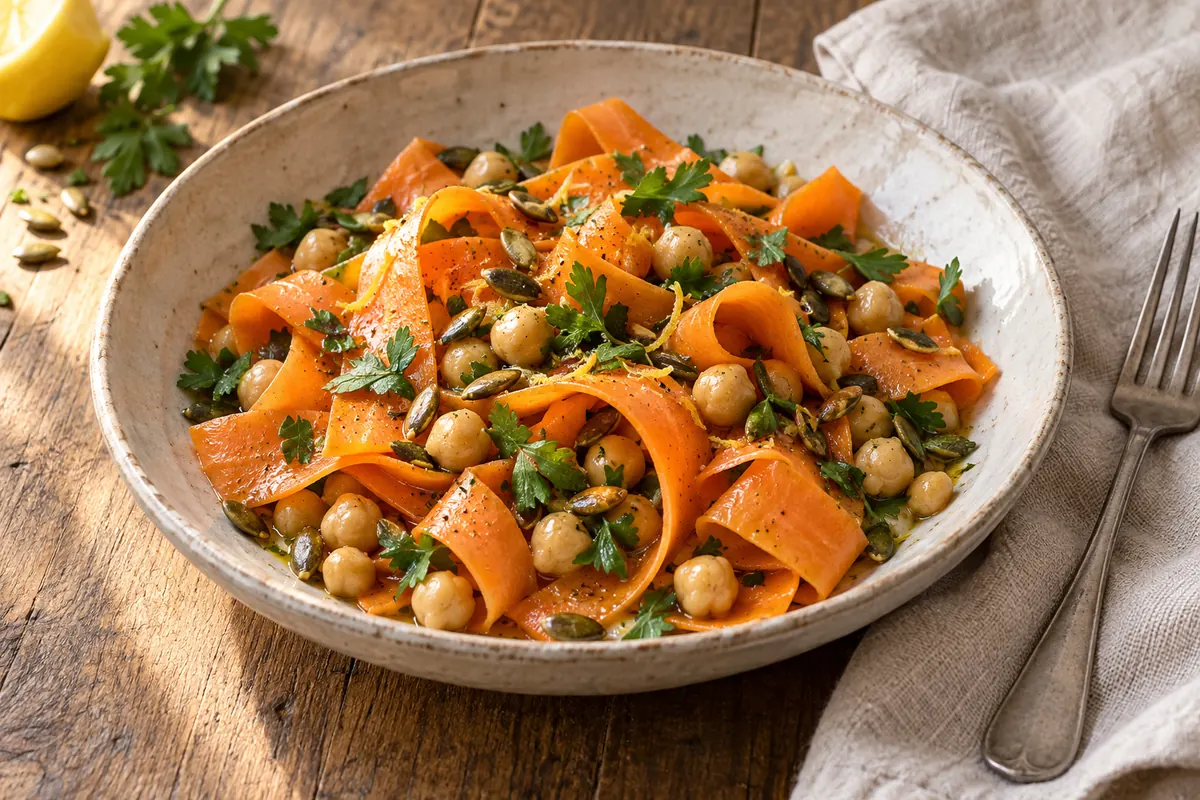
Decide whether you want to notice the seed
Pumpkin and sunflower kernels can provide a substantial bite. Sesame seeds are much smaller and spread across a surface readily. The choice affects how a salad, loaf, or bowl feels as much as how it tastes. A seed topping should fit the scale of the food underneath it.
Read whether the package contains edible kernels or seeds still in their shells. The pumpkin seeds sold for cracking as a snack are inconvenient when you expect a forkful of tender vegetables. Salted and flavored seeds also need to be counted as seasoning before you add more salt to the dish.
Recognize the preparation already done
A toasted sesame label means the manufacturer has already supplied the toasty flavor. McCormick's toasted product is ready to use; its plain sesame guidance describes toasting as a way to deepen flavor. Those are different starting points for a topping that will spend further time in the oven.
When toasting at home, watch a small batch closely and move it from the hot pan promptly. Tiny seeds can change color before larger ingredients beside them are ready. Add them separately if a tray of vegetables requires a much longer roast. Let them cool before sealing a container for another meal.
A paste changes the whole sauce
Ground sesame becomes tahini, so replacing it with a sprinkle of sesame seeds changes far more than appearance. A paste can spread flavor and body through a sauce, while whole seeds remain little separate pieces. Read the tahini label for added ingredients and follow its stirring and storage directions.
When a paste looks separated, check the package guidance before pouring off its oil. Stirring the contents back together may be part of preparing it for measurement. A spoon from the stiff bottom and a spoon from the oily top are poor foundations for a repeatable dressing if the recipe expects a uniform paste.
Treat hydration as part of the ingredient
The seed form matters as much as the soaking step. Terrasoul uses freshly ground flax or freshly ground chia in its binding mixtures, then gives them time to hydrate. Whole seeds scattered into batter are not the same preparation. Follow the grind, water quantity and rest specified by the recipe before judging whether the mixture can replace an egg in that particular bake.
Choose a recipe designed for the seed and form you have. Binding does not reproduce every job an egg performs, particularly when a bake relies on whipped egg foam. For a first substitution, choose guidance specific to that baked good, record the amount and hydration, and evaluate the cooled texture before changing another ingredient.
Keep in mind
Sesame is an allergen; retain the package information when decanting it.
Keep ground seeds sealed and follow package storage instructions rather than assuming every form belongs beside the spice jars.

