Read the style and the firmness
The most useful tofu question is what you want it to do. A smooth dressing needs tofu that blends readily. A tray of browned cubes needs pieces that survive lifting and turning. A soft tofu floating in soup can be successful precisely because it stays delicate.
Firmness words belong to a product line. Silken tofu can itself be labeled soft, firm, or extra firm; Mori-Nu's range includes an extra-firm silken product. Do not assume that every package marked extra firm will behave like the dense refrigerated block used in another recipe. Read the full name and preparation instructions.
Handle a tender block as a tender food
For a soft preparation, arrange the serving bowl and seasoning before opening the package. Drain gently and support the block with a broad utensil. Smaller pieces can be spooned into a dish instead of being forced into tidy cubes that will break during transfer.
Pressing is a choice for a particular result, not an entry requirement for every tofu meal. A fragile tofu intended for a smooth sauce or a gentle soup has little to gain from a heavy stack of pans. Follow the recipe's style recommendation and preserve the texture it is trying to achieve.
Dry the surface for browning
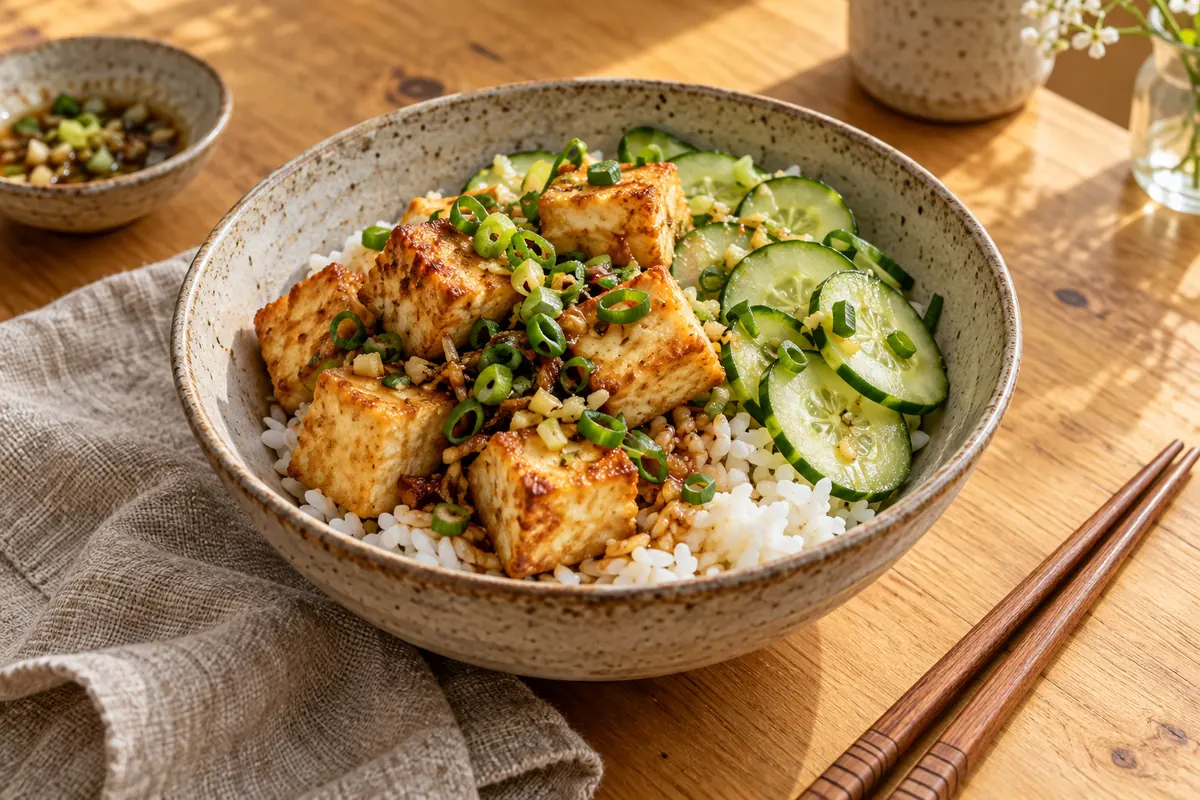
A firm block destined for pan-frying benefits from attention to surface water. Drain it, blot it, and cut consistently sized pieces. House Foods recommends pressing for a crisper result and lists a light cornstarch coating among its cooking options. Neither step replaces giving the pieces space in the pan.
Turn with enough support that the browned face stays attached. If the first cube tears, pause and let the surface cook further before moving the rest. Keep a sauce ready separately so you can decide whether to coat the cubes briefly or serve sauce underneath and retain more crisp edges.
Treat freezing as a deliberate change
House Foods describes freezing, thawing, and squeezing as a way to produce a chewier, more absorbent texture. That can suit a saucy dish, but it is a meaningful change from the original block. It should not be a rescue plan for tofu whose safe storage history is unclear.
Check the storage directions on the actual package. Some aseptic tofu is shelf stable before opening; many water-packed blocks require refrigeration from purchase. After opening, follow the manufacturer's refrigerated storage advice. Label leftovers with the tofu style as well as the date so a later meal begins with an ingredient you recognize.
Keep in mind
Keep soy allergen information available when transferring tofu to another container.
When substituting tofu styles, expect to change handling and sauce texture rather than only cooking time.
