Give the cornmeal a quiet start
Whisk the cornmeal into simmering water in a thin stream. Dumping it in all at once can leave dry pockets wrapped in cooked paste. Once the mixture thickens, switch to a spoon and keep the heat low. An occasional slow bubble is enough; an enthusiastic boil spits hot polenta.
Two batches are easier than one crowded pan
Mushrooms lose volume as they cook, but their starting volume still matters. A pound piled into a modest skillet can release enough water to cover the bottom. Split them into two batches so more cut surfaces touch the hot pan at once.
Slice small cremini thickly and tear oyster mushrooms into bite-size pieces. Very thin slices shrink into scraps before the polenta is done. Let the first side brown before stirring, then turn the pieces and continue until the liquid has largely evaporated.
Keep the garlic out of the hottest minutes
Garlic and thyme need only a brief turn through the browned mushrooms. Add them after returning both batches to the skillet, lower the heat, and stir so the garlic meets a little oil. Burnt garlic can dominate a whole pan of otherwise well-cooked mushrooms.
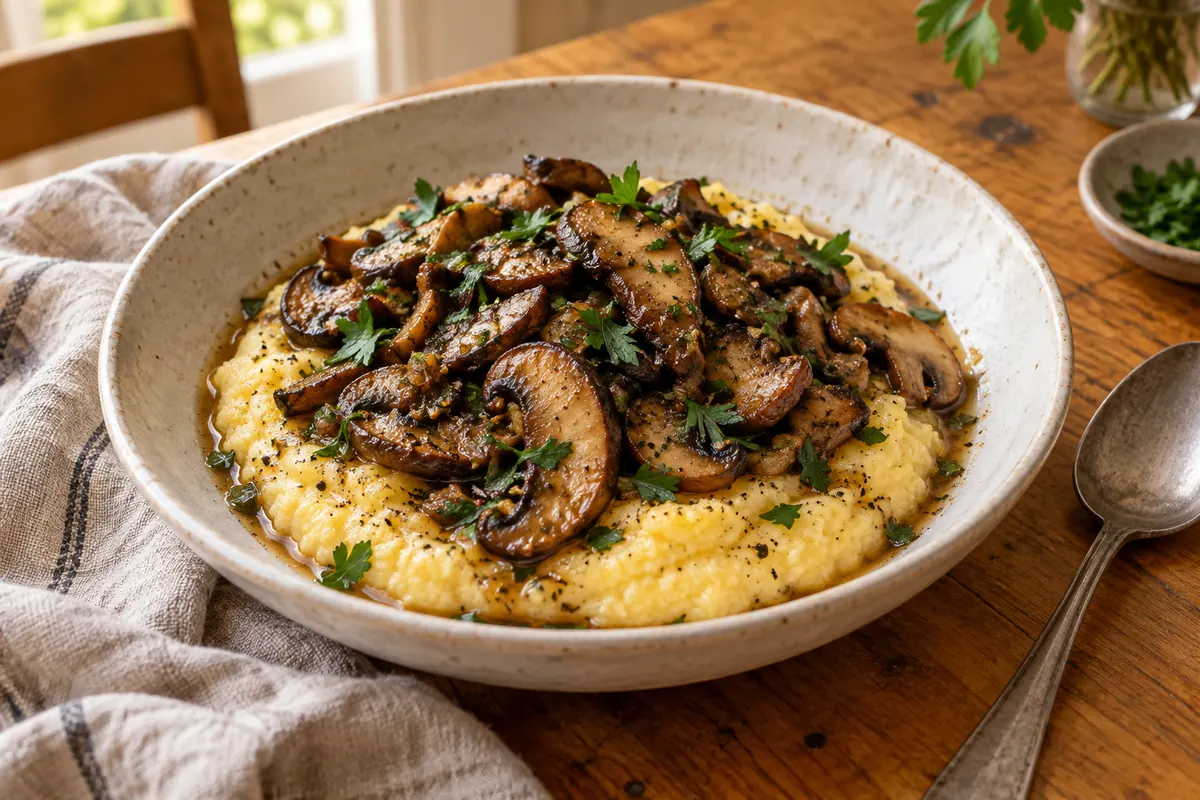
A splash of stock loosens the browned patches and gives you something to spoon over the polenta. Let it simmer just long enough to take up the mushroom flavor. You want a few spoonfuls of liquid left, not a dry heap and not a thin soup.
Serve while the polenta still flows
Polenta firms as it cools. If it thickens before dinner, stir in hot water until it falls easily from a spoon. Taste after loosening, since extra water can make it need another pinch of salt. Butter and Parmesan belong near the end.
Spoon the polenta into shallow bowls and make a small hollow for the mushrooms. Add parsley or a little lemon zest for a fresh finish. A crisp green salad is enough beside it. For a dairy-free version, use olive oil and leave out the cheese; the mushrooms still provide plenty of flavor.