Choose thickness before weight
Pork loin chops cook quickly, so their thickness matters as much as their weight. Ask for four boneless portions about 2.5 cm thick and trim only loose hanging fat. Thin breakfast chops will need a shorter cooking window; very thick chops may need more time at a gentler heat. A thermometer is the useful guide in either case.
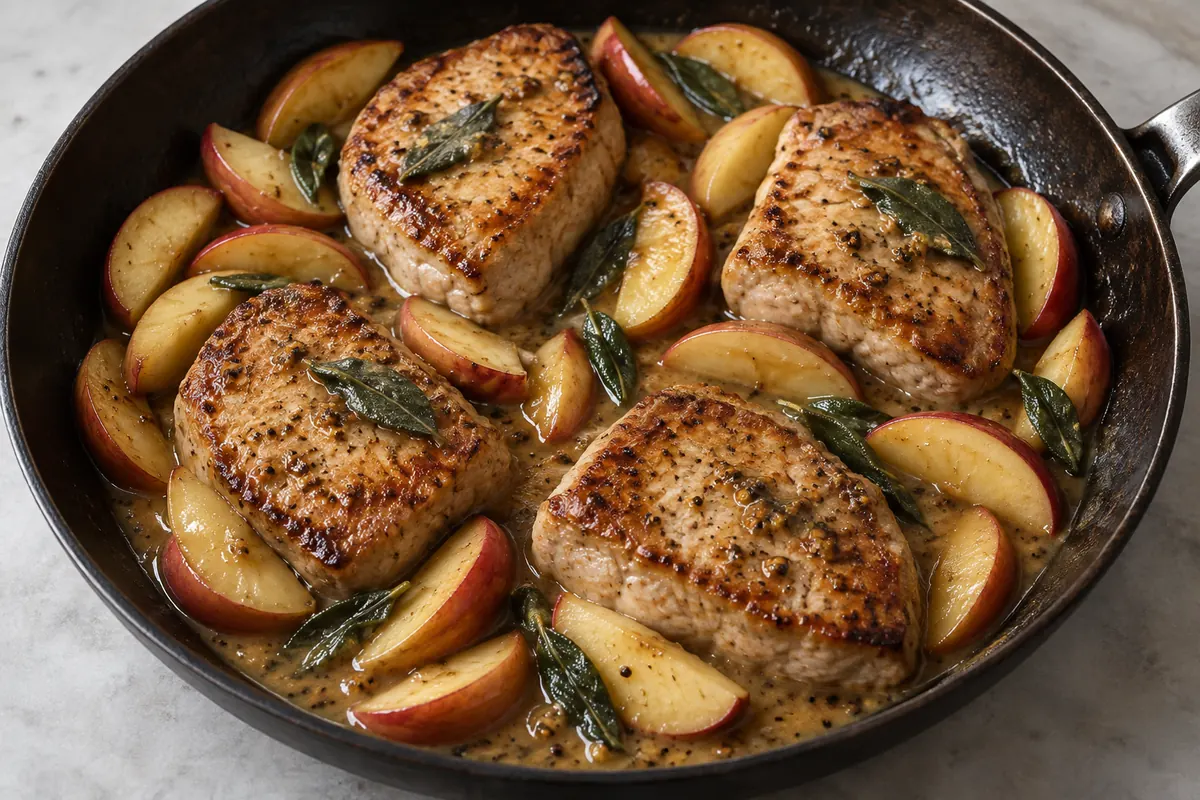
Firm apples give the sauce something to hold onto. Braeburn or Pink Lady are practical choices because their wedges tend to keep a distinct shape. Leave the clean skins on and cut each apple into eight wedges. Prepare them before the pork goes into the pan so the meat does not wait while you core fruit.
Brown the pork, then build the sauce
Pat the chops dry, then season both faces with salt and pepper just before searing. A wide pan makes room for four portions without their edges touching; if yours is smaller, work in two batches and allow extra time. Moderate browning is the goal. Blackened seasoning will make the modest amount of sauce taste harsh.
The apples cook after the pork leaves the pan. Turn the wedges with tongs rather than stirring them constantly, then use cider and stock to lift the brown residue. Unsweetened apple cider here means the nonalcoholic pressed juice, not sparkling hard cider. Mustard adds body and a little sharpness without making a thick gravy.
Use the thermometer and a separate resting plate
Return the chops only long enough to bring their centers to 145 F (63 C), inserting the thermometer from the side into the middle of the meat. Move them to a clean plate and rest for at least three minutes. The recipe allows five minutes, during which the sauce can reduce if it still looks watery.
Spoon the apples and sauce around the meat at serving time. Sage leaves are included in the cooking, where the butter softens their sharp edges. Keep the apple wedges intact when plating and give each portion a share of the pan juices. A shallow plate keeps the sauce close to the meat.