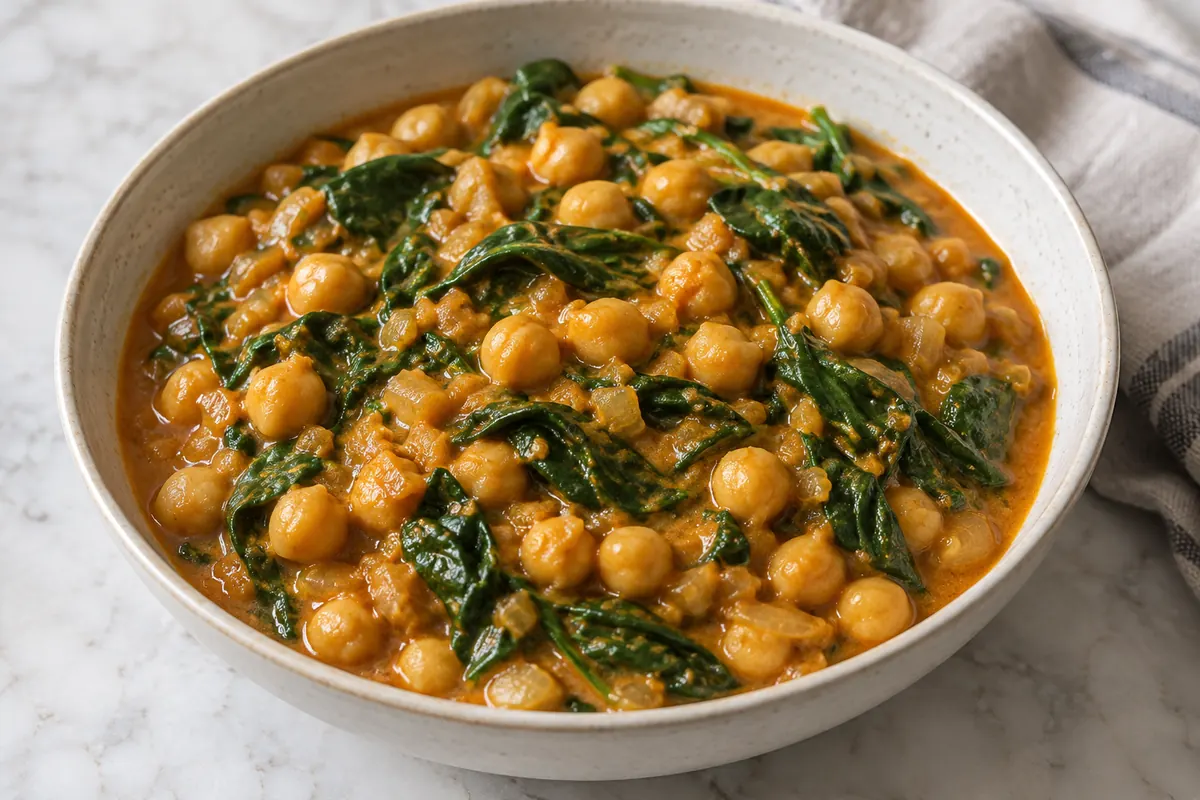
Start with drained canned chickpeas
Crushed tomatoes give a smoother base than large tomato chunks, while full-fat canned coconut milk adds body. Stir the coconut milk in its can before measuring if the fat has separated. A refrigerator carton of coconut drink is much thinner and would change both the texture and the balance of the finished dish.
Give onion and spices their own moment
Cook the diced onion until it has softened before adding ginger and garlic. Those finely grated aromatics need only a short turn in the hot oil. Add the dry spices after them and stir constantly so they do not catch on the bottom while you reach for the tomatoes.
Curry powder is a practical blend here, rather than a claim to one regional curry tradition. Blends vary in heat and composition, so check the label and choose one whose flavor you like. Ground cumin disperses through the sauce. Keep the tomatoes ready before adding the dry spices so their brief cooking stage does not turn into scorching while you open a can.
Wilt spinach at the end
The chickpeas simmer gently in the tomato-coconut mixture while the sauce thickens. Stir around the bottom of the pan occasionally, especially where the edges bubble fastest. Keep the lid off so moisture can escape, but lower the heat if the sauce begins to spit heavily or stick.
Fold in washed, well-drained baby spinach just before serving. It should wilt into the sauce while the chickpeas remain intact. Lemon juice goes in after the heat is turned off, supplying brightness without an extra garnish. Divide the curry into four bowls; rice or flatbread can accompany it, with their preparation counted separately from this recipe.