Decide how much broth dinner needs
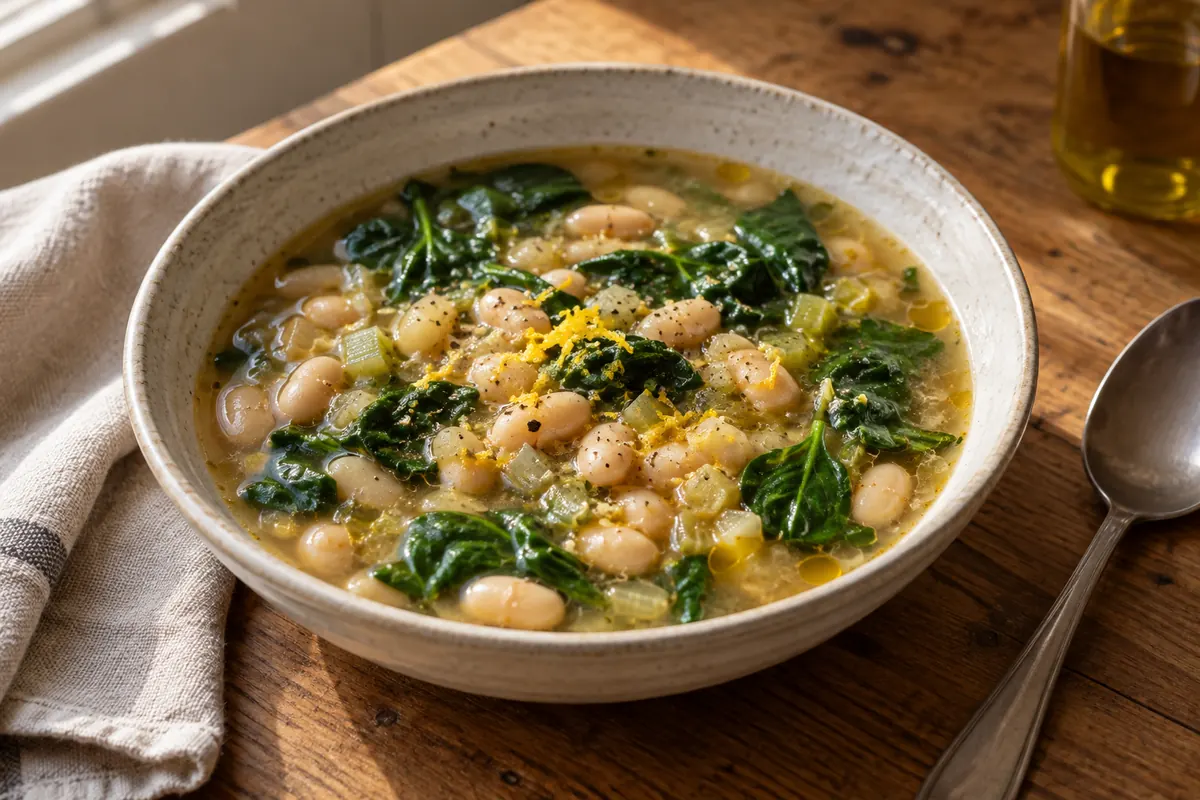
This is a bowl of beans with broth, so begin with less liquid than you might for soup. You can always add another splash before serving. The bean-to-broth balance depends on what goes alongside: use a little more for dunking bread and a little less for spooning over rice.
Canned beans keep the recipe quick. Drain and rinse them so the broth starts with a clean flavor, then mash a small scoop in the pot. That mashed portion gives the liquid some body without making the whole dish thick.
Let the vegetables soften before adding stock
Onion and celery need a quiet few minutes in olive oil. Their edges should soften without dark browning. Cut them small enough to fit comfortably on the spoon with a bean. Large chunks take longer and can feel out of place in a delicate broth.
Garlic only needs a short stir before the liquid goes in. If the vegetables begin sticking, lower the heat and add a teaspoon of water. There is no need to rescue every little patch by pouring in more oil.
Match the greens to their cooking time
Spinach wilts quickly and suits a fast supper. Kale needs its tough stems removed and a longer simmer, especially if the leaves are mature. Add kale with the stock, but wait until the beans are hot before adding spinach.
Frozen chopped spinach is a practical option. Thaw it enough to squeeze out excess water and stir it into the pot in small clumps. The broth may need another splash of stock. Check the seasoning again, since the greens change the balance.
Use lemon to sharpen, then stop
The zest can simmer with the beans, but add the juice after turning off the heat. Taste the broth on its own and with a bean. You want enough acidity to make the next spoonful appealing, while still leaving the beans' mild flavor in place.
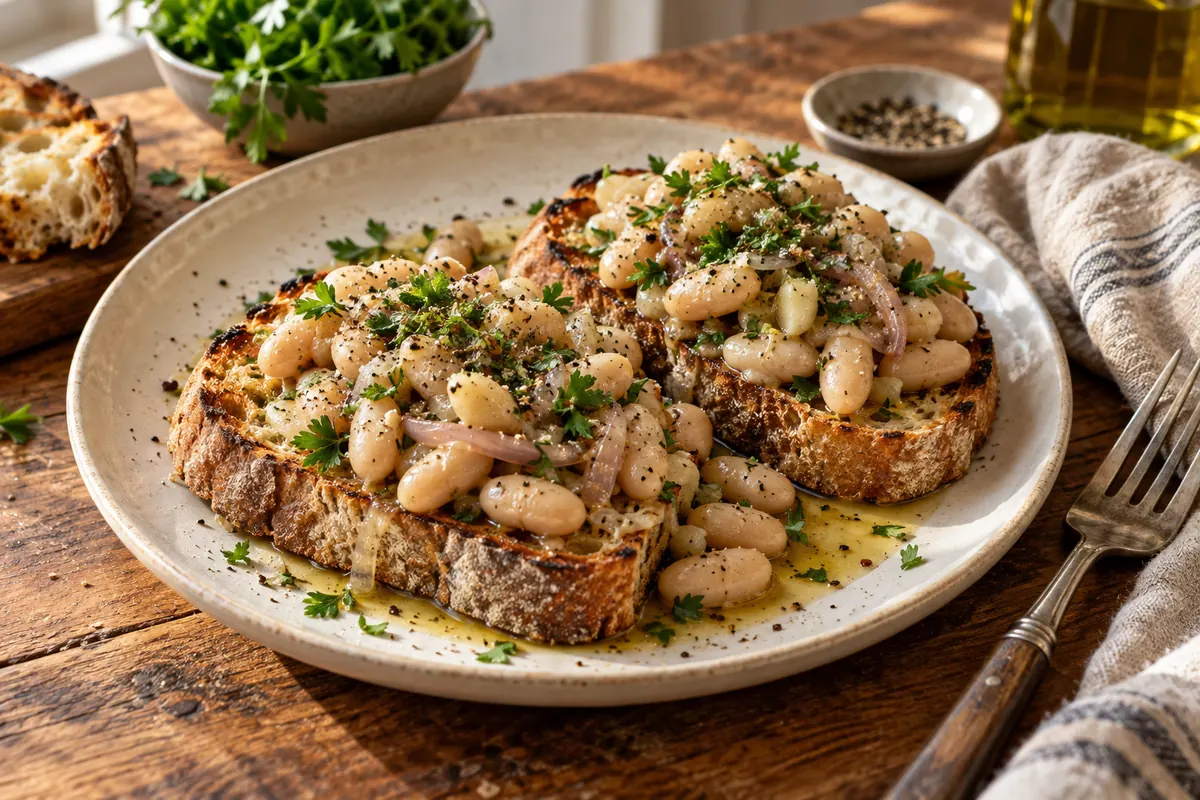
Finish each bowl with olive oil and pepper. A little grated Parmesan is welcome if you have it, though the dish works without it. Serve with thick toast. The beans keep their shape better if you reheat them gently and stir only as much as necessary.