Name the variation clearly
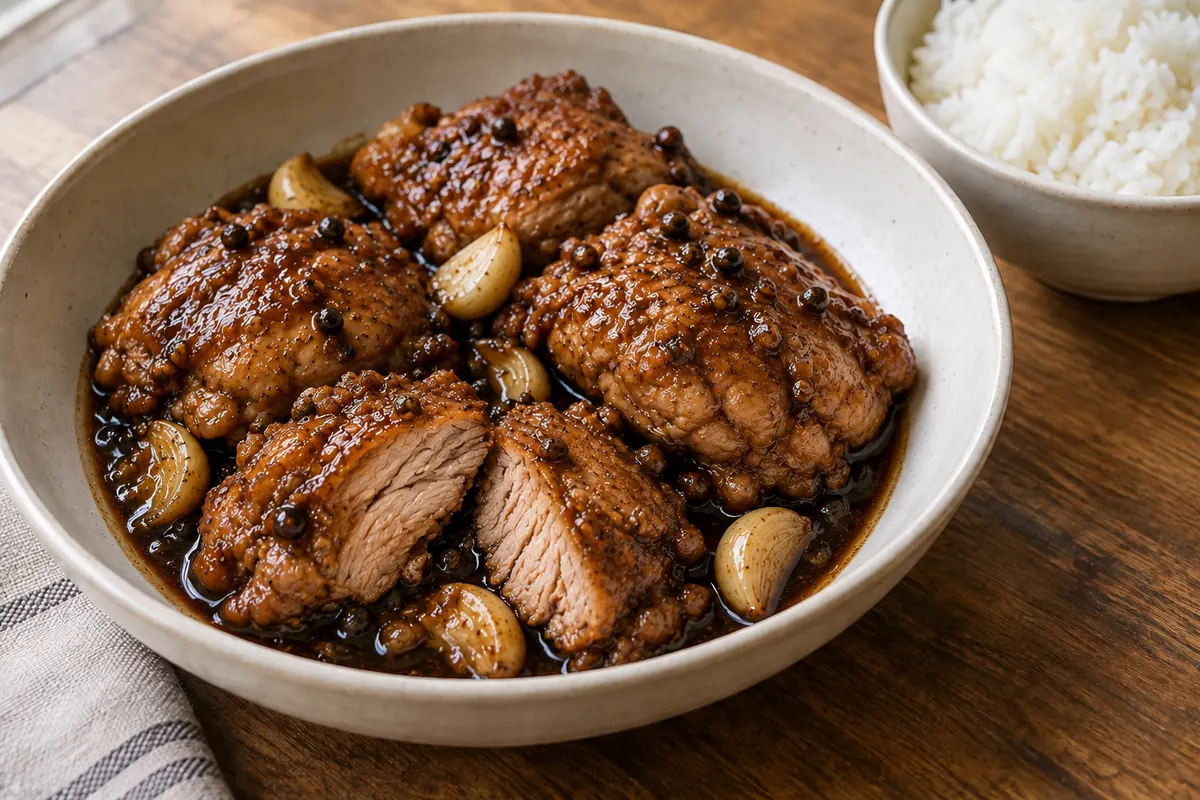
Chicken adobo belongs to Filipino cooking. An ASEAN cultural calendar presents a version with vinegar, soy sauce, garlic, bay, and pepper, followed by a simmer and a browning step. This recipe uses that familiar flavor direction with boneless thighs and a different sequence suited to a skillet .
Filipino adobo has many variations. Boneless thighs and a skillet method make this version practical for a weeknight, while vinegar, soy sauce, garlic, bay, and pepper give the sauce its familiar direction.
Brown, then braise
The thighs get color before the liquid is added. Once vinegar, soy sauce, and water enter the skillet, the cooking becomes a gentle braise. Keep the simmer modest so the sauce does not vanish before the thick pieces are cooked.
Cane vinegar is the first choice in the ingredient list; unseasoned white vinegar is an alternative. Avoid a sweetened or heavily flavored vinegar unless you want to develop a different balance. The soy sauce already brings salt, so taste the reduced sauce before deciding whether it needs any more.
Reduce the sauce separately when needed
If the chicken is cooked and the liquid is still thin, lift the thighs onto a clean plate and reduce the sauce on its own. This protects the meat from an unnecessary extra simmer while the liquid catches up.
Return the thighs for a brief coating, then serve with plain cooked rice. The rice is a serving suggestion rather than a step in the cooking time. Remove the bay leaves before eating, and tell anyone at the table if whole peppercorns remain in the sauce.