Start with the shape of the chicken
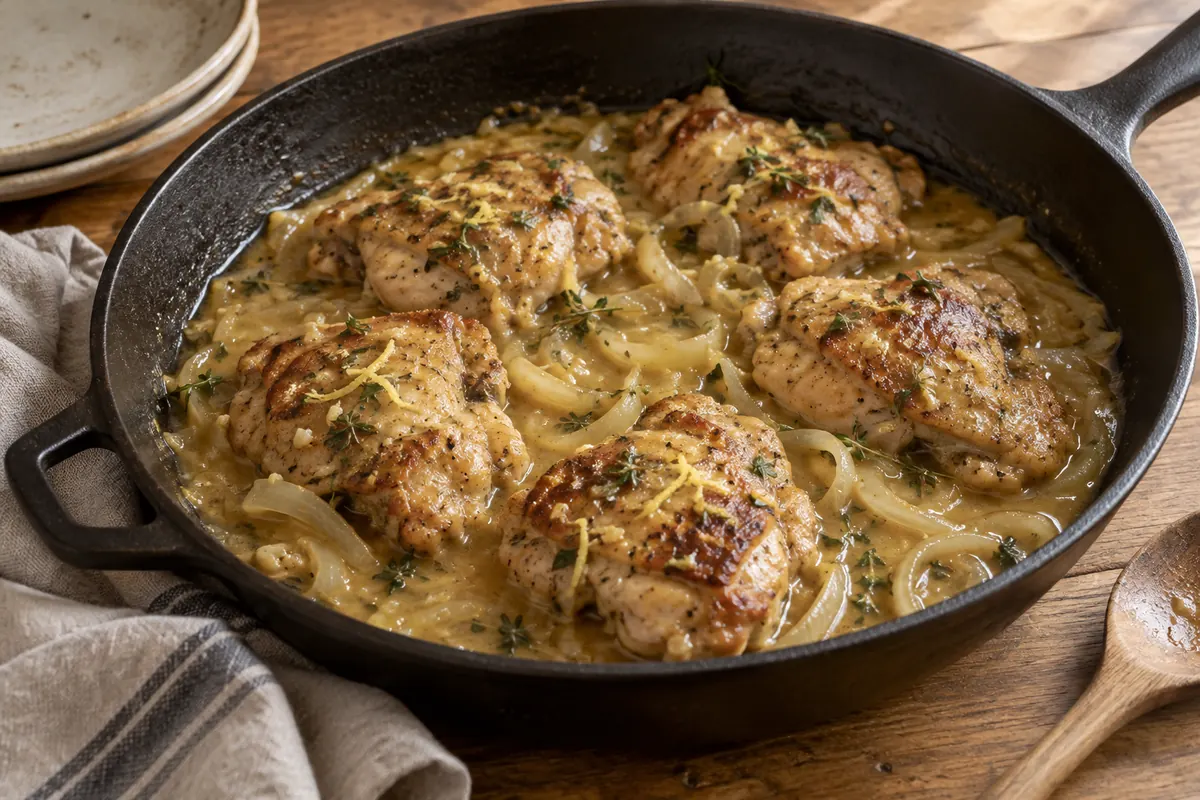
Pat the surface dry with paper towels. Surface water has to steam off before the chicken can brown. Dry the folds as well as the flat faces. Season while the skillet heats, then arrange the thighs with a little space between them. If your pan is small, work in two batches.
Give the onion a place in the sauce
The chicken leaves brown patches on the skillet. Those patches give the sauce flavor as long as they smell roasted rather than scorched. Add the sliced onion after lifting out the chicken, lower the heat, and stir it across the pan. Its moisture helps loosen some of that color.
Thin onion slices become soft enough for a short sauce. Thick wedges need more time and can stay firm while the chicken waits. Add the garlic only after the onion has softened. The moment its smell changes from raw to warm and savory, pour in the stock.
Use lemon in two different ways
Lemon zest belongs in the pan sauce, where it can season the liquid without making it sharply sour. Lemon juice goes in after cooking. This gives you a chance to taste the reduced sauce and add only what it needs.
Fresh thyme sprigs are convenient because you can lift out the stems before serving. Dried thyme also works; use the smaller amount in the ingredient note. Skip putting lots of lemon rounds in the skillet. Long simmering can draw bitterness from the white pith and peel.
Let the thermometer settle dinner
The clock tells you when to start checking, not when the chicken is safe to serve. Insert an instant-read thermometer from the side into the thickest part of each large piece. The chicken must reach 165 F. Check several pieces if their sizes differ.
While the chicken rests briefly, spoon the sauce over rice, boiled potatoes, or thick toast. A green salad gives the plate something crisp. Keep the sauce on a gentle heat if it needs another minute to thicken, and add a little stock if it reduces too far.