Cut for the skewers, then cut for the cook
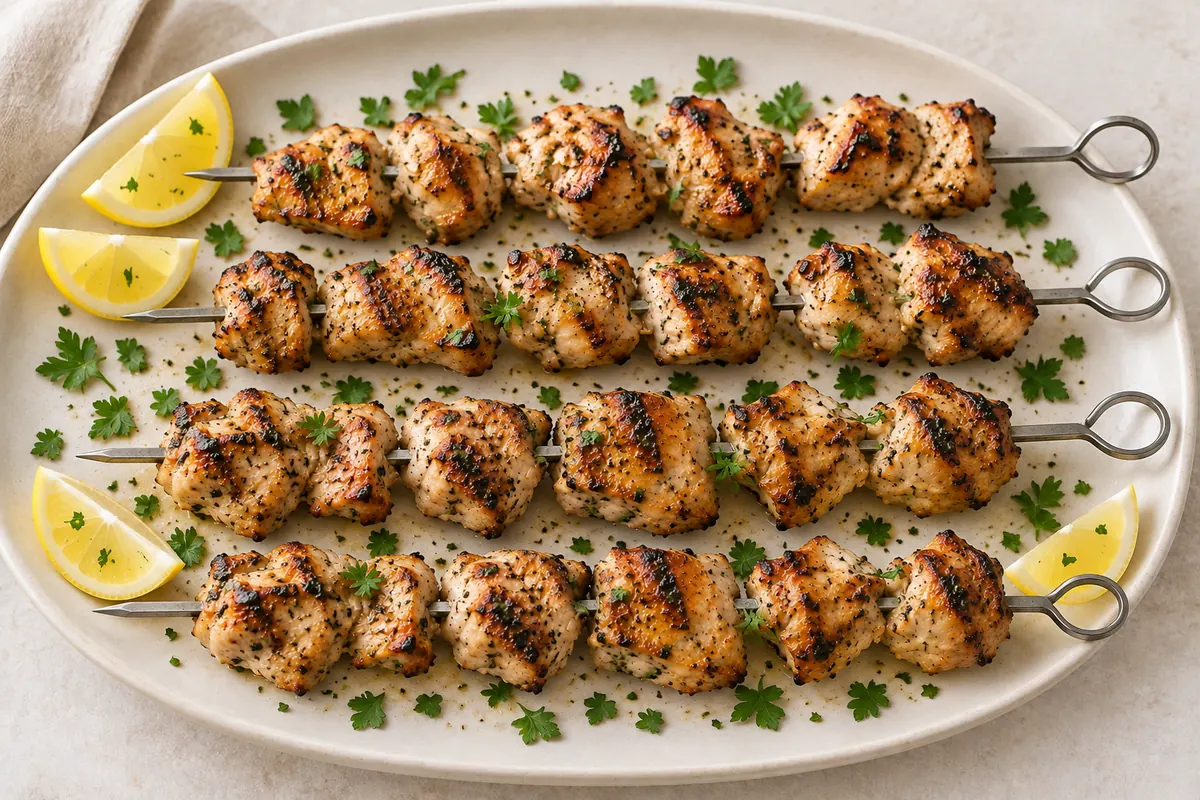
Pieces about an inch across are large enough to keep a thermometer probe in the center. Very small scraps brown quickly but are harder to check. Use boneless thighs and trim loose pieces of fat that might drip and flare on the grill.
Thread the pieces without compressing them into a solid block. A little room lets heat reach more of the surface. Metal skewers are convenient for this recipe because there is no soaking step to remember.
Use two heat zones
Start the chicken over direct heat to get color, then move it to the cooler side if it needs more cooking without more browning. That extra space is useful whenever garlic begins to darken before the chicken is done.
Turn with tongs rather than grabbing the metal skewer ends. Keep the handles away from the hottest section, but still treat them as hot. Prepare a clean plate for the cooked skewers before you carry the raw chicken outside.
The thermometer decides when to eat
A dark grill mark describes the surface, not the middle. Check several of the largest pieces, especially those at the cooler end of a skewer. Continue cooking any piece that has not reached the temperature listed in the method.
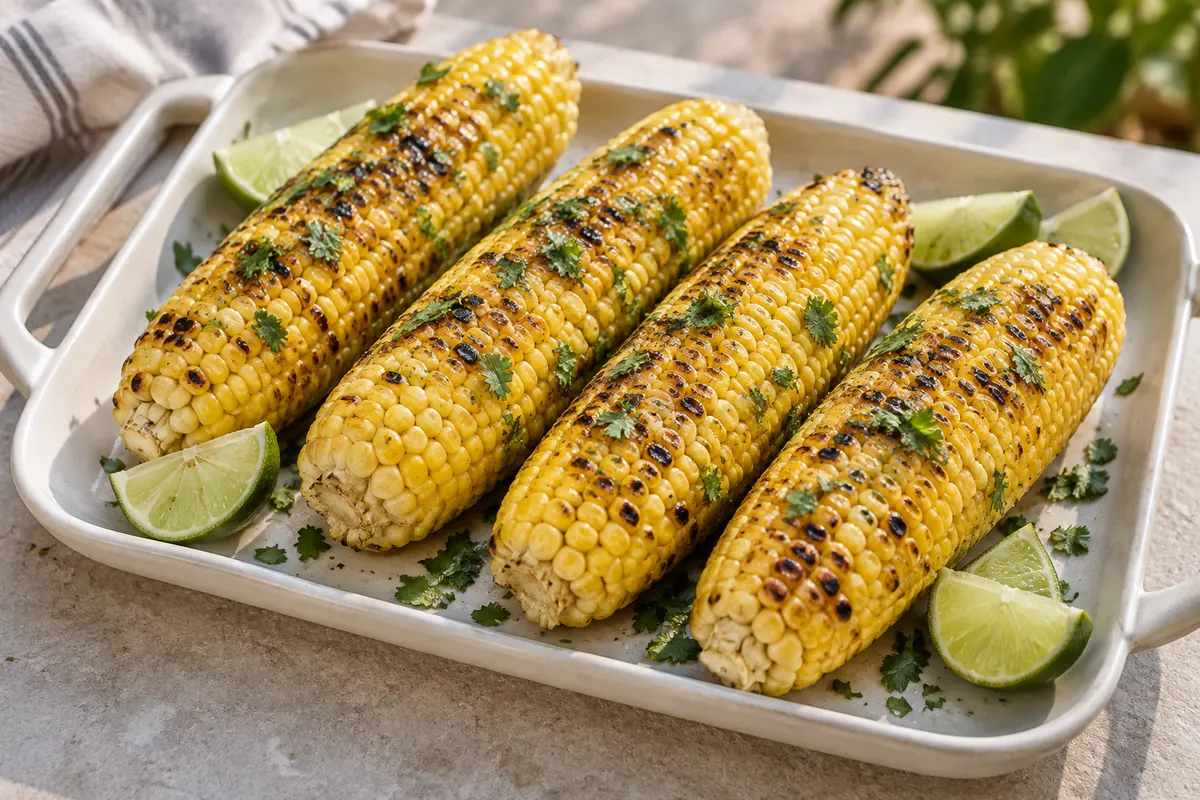
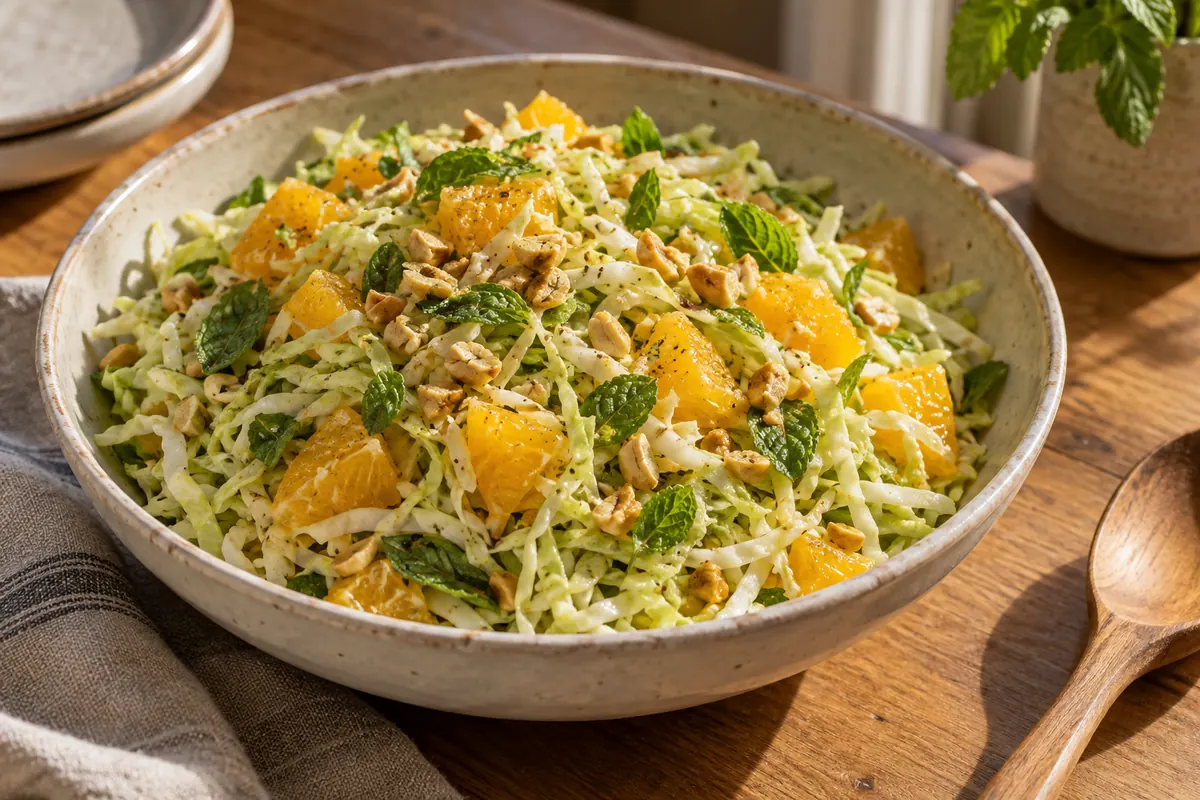
Parsley and lemon wedges finish the platter after cooking. A cucumber salad or grilled corn is a useful companion, and both can be prepared without putting raw chicken utensils back into the ready-to-eat food.