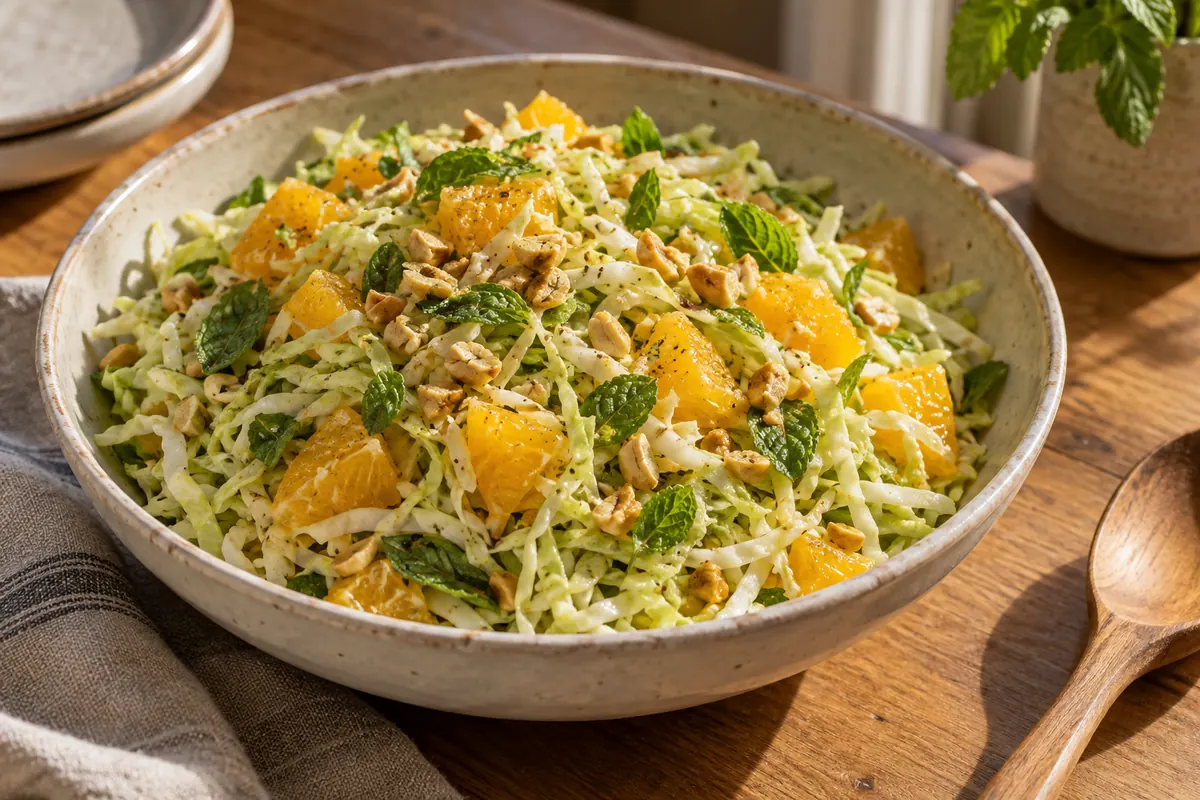
Slice the cabbage thin enough to bend
A small green cabbage has enough crunch to stand beside roast potatoes or a skillet supper. Remove bruised outer leaves, cut it into wedges, and trim out the dense core. Slice across each wedge with a sharp knife , aiming for thin strips.
There is no need to buy a mandoline for this job. If you already use one, keep its guard in place. Hand-cut cabbage can be a little uneven and still eat well. Thick shreds are the ones to pick out and slice again.
Let a little salt begin the softening
Tossing cabbage with salt before dressing draws a little moisture and makes the strips less rigid. Use your hands to turn it gently rather than kneading hard. The goal is a crisp salad that bends on a fork, not a bowl of limp leaves.
After ten minutes, check the bottom of the bowl. If there is a noticeable puddle, pour it off before adding dressing. A small amount can stay. Taste a shred so you know how much salt has already reached the cabbage.
Cut the orange over a bowl
Slice the peel and white pith from the orange, then cut the flesh into small pieces over a bowl to catch the juice. You can cut neat segments between the membranes if you enjoy that work, but bite-size pieces are enough.
Add the collected juice to the dressing. It gives a little sweetness without another ingredient. Lime supplies the sharper note. If the orange is especially sweet, you may want a little more lime; if it is tart, start with less.
Dress before dinner and garnish at the table
The cabbage can sit in the dressing for a short while, which makes this a convenient side when the stove is busy. Fold in the orange gently so its pieces do not become juice before reaching the plate. Add mint near serving time.
Roasted peanuts give the salad a salty crunch, but toasted sunflower seeds are an easy alternative. Keep either topping separate if packing leftovers. Serve beside chicken, beans, or spicy potatoes, where the cool citrus gives your fork somewhere fresh to go.