Use zest for the clearest orange aroma
Rub the zest into the measured sugar with clean fingertips until the sugar feels slightly damp and smells of citrus. This distributes the zest before the wet ingredients arrive. Use an olive oil whose flavor you enjoy; a very assertive bitter oil will remain noticeable in a plain loaf without frosting to soften it.
Whisk the wet ingredients, then fold
Yogurt adds body to the liquid mixture. Choose plain whole-milk yogurt with a spoonable texture, rather than a thick strained product or a sweetened flavored cup. Whisk it with eggs, juice and oil until there are no obvious streaks. The oil does not need to be creamed with the sugar as butter would.
Combine flour, baking powder and salt in a separate bowl, then fold them into the wet mixture just until the dry pockets disappear. Continued beating is unnecessary. Line the loaf pan with a paper sling so the baked cake can be lifted without being tipped onto its top. Keep the short ends lightly oiled as well.
Cool before cutting clean slices
Begin checking near the end of the estimated baking window. The center should spring back lightly, and a skewer inserted into the middle should emerge without wet batter. A few moist crumbs are different from a shiny coating of uncooked mixture. If the top colors early, lay foil loosely over it while the center finishes.
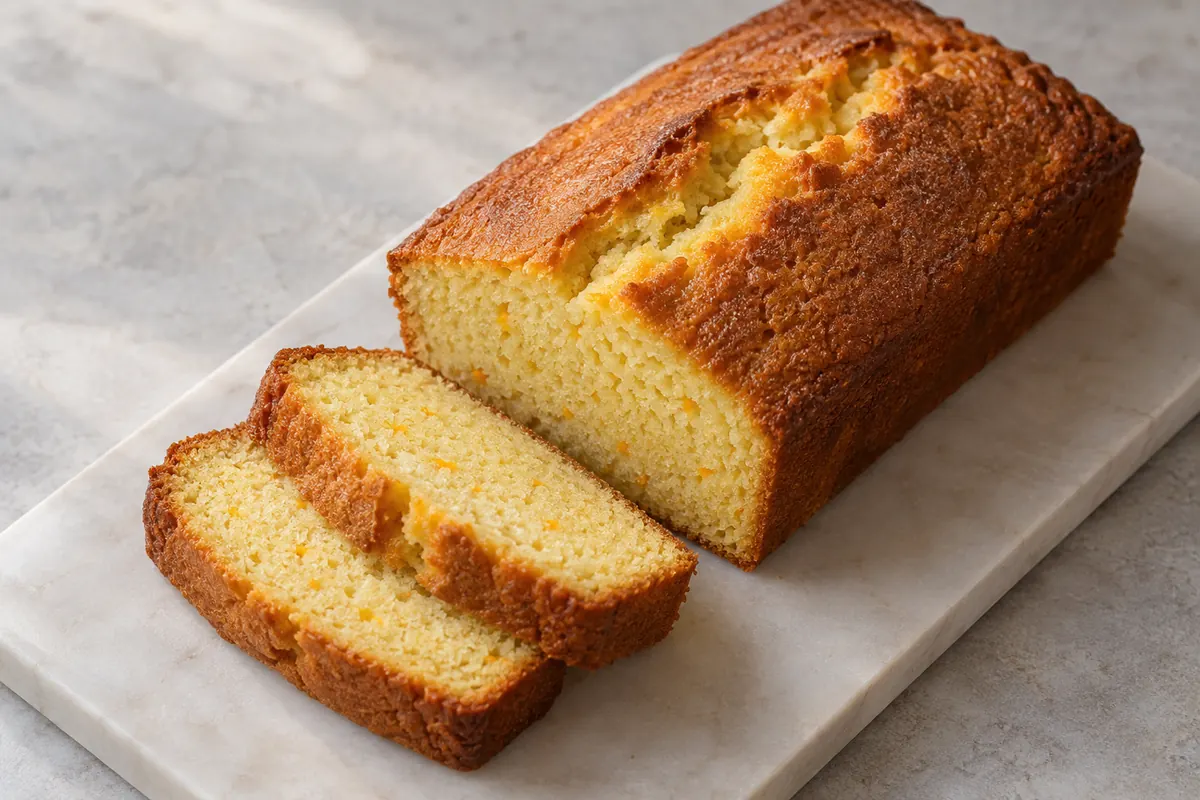
Leave the loaf in its pan for ten minutes, then lift it onto a rack for the remaining cooling period. Warm slices are fragile, so use a serrated knife only after the crumb has settled. Serve it plain to keep the orange and olive oil distinct. No glaze, syrup soak or decorative fruit is included in this version.


