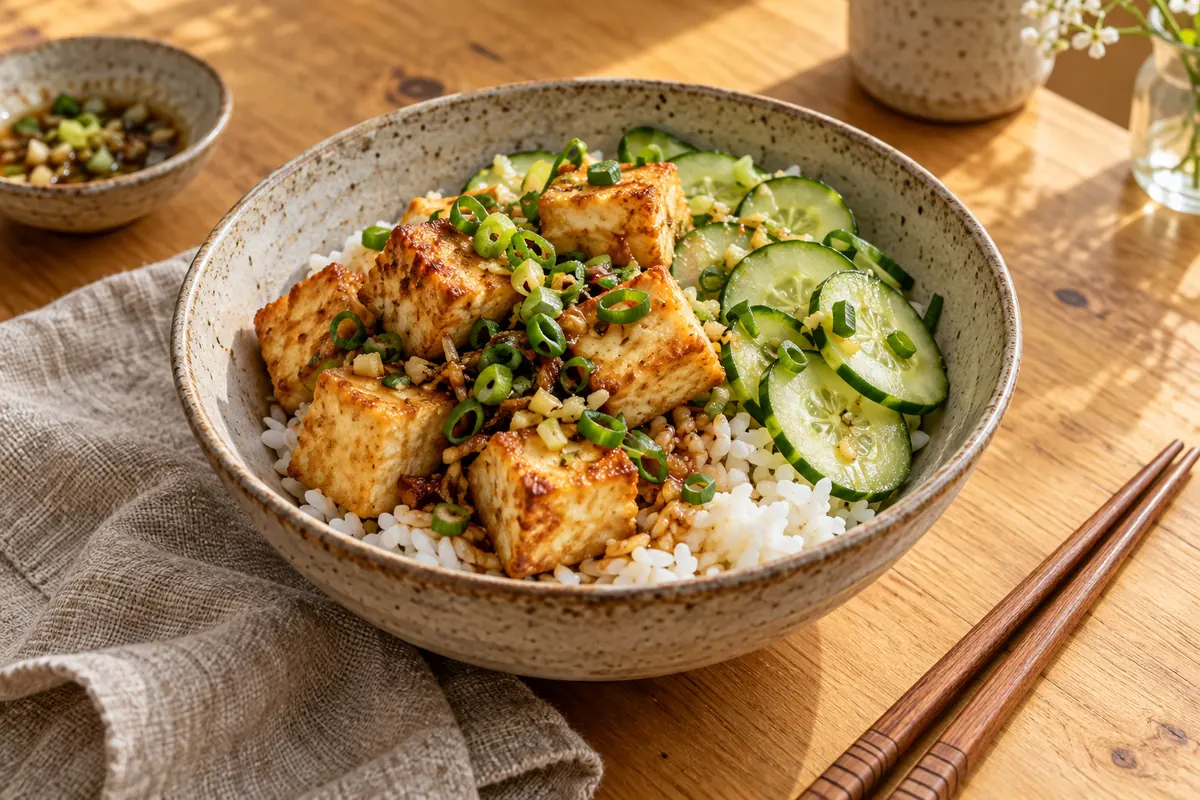
Dry tofu takes a coating more easily
Extra-firm tofu is the starting point for this skillet supper. Drain it, wrap it in a clean towel and press gently under a plate for ten minutes while preparing the vegetables and sauce. This is a brief surface-drying step, not a promise to remove all the water. Slice into even cubes so that their flat faces can sit against the pan.
Cornstarch makes a light coating that helps the sauce cling. Toss it with the tofu immediately before frying. Fry the tofu while its coating still looks dry and powdery. Separate any cubes that stick together rather than burying damp patches under another layer of starch. Keep the cubes separate as they enter the oil.
Give broccoli its own short turn
Cut the broccoli into small florets and slice the tender peeled stem into thin coins. The stem belongs in the dish and makes the measured weight less wasteful. Very large florets may brown before their centers soften, so split them through the stalk into pieces that fit easily on a fork.
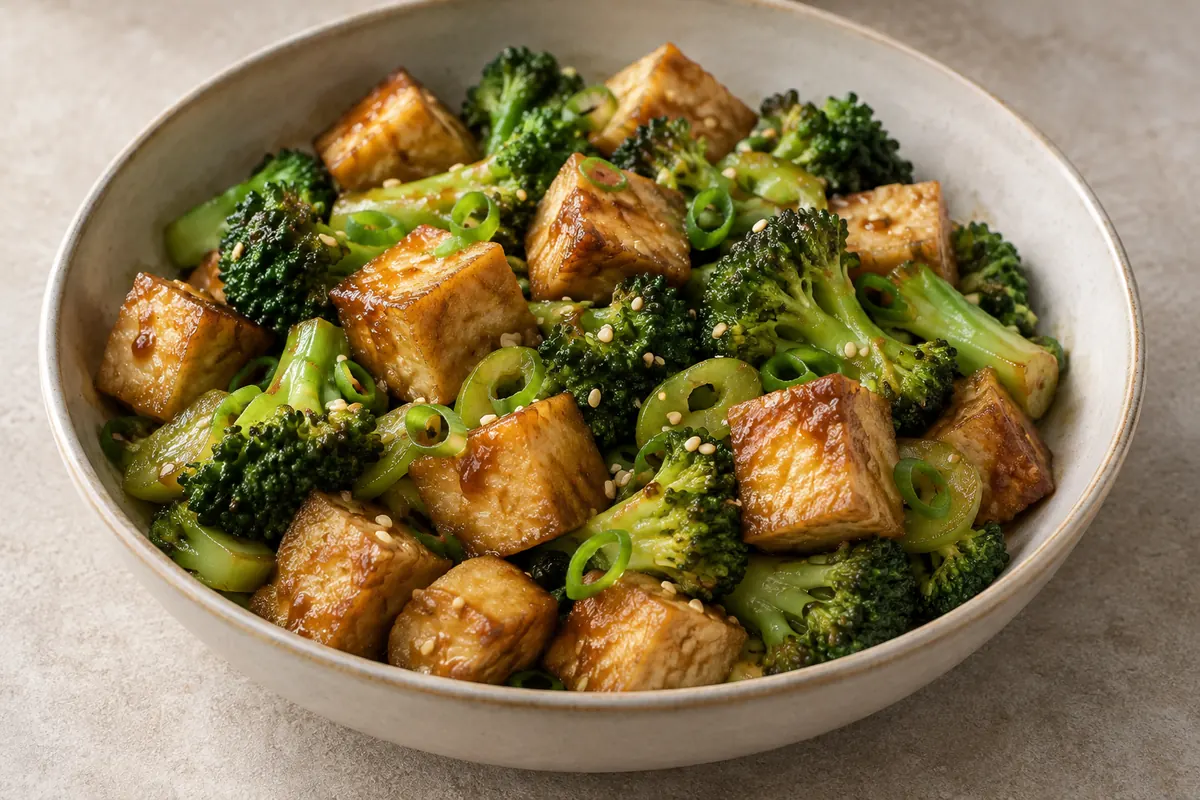
After the tofu is browned, a measured splash of water steams the broccoli briefly under a lid. Uncover before adding the sauce and let excess water evaporate. The pan should look almost dry; otherwise the dressing becomes a weak broth and the tofu loses its crisp edges before dinner reaches the table.
Mix the sauce before the pan is hot
Soy sauce, rice vinegar, ginger and a little sugar form the coating. Stir the cornstarch suspension again before pouring it in because starch settles quickly. Start with low-sodium soy sauce, since reducing a standard salty sauce in a hot pan can make seasoning difficult to correct.
Return the tofu at the very end and fold it through gently. Sesame oil supplies aroma while sesame seeds and scallions remain visible on the finished dish. Serve immediately with a separately cooked grain if desired. The sauce should form a glossy coating rather than collect as a deep pool beneath the vegetables.