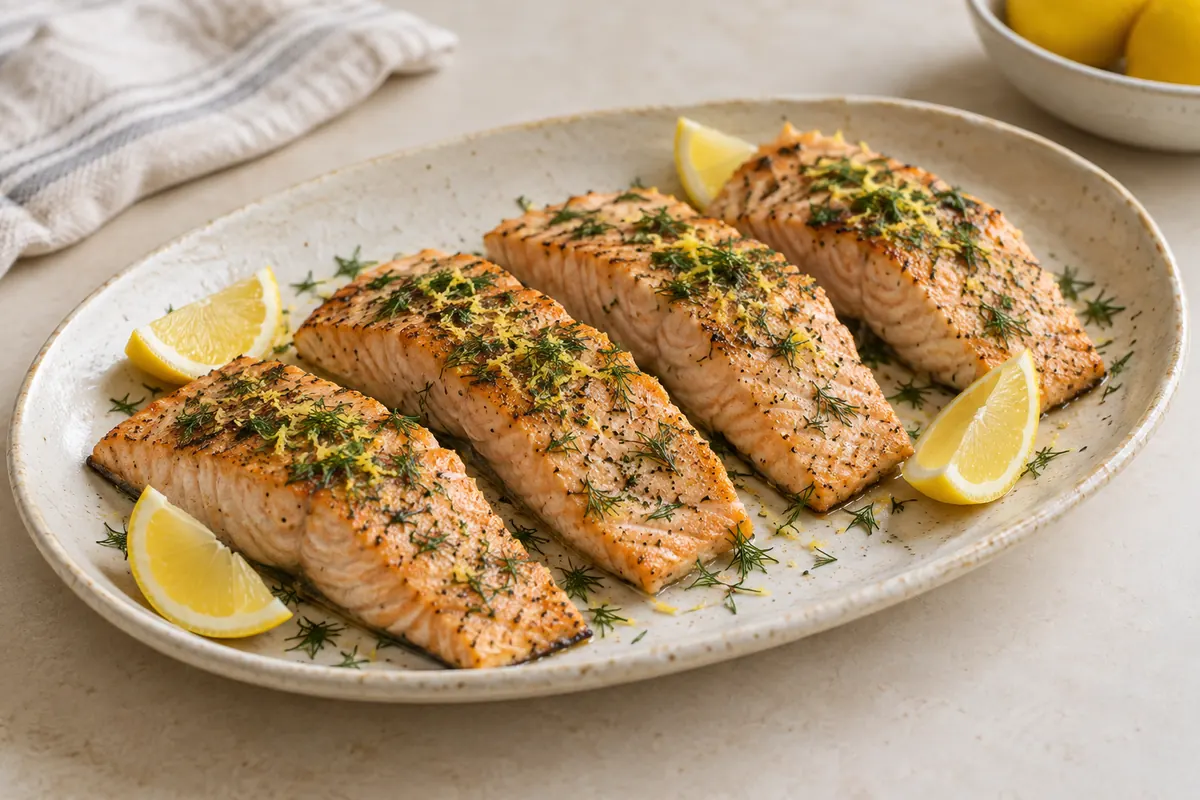
Choose portions that fit the pan
A shallow pan is easier to work in than a deep pot when you need to lift a fragile fillet. Check that the lid fits and that a wide spatula can reach underneath the fish. A pan that suits the shape of the portions is more useful than a large quantity of elaborate broth.
Season the liquid before the fish goes in
Water can be a sensible poaching liquid. A little salt and a few aromatics give it flavor without making the fish compete with a strong sauce. Lemon peel, a small piece of onion, or herb stems are possible choices when they fit the dish you plan to serve.
Taste the liquid before adding raw fish. If you use prepared stock, check its salt level first. The guide does not prescribe one broth for every fish; a gentle white fish and an oily salmon portion may call for different accompaniments.
Keep the movement gentle
Bring the liquid to the point directed by the recipe, then reduce the heat before lowering the fish into it. The surface should move gently. Vigorous bubbles buffet the flesh and make it harder to lift a whole portion neatly.
After adding cold fish, allow the pan to regain gentle heat. Resist the urge to turn the burner high and walk away. Covering can help the exposed upper surface cook, but the pan still needs attention. A lid is not a substitute for watching how the liquid behaves.
Check the thick part rather than the clock
Portion thickness, starting temperature, and the amount of liquid all change the time. Insert a thermometer into the thickest center, approaching from the side when that makes the center easier to reach. FDA guidance calls for most seafood to reach 145 F (63 C). Appearance can help you understand the texture, but it is not the temperature measurement.
Lift finished portions with a wide spatula and let excess liquid drain back into the pan. Move them to a clean serving plate. If a piece splits, serve it honestly as a broken portion rather than giving the remaining fish extra cooking in pursuit of a better photograph.
Keep the rest of dinner ready
Finish the sauce, warm the plates if you choose, and have the side dishes ready before the fish is cooked. Delicate fish does not benefit from a long wait while another pan starts. Poaching liquid can be used in a sauce only after it has been properly cooked and handled; raw fish has been in it.
This guide covers cooked fish portions served soon after preparation. It does not provide a method for raw seafood, sous vide fish, vacuum-packed storage, or preservation. Use a complete recipe for exact liquid quantities, flavoring, and timing, and follow the handling guidance linked below.
Keep in mind
Thaw frozen seafood in the refrigerator and keep raw fish away from ready-to-eat ingredients.
A broth temperature and a finished fish temperature describe different things; check the food itself.
Use the linked food safety guidance alongside a complete recipe for your chosen fish.