Choose pieces that will finish together
Thaw frozen fish in the refrigerator, then pat it dry. Surface water dilutes the small amount of oil and salt on top. Choose a tray that holds the portions in one layer with space between them.
A little oil, then leave it alone
The oven does most of the work. Oil the fish lightly and use a moderate amount of salt; dill and lemon will make the finished plate smell fresh, but neither can fix fish that has no seasoning underneath.
Begin checking before the suggested time ends if your portions are thin. Look at the center, rather than the edge that cooks first, and use a thermometer to make the safety decision. A longer bake cannot be undone with a generous squeeze of lemon.
Finish after the fish is cooked
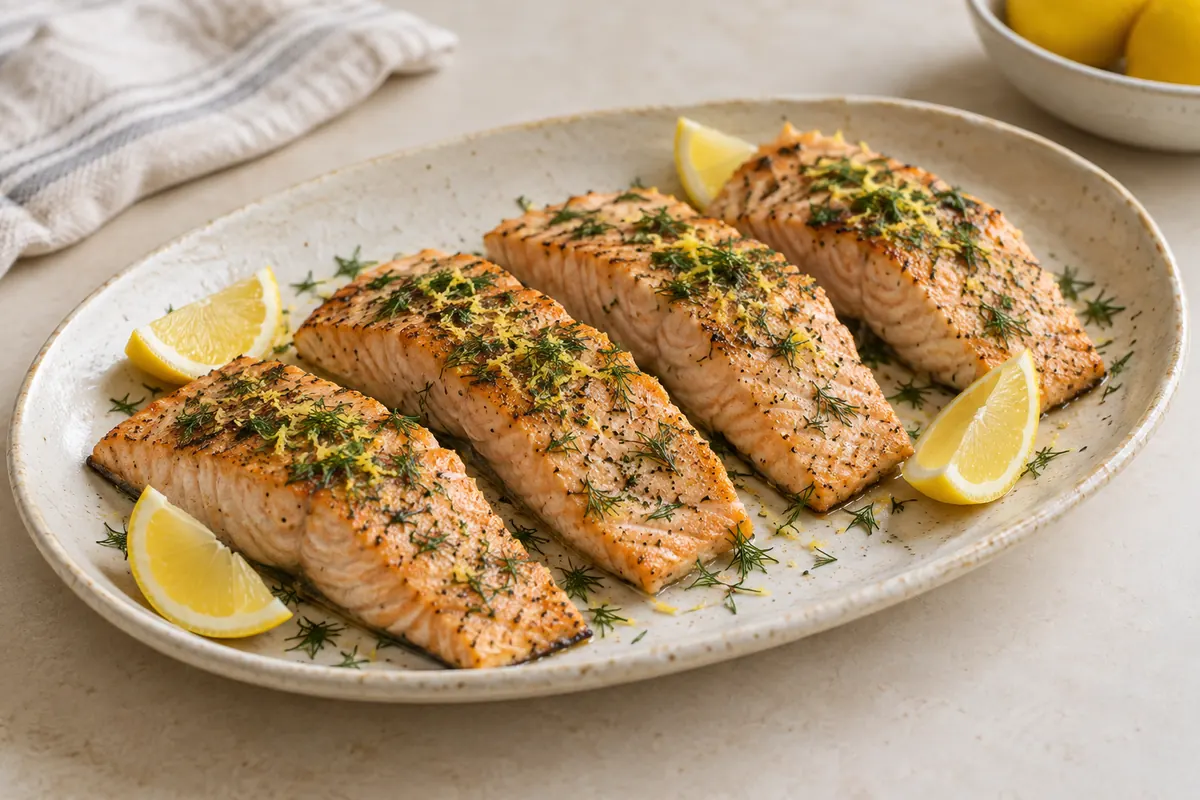
Scatter the dill and zest over the hot fillets once they leave the oven. The herbs keep more of their fresh smell this way. Set lemon wedges beside the fish so each person can choose how much acidity to add.
Serve with a cooked grain or one of the vegetable sides in the recipe library. Keep any accompaniments separate during baking, since they may need a different temperature or more time than the salmon.