Stop the board from moving
Check the board on the counter before placing food on it. Use its nonslip feet or a suitable damp cloth beneath it, keeping the working surface stable. Give yourself enough space on both sides so the knife does not collide with a bowl or the counter's edge.
Choose a board suited to the knife and follow its care instructions. Very hard decorative surfaces can be poor cutting surfaces. Wusthof's board guidance emphasizes both blade-friendly materials and stability; a board should earn its place by how it works, not only how it looks on the counter.
Give round food a resting face
A carrot or potato that rolls is harder to control. Where the intended cut permits, make a small flat face and rest the ingredient on it. Work with a manageable portion instead of forcing the knife across a whole awkward pile.
Keep the guiding fingertips tucked and use a grip you can control comfortably. Do not rush a cut because the ingredient is almost finished. The last small piece may be the least stable; reposition it or leave a useful trimming rather than forcing your hands into an unsafe position.
Cut for the cooking time
The aim is not to make every ingredient exactly the same shape. Dense carrots and tender mushrooms have different jobs in a pan. Make each type reasonably consistent within itself, then group ingredients by when the recipe adds them.
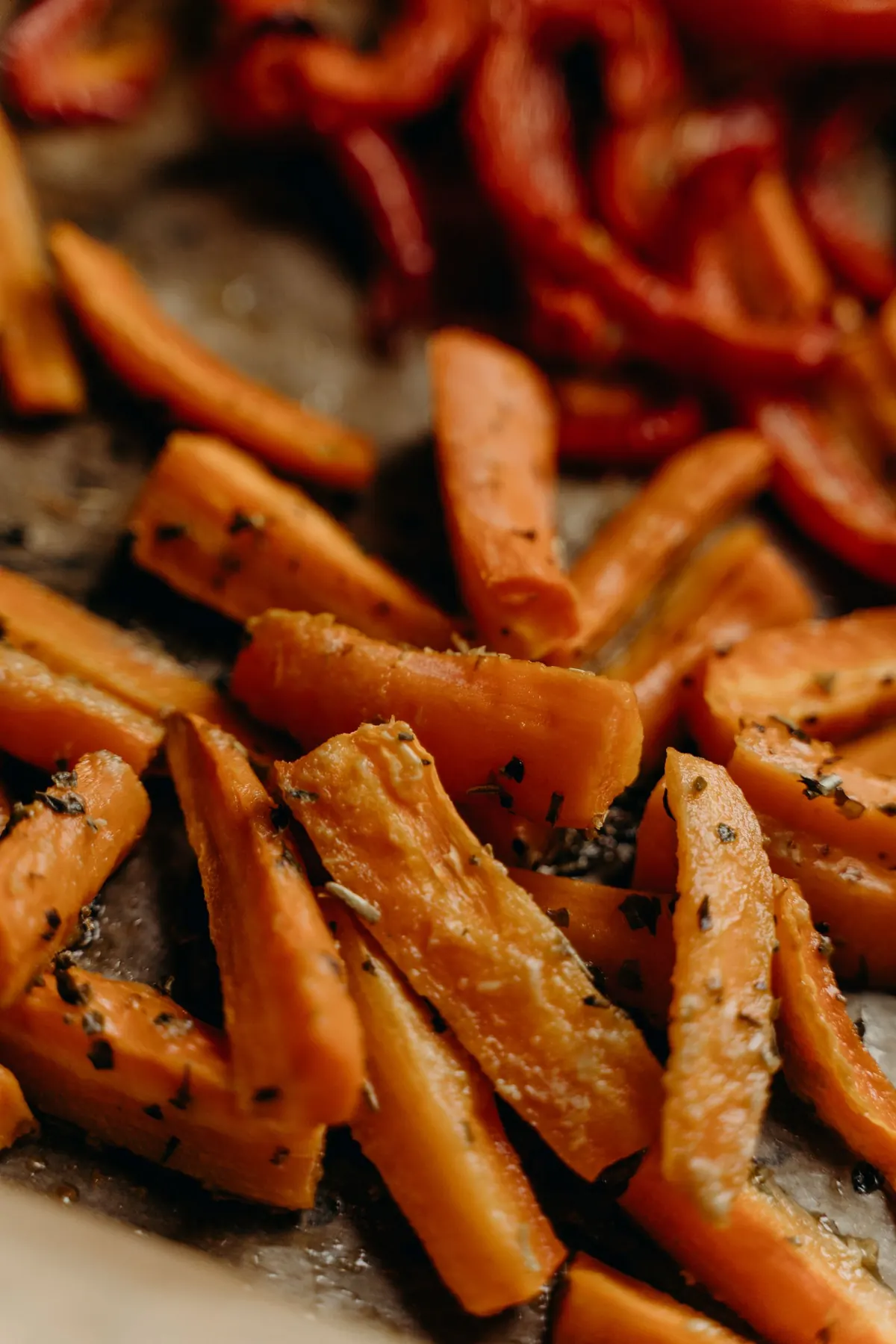
For soup, think about what fits comfortably on the spoon. For roasting, leave a face that can contact the tray. For a quick stir-fry, cut the slower ingredients thin enough for the short cooking window. A practical cut follows the dish, not a decorative pattern.
Keep the clean and raw stages separate
Prepare ready-to-eat garnishes on a clean board and keep them away from raw meat or seafood. Use separate equipment where practical, and wash and sanitize according to reliable food-safety guidance and the board's material. A quick wipe is not a complete cleaning step.
Hand-wash and store knives as their manufacturer directs. Do not leave a blade hidden under soapy water or loose among other utensils. Keeping the board, knife, and cleanup routine predictable makes the next preparation calmer as well as more efficient.
Keep in mind
A knife that slips or crushes instead of cutting may need appropriate sharpening or maintenance.
Choose controlled cuts and a suitable knife; this text does not replace practical knife-skills instruction.