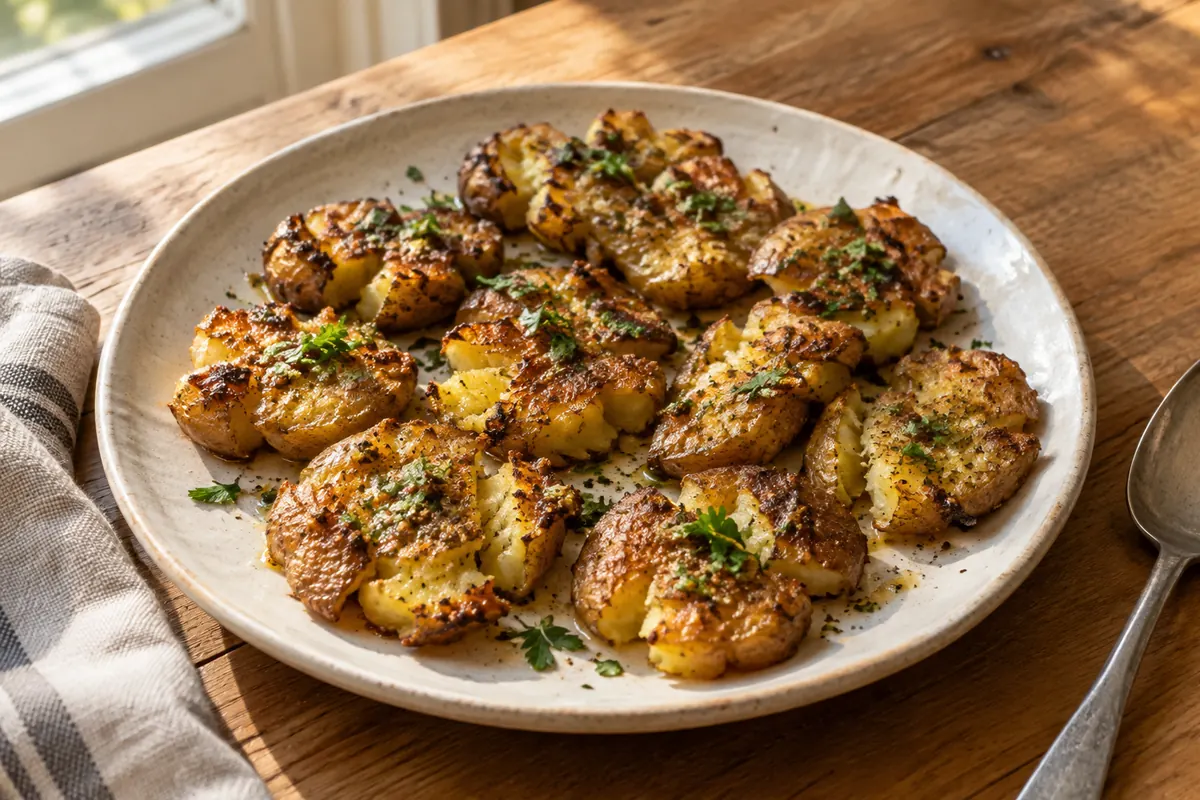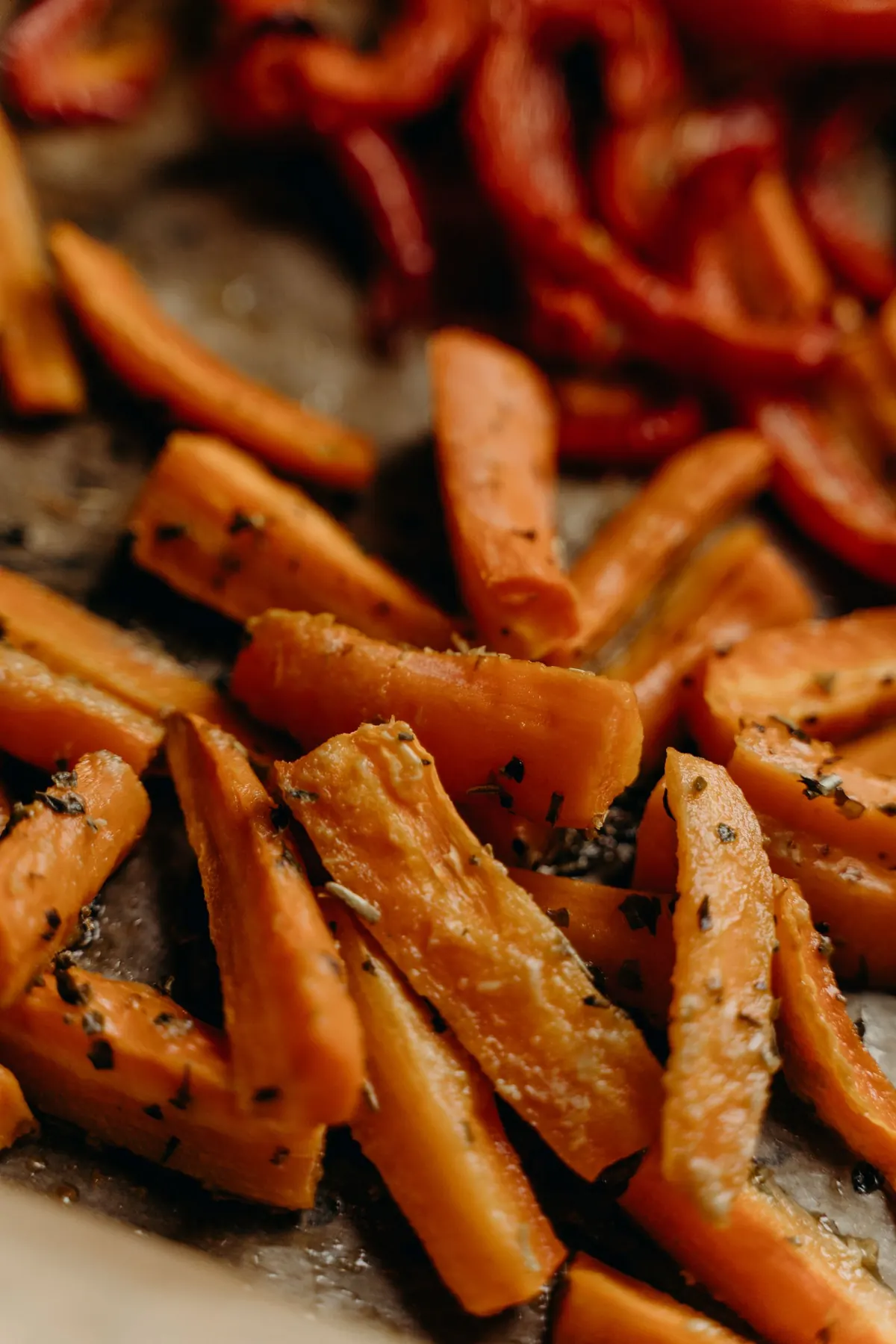
Choose a cut that suits the vegetable
A carrot baton and a broccoli floret do not soften at the same pace, even if they look similar in size. Dense roots generally need more time than tender florets. For a mixed tray, begin with the slower vegetable or use separate sheets.
Cut each type into reasonably similar pieces. A few irregular corners are fine, but a whole carrot beside thin coins creates an avoidable timing problem. Check the thickest piece with a knife when you think the tray is nearly done.
Oil lightly and leave room
Toss vegetables in a bowl with enough oil to give them a light sheen. Dry spice should cling to the pieces instead of sitting in dusty heaps on the sheet. Scrape the seasoned oil from the bowl onto the tray.
Spread the pieces with a little breathing room. If the tray is packed tightly, the vegetables may soften well but remain pale. For browned edges and a drier surface, spread the vegetables across two trays.
Look underneath before changing the oven
At 425 F, many cut vegetables develop color in twenty to thirty minutes, but the pan and vegetable matter. Lift a piece with a spatula and inspect the underside. A deeply colored bottom and pale top can simply mean the tray needs a turn.
If the food browns before it is tender, lower the oven temperature and continue. If it becomes tender with little color, spread it out and move the tray closer to the upper part of the oven for a short finish. Watch closely rather than leaving it for another full cooking interval.
Finish in a way that keeps the texture
Let roasted vegetables sit uncovered for a minute after they come out. A lid or tight foil traps steam and softens browned surfaces. Salt, lemon juice, herbs, and yogurt can be added near serving, depending on the dish.
For a larger dinner, roast two sheets and rotate both their positions and their orientation halfway through. Start checking each separately. One tray may finish before the other, especially if your oven has a hot corner. Move ready pieces to a platter and leave the rest to finish.
Keep in mind
A darker sheet can brown bottoms sooner than a pale metal sheet.
Line a tray when cleanup matters, but remember that parchment changes the direct contact with the metal.