Give the sauce a head start
Canned crushed tomatoes need time in the skillet before the pasta joins them. A short simmer takes off their raw edge and reduces excess liquid. Start the sauce before boiling the pasta water so neither part has to wait long for the other.
Choose a wide pan. It makes reduction easier and gives you room to stir the pasta and beans at the end. A deep saucepan works in a pinch, but expect the sauce to need a few more minutes before it becomes thick enough.
Cut the garlic rather than crushing it to paste
Thin slices of garlic leave a gentle flavor through the oil and remain visible in the sauce. Keep the heat moderate while they soften. The slices should turn pale gold at most; dark brown garlic can make the whole skillet taste harsh.
Red pepper flakes are optional. Add them to the warm oil for a brief moment before the tomatoes, then stand back as the wetter ingredients go in. If you dislike heat, leave them out and add a little black pepper near serving time.
Mash a few beans and leave the rest whole
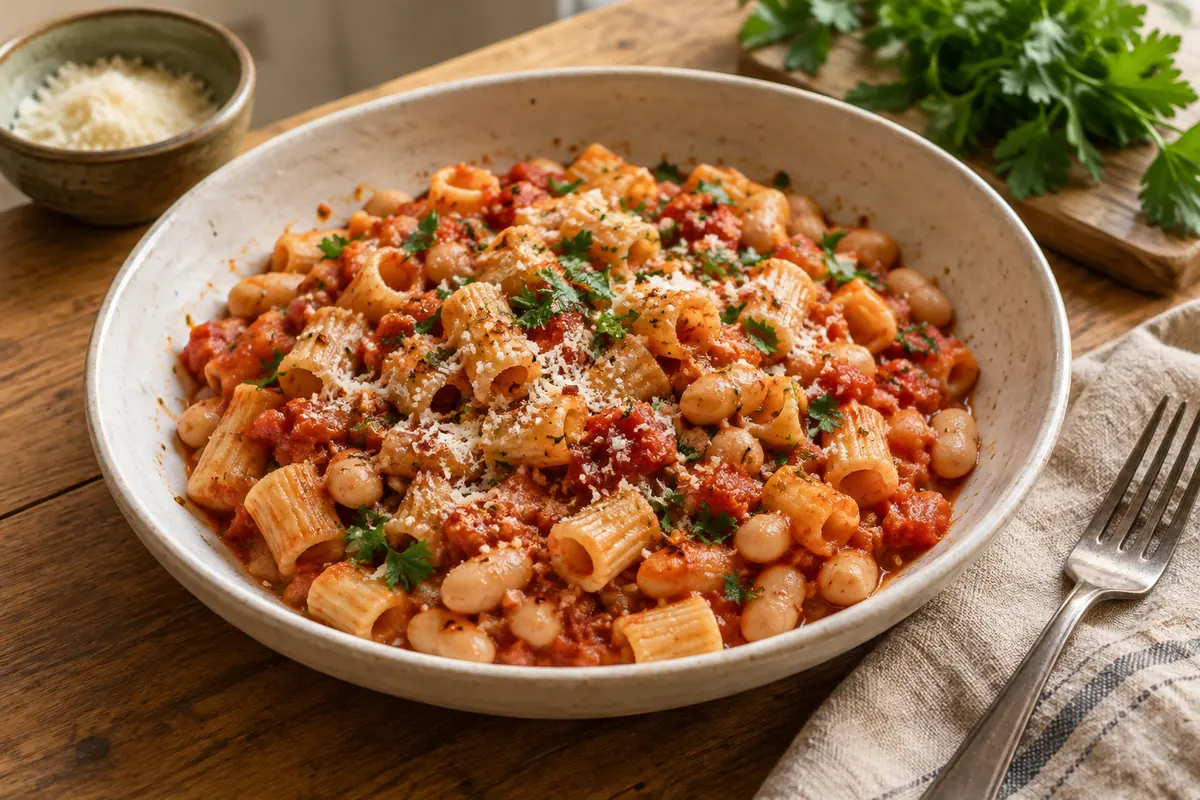
White beans make this pasta more substantial and give the sauce a soft, creamy texture. Crush a small portion against the side of the skillet. Leave most intact so the bowl still has distinct beans among the noodles.
Rinse canned beans first, particularly if their liquid tastes very salty. If using home-cooked beans, drain them but save a few spoonfuls of broth. That broth can loosen the sauce along with the pasta water and add a little more bean flavor.
Check the balance after adding the pasta
A sauce tasted alone can seem sharper than it does once it coats the pasta and beans. Taste a whole forkful before making final changes. Add salt if it seems flat, olive oil if it feels austere, or a little lemon juice if it needs brightness.
Shells, elbows, and small rigatoni are convenient shapes. Finish with parsley and optional grated cheese. Serve with a crisp salad, or offer smaller bowls beside another dish. Add a splash of water when reheating so the sauce loosens again.