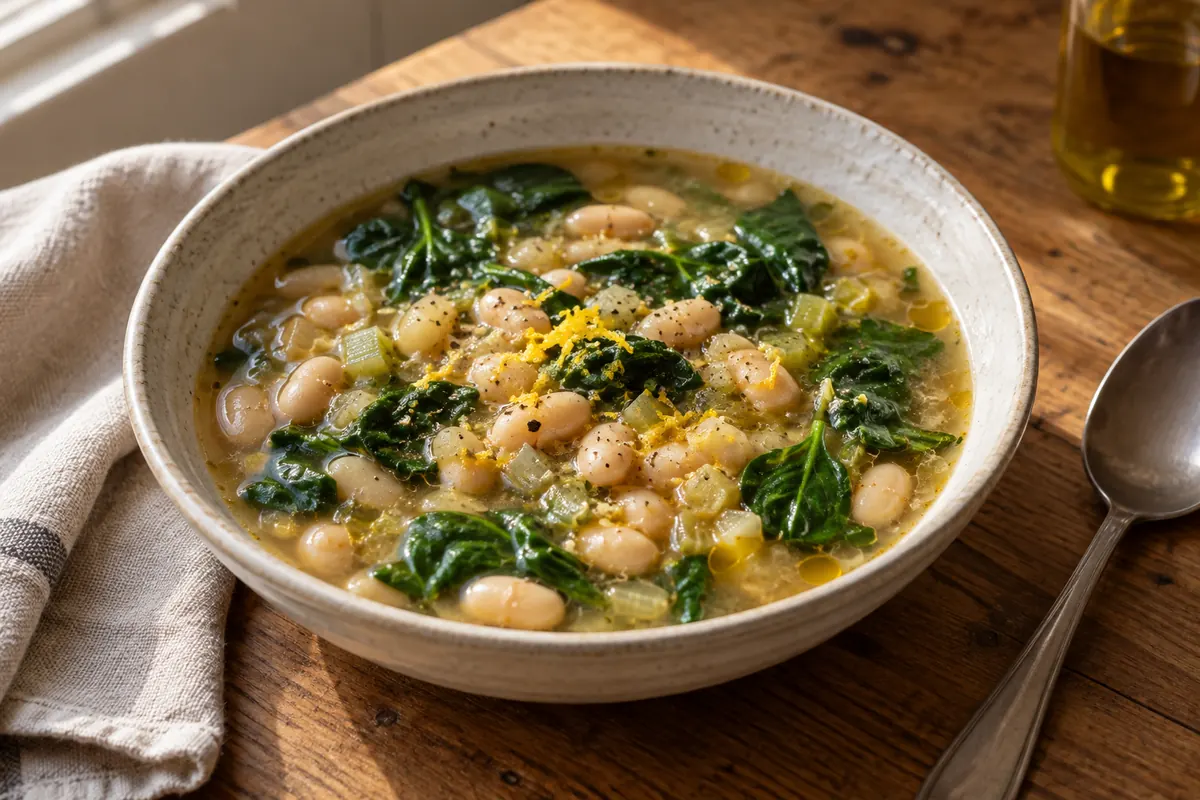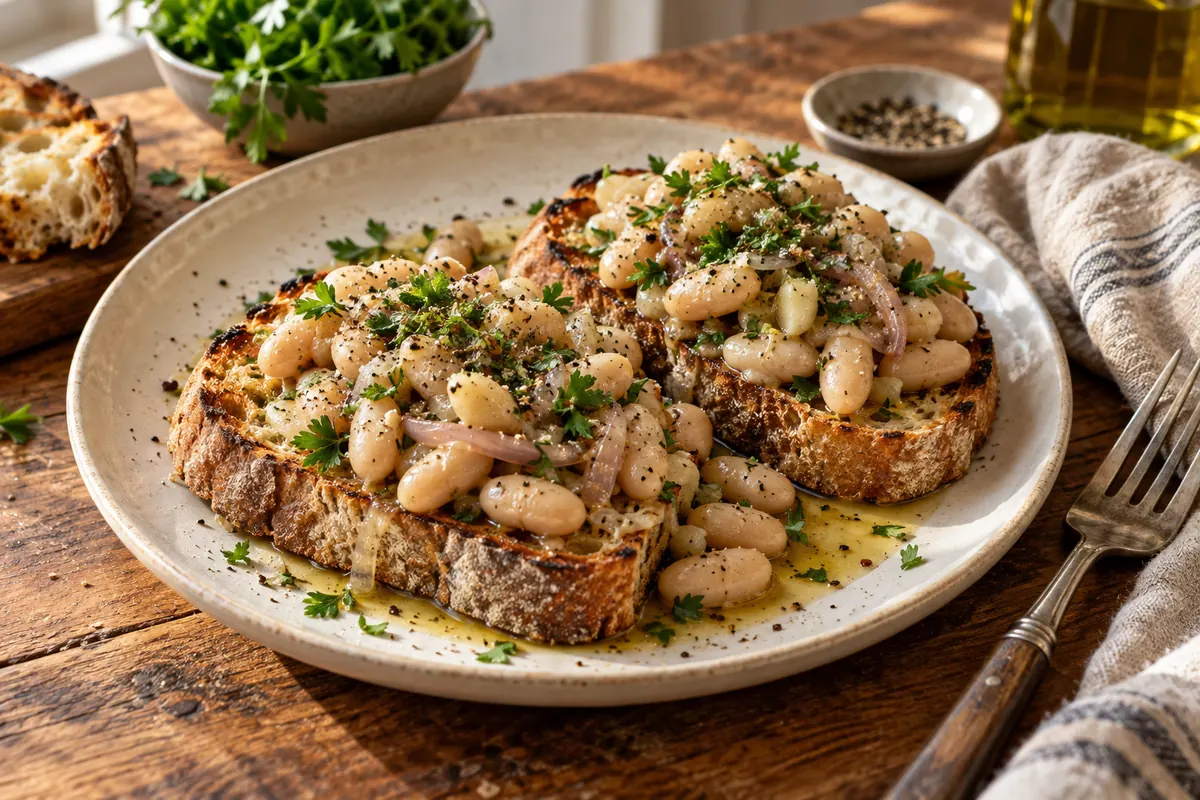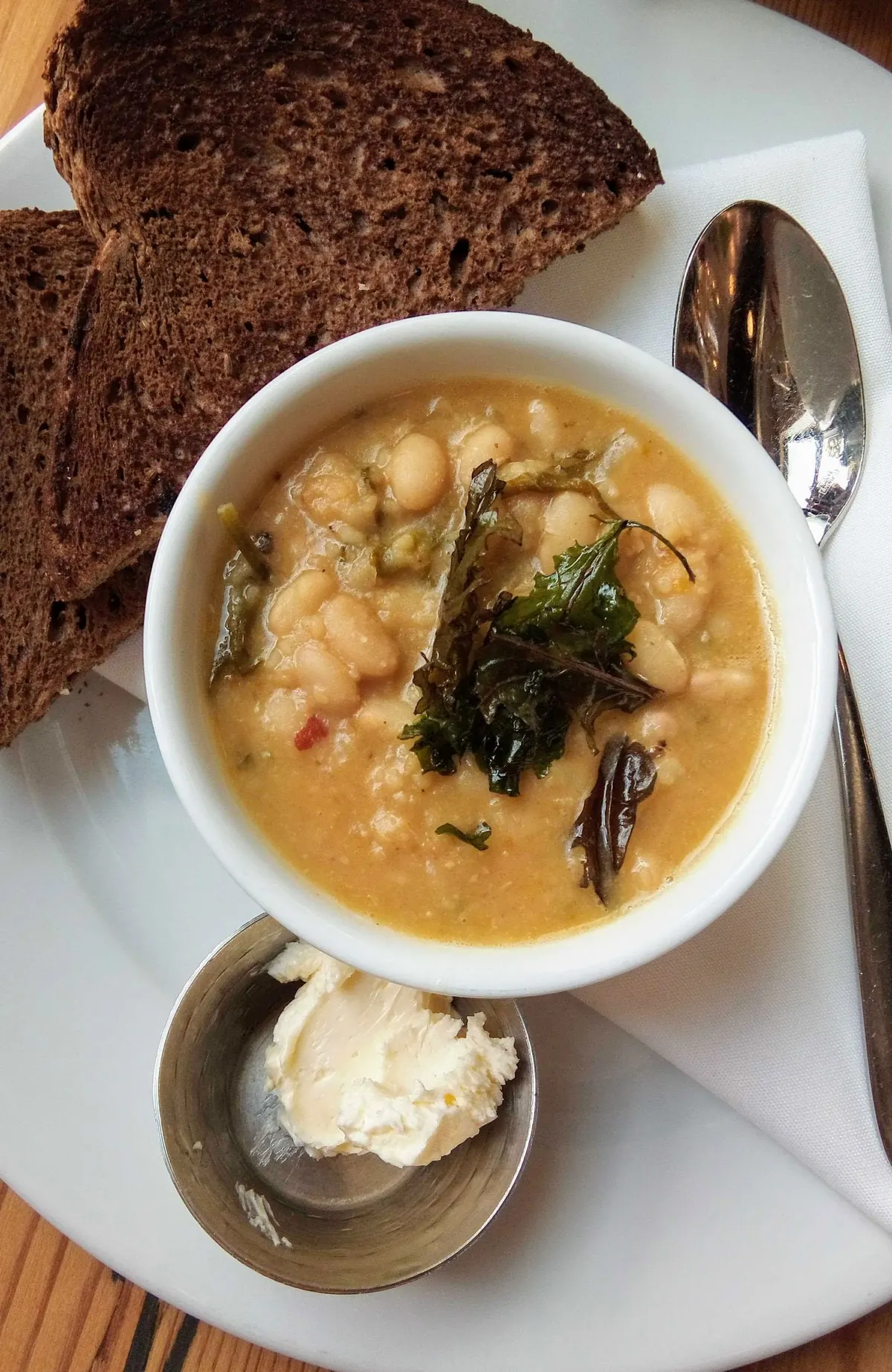
Begin with the shape you want on the spoon
Navy beans are small enough to tuck into a spoonful of soup. They can make a creamy base when some are mashed. These descriptions are a starting point, not a promise that every can will behave alike. Brand, age, and cooking all affect the texture.
Taste a canned bean before dressing the batch
Drain and rinse canned beans, then taste one. This tells you whether it is already salty and whether the center is pleasantly soft. A firm bean needs a gentler, longer warm-up than one that breaks when you lift it.
For toast or a thick sauce, mash a small portion with the broth and leave the rest whole. For a salad, keep handling light so the beans do not become paste. Add the dressing after they are drained well, since surface water weakens its flavor.
Dried beans make broth as well as dinner
Dried beans let you choose aromatics for the cooking water and save the broth afterward. They also ask for planning and careful cooking. Follow the package and the linked cooking guide, rather than trying to fit them into a canned-bean recipe's short timetable.
Cannellini are white kidney beans. Their dried form needs the kidney-bean safety steps, including a proper boil after soaking. Canned beans are already cooked; the same initial preparation is not required. Be clear about which form a recipe asks for before you begin.
Make substitutions by texture and quantity
A fifteen-ounce can includes packing liquid, so its printed weight is not the weight of drained beans. When replacing it with home-cooked beans, about one and a half cups is a practical starting point. Add broth separately to match the dish.
Great northern beans can stand in for cannellini in most of this site's recipes. Butter beans are larger and may break more easily, but can be good in a gentle broth. Chickpeas bring a firmer, nuttier bite and change the dish more noticeably. Choose that change deliberately rather than expecting identical results.
Keep in mind
Taste canned beans for salt before adding salty stock or cheese.
Read the dried-bean safety guide before cooking raw cannellini or other kidney beans.