Plan for the last two minutes
Pasta and sauce should meet while both are hot. Begin the sauce early enough that it is ready when the pasta approaches tenderness. A sauce waiting in the skillet is easier to manage than drained pasta waiting in a colander.
Cook the pasta a little short of the package's al dente time, then taste a piece. Its center should still offer some resistance. The final minute or two in sauce gives you a chance to finish cooking it and adjust the texture of the whole bowl together.
Save the water before draining
Scoop out a cup of pasta water before tipping the pot into the colander. It is much easier to remember this step if you put a heatproof cup beside the stove when cooking begins. The starch helps the sauce cling as you toss the pasta. The water also carries salt, so taste the sauce before adding more.
Its concentration varies with the pasta shape, pot size, and water amount. Treat it as an ingredient you add gradually, not a guaranteed formula. Begin with a quarter cup for a skillet holding enough pasta for four people.
Watch the bottom of the skillet
Add drained pasta to the sauce and turn it over moderate heat. If the pan looks dry and the noodles stick together, add water by the tablespoon. If a large pool remains, keep tossing gently while it reduces. Taste a noodle as you go.
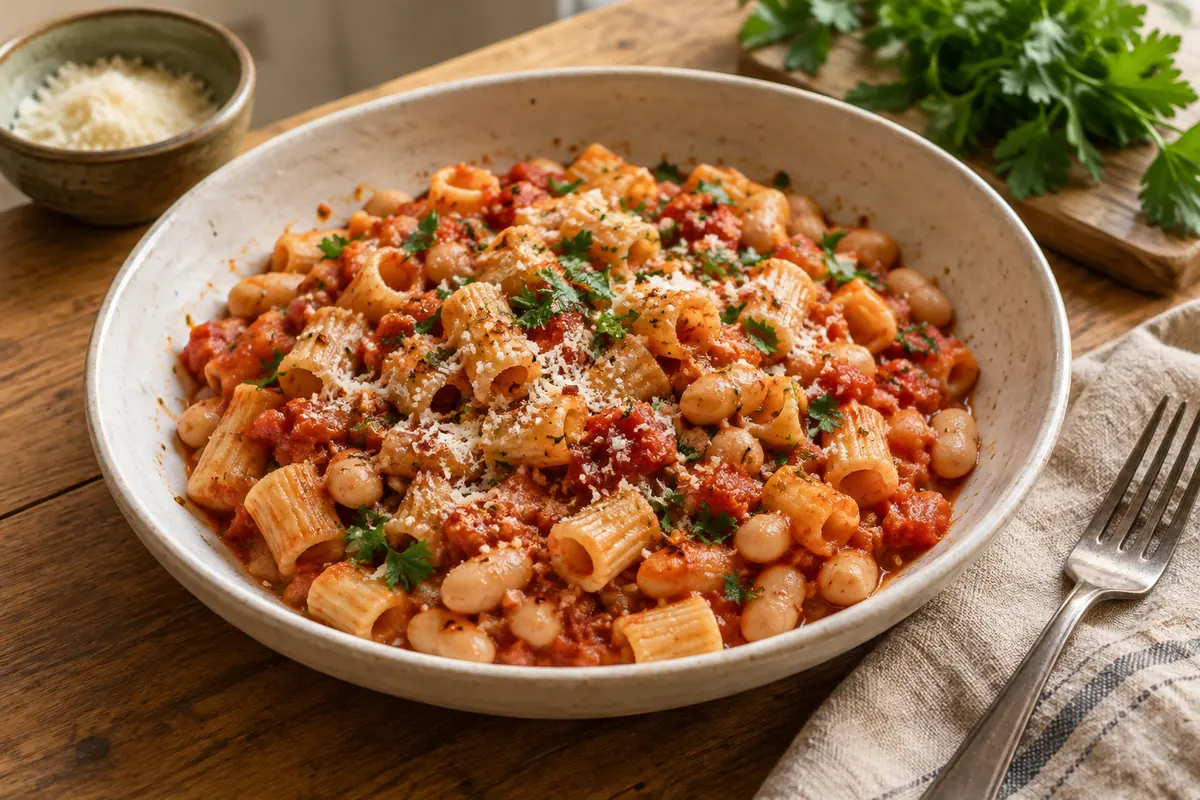
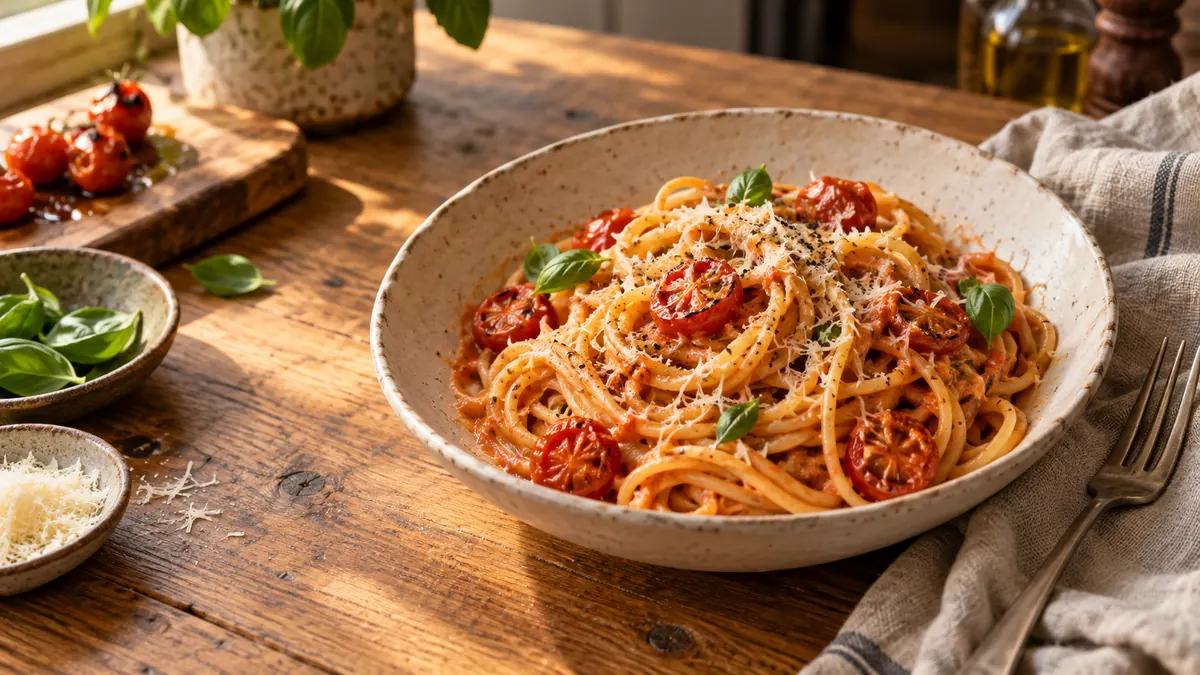
Look for a coating that follows the pasta onto the fork. Tomato sauces may still have small pieces and a little juice; butter and cheese sauces can look smoother. Neither needs to become a thick paste before leaving the pan.
Add cheese with some restraint
Grated hard cheese can tighten a sauce quickly. Lower the heat before adding it and keep the pasta moving. Add a small handful, check the texture, then decide if it needs more. A splash of reserved water can loosen the sauce after the cheese goes in.
Taste the finished pasta before adding salt. Pasta water, cheese, and canned ingredients can all contribute plenty. Serve immediately, with the remaining water still nearby in case the sauce tightens while you plate. A warm serving bowl buys a little time, but does not replace a prompt dinner.
Keep in mind
A mug of plain hot water can loosen pasta if you forgot to save its cooking water.
Check seasoning after the sauce and pasta meet, especially when using cheese or olives.