Let the tomatoes do some work
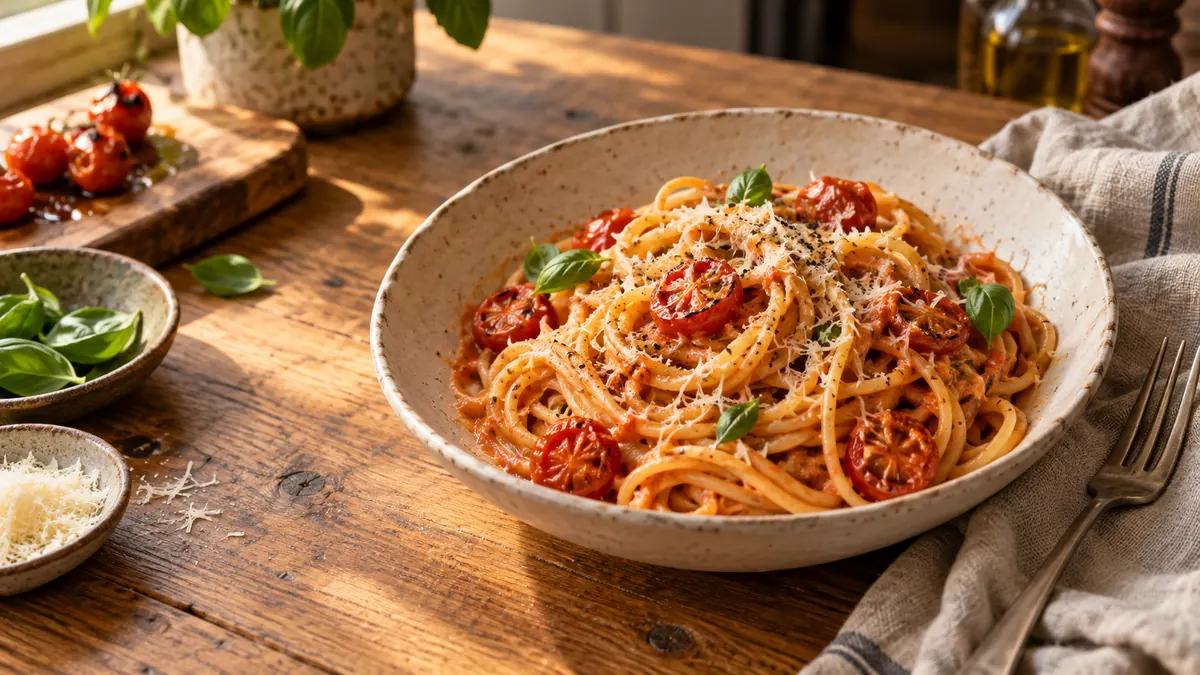
Cherry tomatoes cook down to sauce even when they are a little soft around the edges. Their skins wrinkle in the pan, their juices collect underneath, and suddenly there is something for the pasta to hold. Cut the larger tomatoes in half so the batch softens at roughly the same pace.
This sauce should taste of tomatoes first. The butter rounds off their sharpness, while lemon zest gives the finished bowl a fresh smell without adding much liquid. Hold the lemon juice until the end. Some tomatoes need the whole tablespoon; others are already bright enough.
A sauce with room to move
Use a wide skillet if you have one. The tomatoes need enough space to sit against the hot surface, and you will need room to turn the cooked pasta through the sauce. A cramped saucepan makes both jobs slower and encourages the tomatoes to stew before they have any color.
The garlic goes in after the tomatoes begin to collapse. Thin slices soften quickly, and they are easier to burn than the tomatoes. If the skillet looks dry, add a spoonful of pasta water instead of another splash of oil. You want a loose, glossy sauce, not a pool of fat.
Finish the pasta in the skillet
Pull the pasta from its pot while the center still offers a little resistance. It will finish cooking in the tomato juices. Reserve water before draining, even if the sauce seems wet enough. A few tablespoons can loosen a tight sauce or help grated cheese disappear into it.
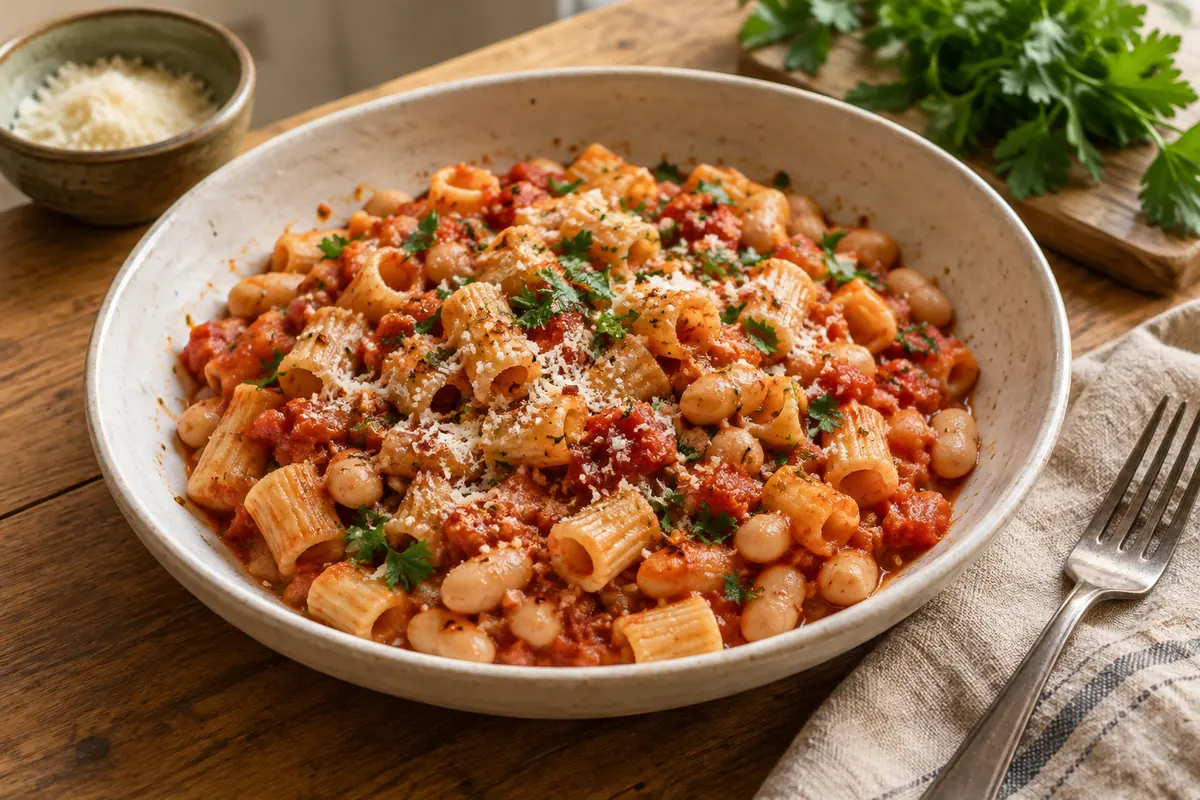
Add the butter with the heat low and keep turning. The sauce should cling to the ridges or curves of the pasta. If liquid sits at the bottom, give it another minute of gentle tossing. If the pasta drags against the pan, add water a tablespoon at a time.
A bowl worth eating right away
Tear the basil just before serving so it stays fragrant. Parmesan is optional; add a small amount, taste, then decide whether the bowl needs more salt. Both salted pasta water and cheese change the final seasoning, so the beginning of the recipe is a poor moment to settle it.
Short shapes such as rigatoni, shells, or fusilli are easy to turn in the skillet. Linguine, tagliatelle, and spaghetti also work, but use tongs and a larger pan. Serve this pasta as soon as the sauce coats it. If dinner is delayed, keep extra reserved water nearby for a final loosening.