Choose plums that can hold a wedge
Ripe plums should yield slightly when pressed gently but still be firm enough to cut cleanly. Very hard fruit can stay sharp and resistant after baking; fruit that is already collapsing may make a looser filling. Cut each plum into wedges around the stone, leaving the skin attached for color and a little structure.
Weigh the prepared fruit after removing the stones. That keeps the amount of filling consistent even when plum sizes differ. The modest sugar in the fruit leaves room for its natural tartness. Taste a piece of clean raw plum before mixing to understand its sweetness, but do not taste the flour-containing topping before it is baked.
Make a rough topping with cold butter
Rolled oats give the topping a visible texture, while flour fills the gaps and helps form crumbs. Quick oats break down more readily, and steel-cut oats need a different method, so this recipe specifies ordinary rolled oats. Rub cold diced butter into the dry ingredients until there are both small crumbs and a few larger clusters.
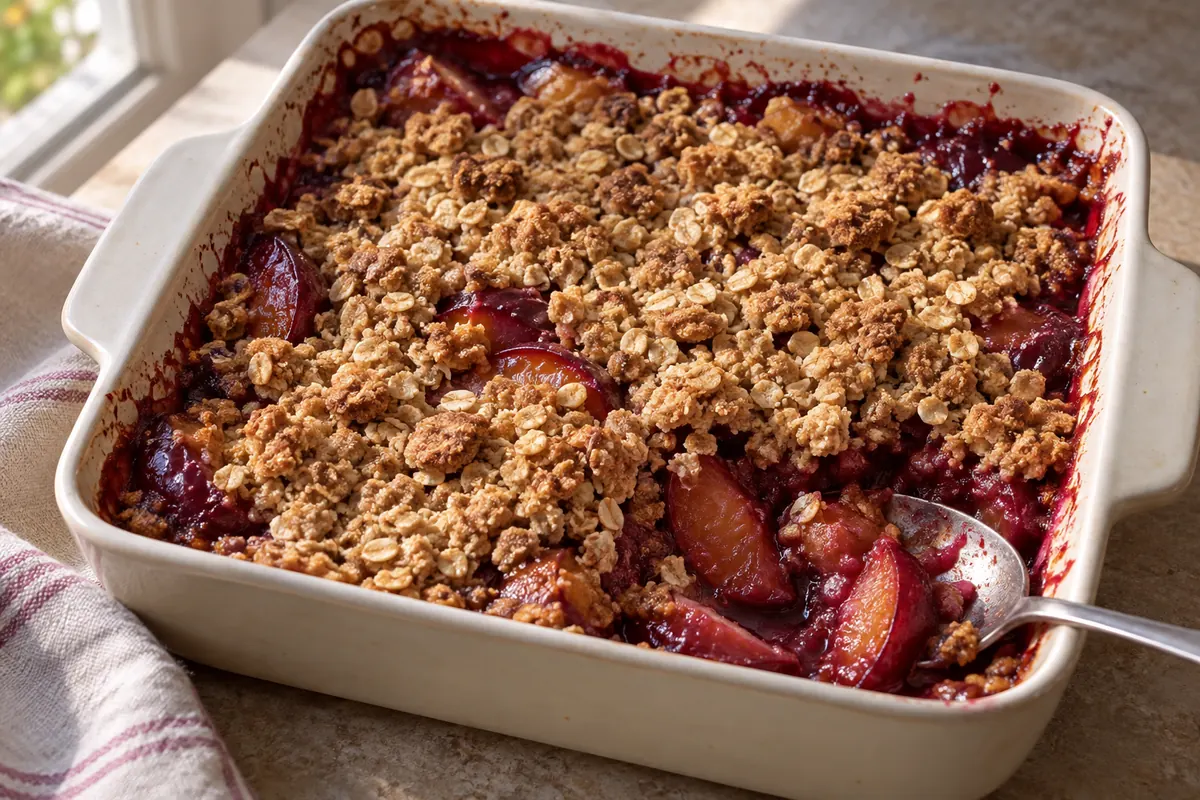
Spread the crumbs loosely rather than pressing them into a solid lid. Little openings let steam escape and show the filling underneath. A square dish gives a useful balance of topping and fruit depth; a much smaller, deeper vessel could leave the center slow to heat while the top becomes dark.
Watch the fruit as well as the top
Golden oats alone do not mean the filling has cooked enough. Look for thick juices bubbling through the openings near the center and softened plum wedges at the edges. A baking sheet beneath the dish catches possible drips without asking you to reach into the oven to clean them.
Rest the crumble for twenty minutes before serving so the hot fruit is easier to portion and its juices have time to settle. It remains a spoon dessert rather than a sliceable bar. Serve six modest portions directly from the dish, making sure each gets both fruit and topping. Cream or ice cream would be separate serving additions.