Begin with ingredients that are ready to eat
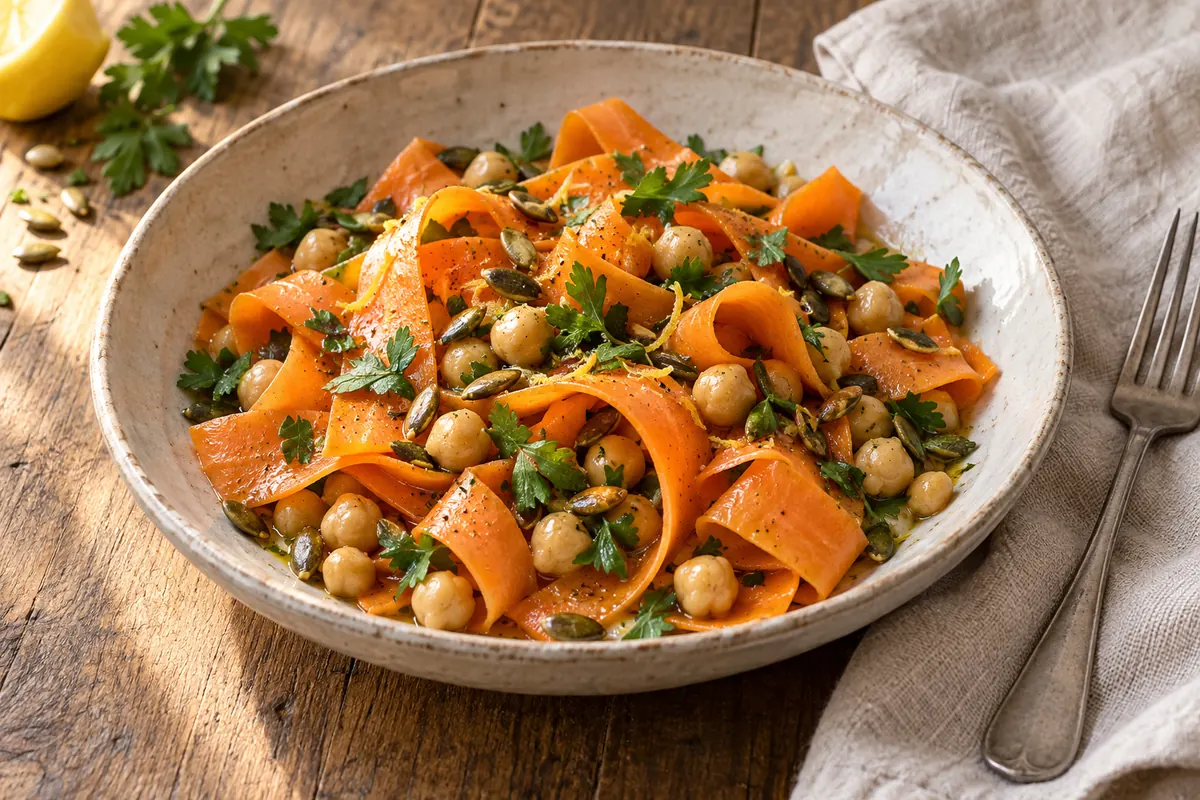
Choose a substantial component first, then something crisp, something flavorful, and a dressing that reaches them. The carrot and chickpea salad pictured here uses canned beans and raw carrot ribbons. It is an example of assembling ready-to-eat ingredients, rather than proof that every bean or grain can be eaten uncooked.
Clean produce before cutting through it
FDA advises washing hands before and after handling produce, rinsing produce under plain running water, and avoiding soap or produce wash. Rinse before peeling so the knife does not carry surface contamination into the cut food. Use a clean brush when appropriate for firm produce.
Dry with a clean towel or paper towel, remove damaged areas as directed, and use a clean board and knife. Keep raw meat, poultry, and seafood away from this preparation. Produce labeled pre-washed or ready-to-eat does not need another washing step, according to FoodSafety.gov.
Dryness is part of the flavor plan
Water left on leaves and sliced vegetables changes the dressing. It dilutes salt and acidity and can leave liquid pooling in the bowl. A salad spinner is useful for suitable greens, while a clean towel or a little draining time may suit firmer ingredients.
Drain canned beans thoroughly and blot them if they are very wet. Shake a jar of dressing before using it, then add enough to coat rather than drown the food. Taste a bite containing the main ingredients together; tasting only the liquid at the bottom gives a different answer.
Cut and season for the texture you want
A carrot ribbon and a thick carrot coin make different salads. Choose a cut that is comfortable to eat raw and repeat it reasonably evenly. If the bowl includes several firm vegetables, do not expect a dressing to solve pieces that are too large or difficult to chew.
Some vegetables soften pleasantly after time with salt or acid, while delicate leaves lose their crispness. Follow the recipe's order and timing rather than assuming every salad improves after an hour dressed. Keep crisp toppings aside when you want them to stay distinct.
Keep the cold food cold
Perishable produce belongs in refrigeration at or below 40 F (4 C), following FDA guidance. Assemble as close to serving as the recipe allows and keep spare portions chilled. A meal without a stove still needs a storage plan.
Lemon juice and vinegar season a salad; they are not a validated way to make contaminated ingredients safe. This guide does not cover raw animal foods, fermenting vegetables, or shelf-stable preservation. Follow the linked handling guidance for the washed produce, ready-to-eat products, and safely prepared cooked components you choose.
Keep in mind
Read labels to distinguish raw, ready-to-eat, and products that require cooking.
Use clean equipment and separate ready-to-eat preparation from raw animal ingredients.
Use clean utensils and follow the linked safety guidance when handling produce.