Look at the sauce before the cupboard
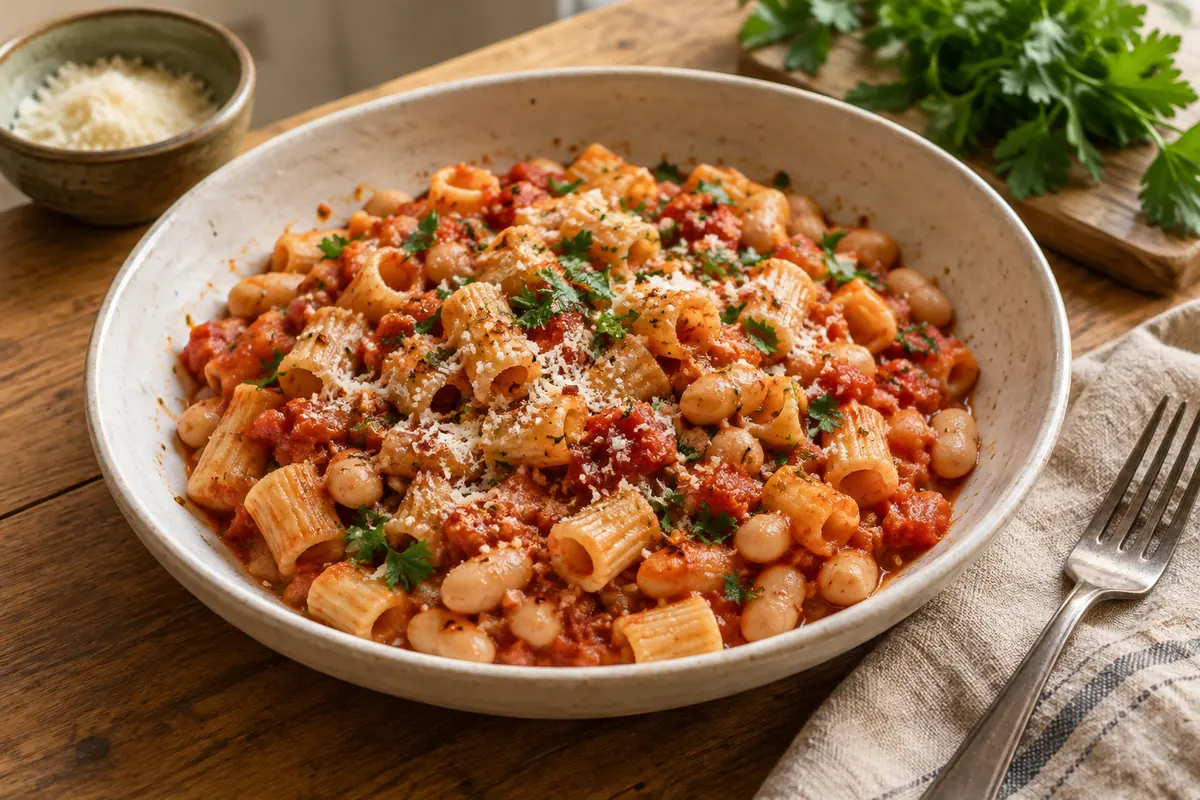
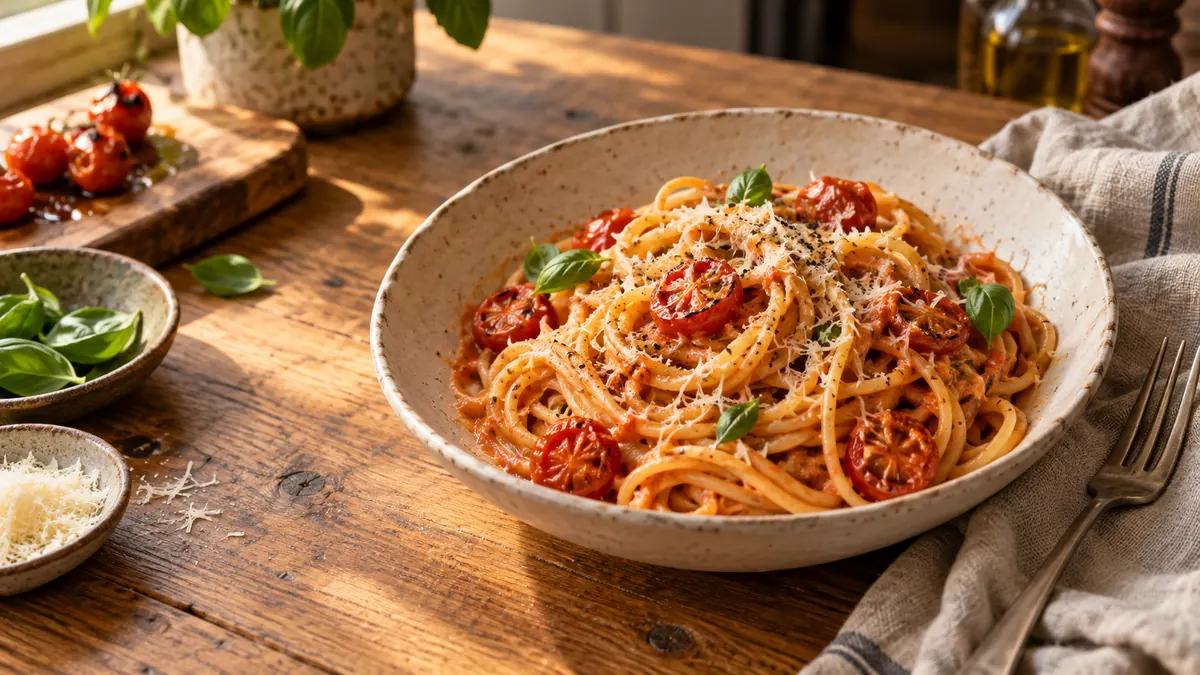
A smooth tomato sauce can coat a long noodle without much help. Tubes and shells give beans and chopped vegetables a place to settle, so the sauce travels with each forkful. A short twist can catch small pieces too.
These are practical pairings, rather than a rule that every Italian kitchen follows. Regional dishes have their own shapes and habits. If you are cooking a named regional recipe, begin with its recommended pasta. For an improvised supper, pay attention to what your fork will actually lift.
Keep the size of the pieces in mind
A whole cherry tomato beside a tiny soup shape is a rather different bite from a tomato cut into quarters. Try to make the sauce pieces compatible with the pasta. Large ridged tubes can take a chunky sauce; small shells are easier to spoon with beans or peas.
Long strands are satisfying with a coating of oil, butter, or a sauce with finely chopped ingredients. Very delicate noodles can become overwhelmed by big pieces. Wide ribbons offer more surface for a rich sauce, but the sauce still needs enough moisture to move between them.
Finish the shape you chose
Taste the thickest part of a short shape, including the center fold of a bow tie. A thin edge can feel done while the middle remains firm. Package timings are a starting point, and the last minute in sauce counts toward the cooking time.
Reserve cooking water before draining. Turn the pasta in the hot sauce and add that water in small splashes until the coating follows the pasta. A hollow shape should not sit in a puddle while its outer surface looks dry. Stir from the bottom and check again.
Make the next box easier to use
Keep one long shape, one short shape, and one small shape if cupboard space permits. That is enough variety for many weeknight sauces and soups. Buying five nearly identical tubes adds less flexibility than adding a spoonable shape to the shelf.
Write a note on a recipe after a substitution: which shape you used, whether the sauce needed more liquid, and how the portions felt. That small record is more useful at the next dinner than remembering that the pasta was generally good.
Keep in mind
Small pasta continues absorbing broth in the serving bowl. Keep additional hot broth nearby for soup.
Fresh filled pasta has a different cooking schedule from dried pasta. Follow its recipe or package rather than borrowing the timing from a dried shape.