Choose bread that can hold lunch
Rub the hot toast with the cut face of a garlic clove. One or two passes are enough to leave a noticeable flavor. Raw garlic becomes strong quickly, so stop before the surface looks scraped or wet. The rest of the clove can go into another meal.
Build a small amount of good bean broth
Drain and rinse the beans, then warm them with shallot and a little stock. The liquid should barely reach the top of the beans, not turn the skillet into soup. Crush a spoonful against the side of the pan to give the broth a little body.
The shallot needs a head start. Canned beans need only warming. Give the raw shallot time to turn soft and translucent before adding them. Cook it over moderate heat and stir often. Pale, soft shallot makes a cleaner sauce than dark, brittle pieces.
Season a bland can carefully
Beans vary in saltiness. Begin with a small pinch and taste once the stock has reduced. Add lemon juice at the end so its brightness stays clear. A little black pepper is enough; this lunch does not need a crowded spice cupboard.
Cannellini beans tend to mash easily and make a creamy pan sauce. Great northern beans are a good alternative. If your beans are firm, let them simmer an extra minute with another splash of stock, but do not expect canned beans to become much softer in a very short simmer.
Keep the toast and topping in step
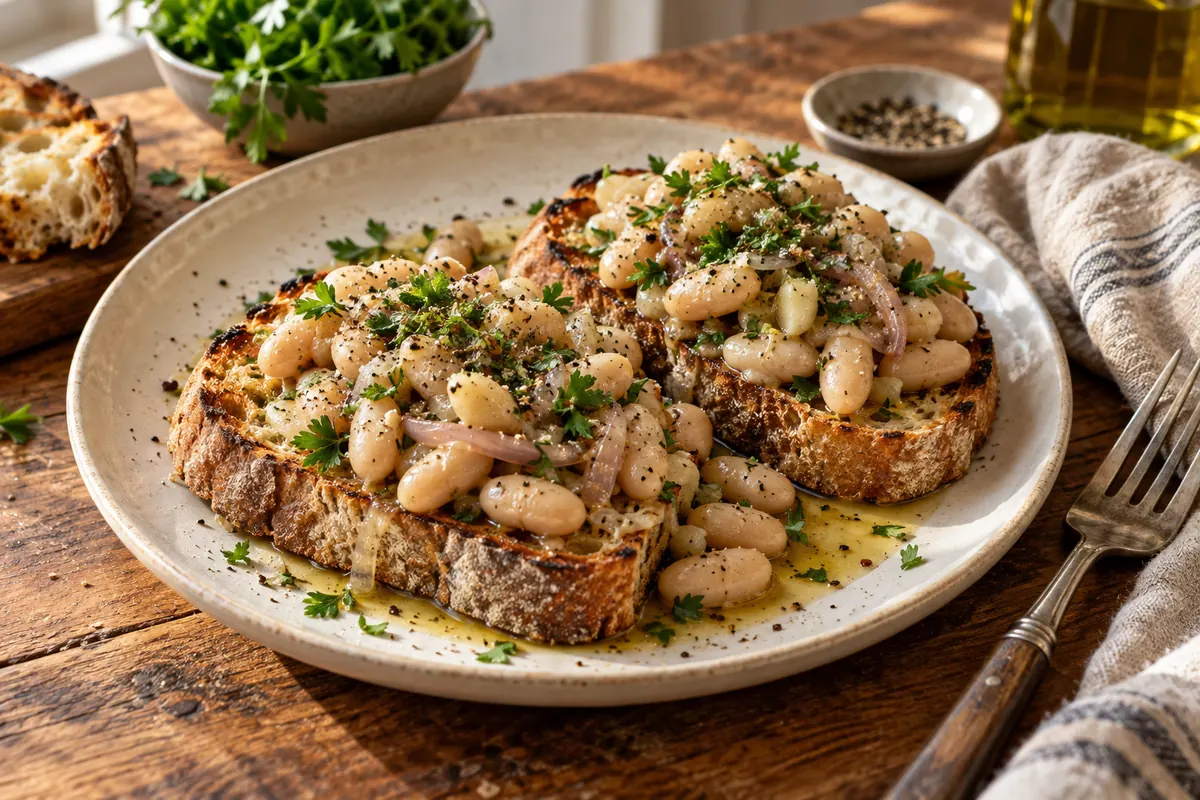
Finish the beans first, then toast the bread while they sit off the heat. This avoids leaving hot toast under a damp towel or in a closed oven, where it can lose its crunch. Rewarm the beans gently if necessary and spoon them over just before eating.
Add parsley for freshness, grated cheese for salt, or a few chopped olives for a more pointed finish. A fried egg can turn one slice into a larger meal. If you plan to save some, refrigerate the bean topping separately and make fresh toast when you are ready to eat.