Let the potatoes go first
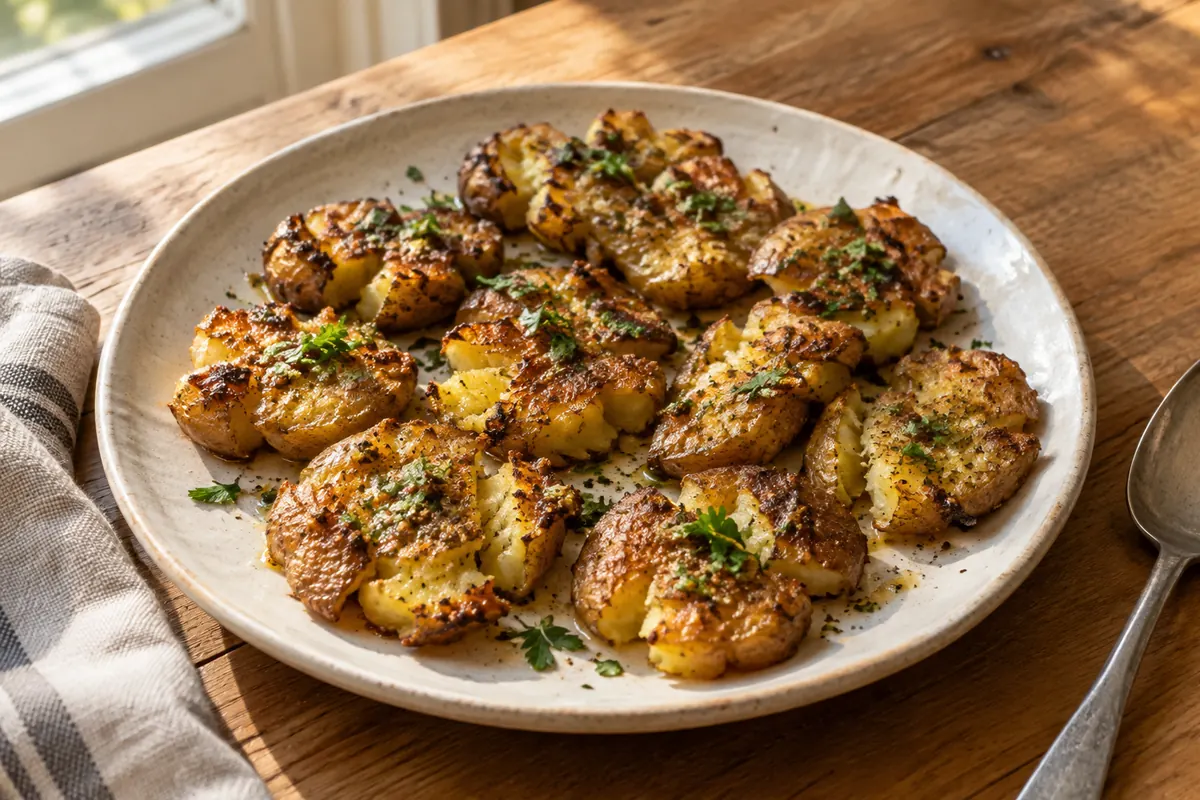
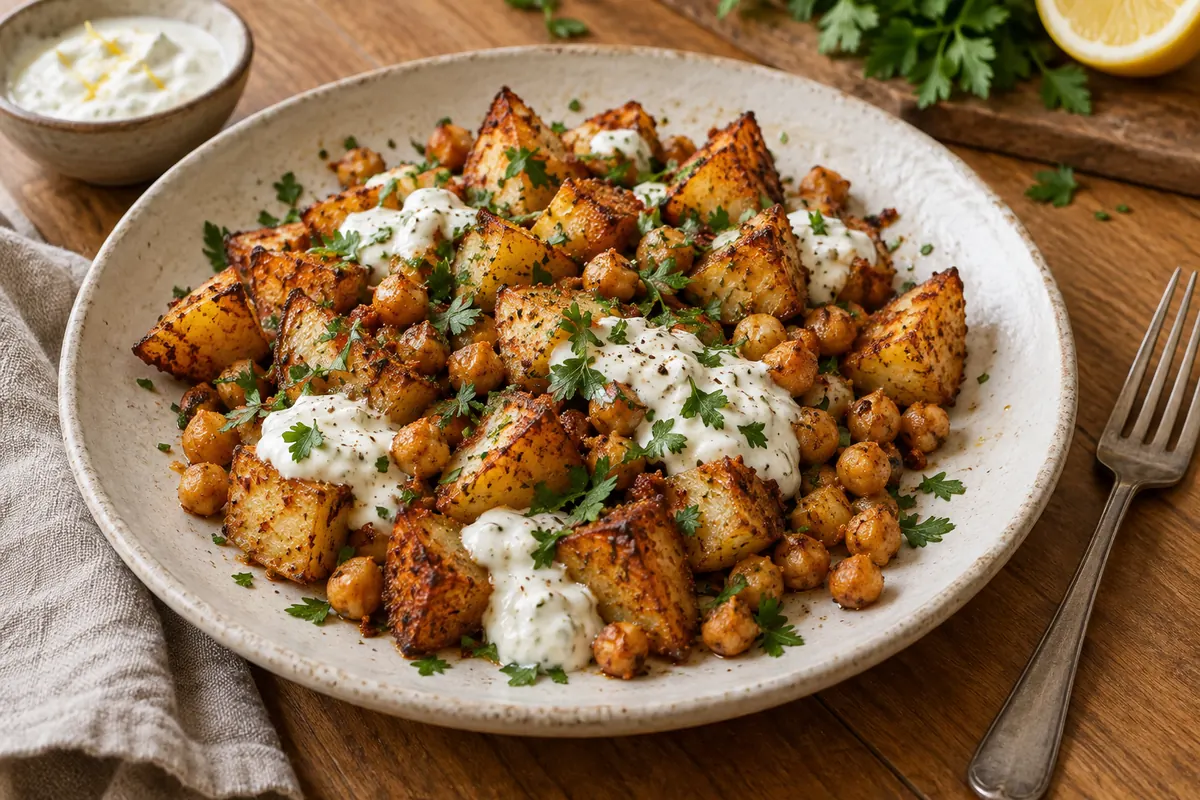
Cut the potatoes into three-quarter-inch pieces. Smaller cubes can dry out; larger ones may need more time. The exact shape is less important than making the pieces reasonably similar. Leave the skins on if they are clean and thin.
Choose your paprika before seasoning
Smoked paprika adds a pronounced woodsy flavor. Sweet paprika makes a milder tray, and a mixture of the two sits between them. Hot paprika can be much fiercer than expected, so replace only part of the measured amount if using it.
Mix the paprika into the oil before tossing so it coats the potatoes evenly. Dry patches of spice on the tray can scorch. If your oven runs hot or the pan is very dark, look in a few minutes early and reduce the heat if the edges darken too quickly.
Drain the chickpeas, then make the cold sauce
Rinsed chickpeas should be well drained before joining the potatoes. Shake them in the sieve and blot away obvious moisture. Wet chickpeas can leave the tray steamy just when the potatoes are beginning to crisp.
The yogurt sauce is deliberately simple: yogurt, grated garlic, lemon, and salt. Raw garlic grows more noticeable as the sauce sits, so begin with a small clove. If you prefer a gentler sauce, use half and taste again near serving time.
Use a spoonful of sauce to connect the plate
Pile the hot potatoes and chickpeas beside or over the yogurt rather than stirring everything together. A few dry edges keep their texture that way. Add parsley generously. Chopped dill also works if that is what is left in the refrigerator.
Serve with a cucumber salad or steamed green vegetable. To make the meal larger, add warm flatbread. Save leftovers in separate containers so you can reheat the potatoes and chickpeas in the oven, then add cold yogurt after they are hot.