Get color on the chicken before adding vegetables
Boneless thighs keep the timing manageable. Spread each piece flat and pat it dry before seasoning. A crowded pan can steam the surfaces, so use a large skillet or brown the chicken in two batches. The first batch can wait on a plate while the second cooks.
Choose olives for flavor rather than quantity
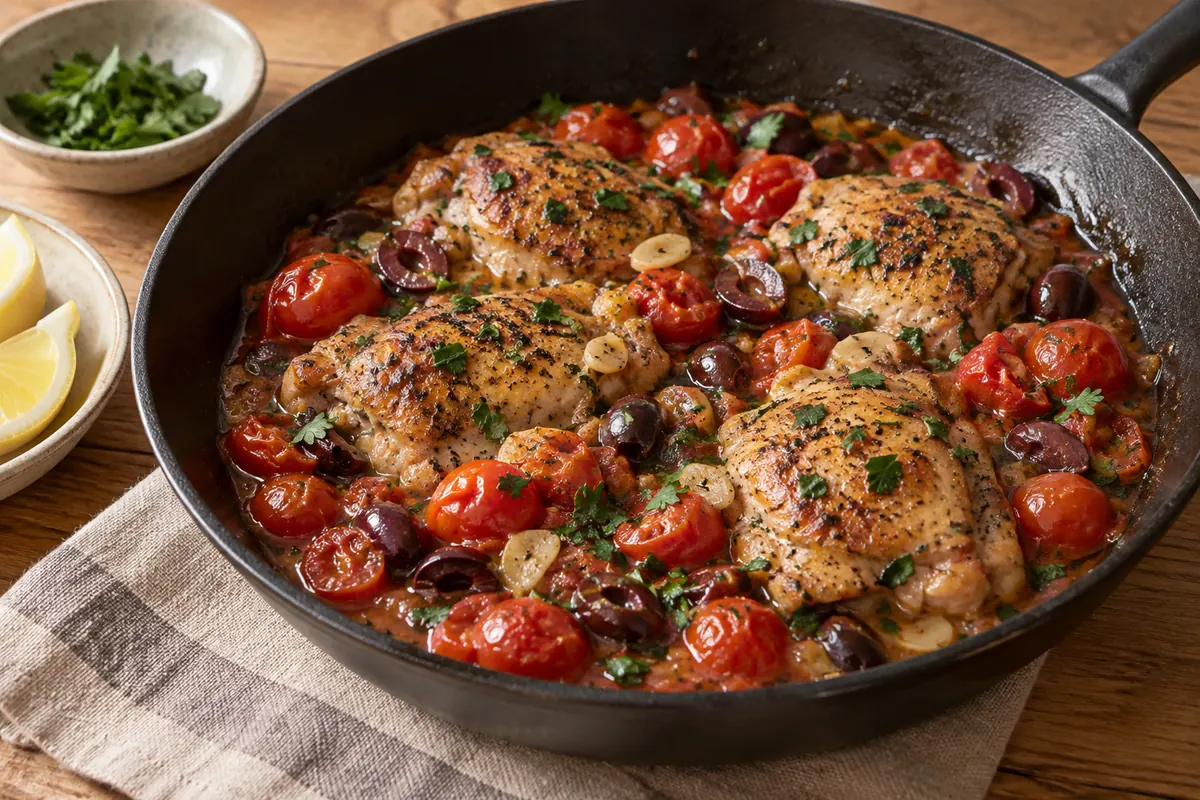
A small amount of olives changes the whole sauce. Pitted green olives give a firm, salty bite; Kalamata olives bring a softer texture and deeper flavor. Chop or halve them so each spoonful has a manageable piece.
Taste the olives before adding salt to the tomatoes. Some brines are very salty. The recipe begins conservatively, leaving the final adjustment until the sauce is finished. Capers can replace the olives, but use fewer and rinse them if they are especially briny.
Let some tomatoes burst and some hold their shape
Halve the larger cherry tomatoes and leave the smallest ones whole. As they cook, press a few with a spoon to release their juices. A mixture of sauce and intact tomatoes makes the final plate more interesting than a completely smooth purée.
Stock loosens the browned patches left by the chicken. Use a wooden spoon to scrape gently, then return the thighs and their collected juices. Keep the simmer calm so the tomatoes do not disappear before the chicken finishes cooking.
Finish with a thermometer and a fresh garnish
Check the thickest pieces from the side with an instant-read thermometer . Each should reach 165 F before serving. A timer can tell you when to check, but thigh sizes and starting temperatures change the cooking time.
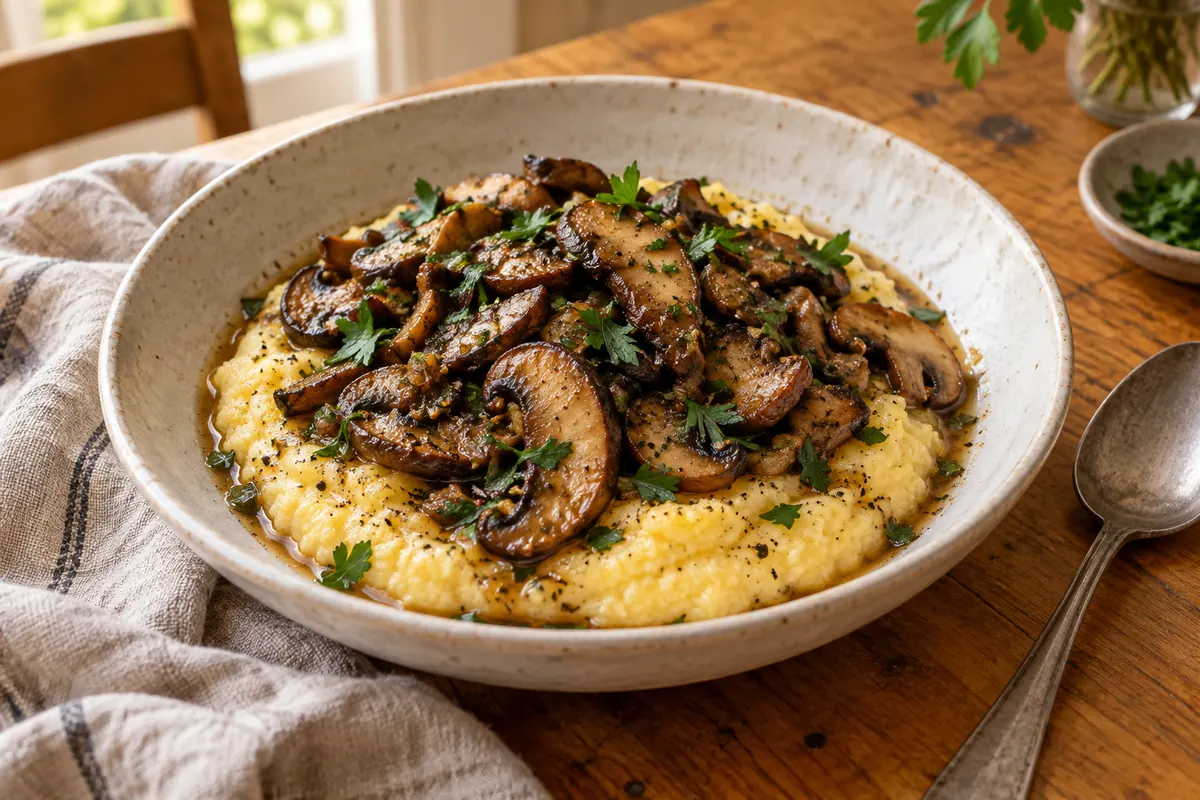
Add lemon juice after turning off the heat and scatter parsley over the pan. Serve with rice, soft polenta, or bread for the sauce. A dish with plenty of liquid reheats more comfortably than dry chicken, but keep the heat gentle and check that leftovers are hot throughout.