A dedicated bread oven should earn regular use
Start with your actual bread method rather than the appeal of specialized equipment. If you bake occasionally or an existing suitable covered vessel already works comfortably, another substantial piece needs a specific purpose. The LCBC becomes a more useful purchase when the shape, handling and routine resolve a real limitation in the way you currently bake.
Check the full dimensions, including the dome
Lodge lists the complete vessel at 13.18 inches long, 10 inches wide and 7.25 inches tall. Compare those outside dimensions with the usable rack and appliance guidance, allowing practical room for handling. The nominal bread size is not a complete description of the object that must enter, sit inside and leave the oven.
Height deserves particular attention when other racks remain in place. Plan where the cover will go when it is removed and how protected hands can reach the handles and knob. A bread oven that fits while empty and cold may still be awkward during the actual bake if access and landing space were never considered.
The published weight is a central buying filter
The manufacturer lists 14.95 pounds before bread is added. That substantial mass should influence the purchase before color, styling or brand familiarity. Think about the route from storage to preparation, into the oven, onto a stable landing area and finally to the sink or cleaning space.
The lid and base are separate parts to manage, each requiring appropriate protection and a controlled place to rest during use. Choose a routine that follows the product instructions and remains comfortable for you. If moving the cookware feels difficult, another suitable bread setup may be a more practical way to bake regularly than forcing yourself around a weight problem.
The product in this review
The details that matter
Compare the exact model, dimensions, and care instructions before ordering. These notes draw on published specifications.
Regular covered round loaves
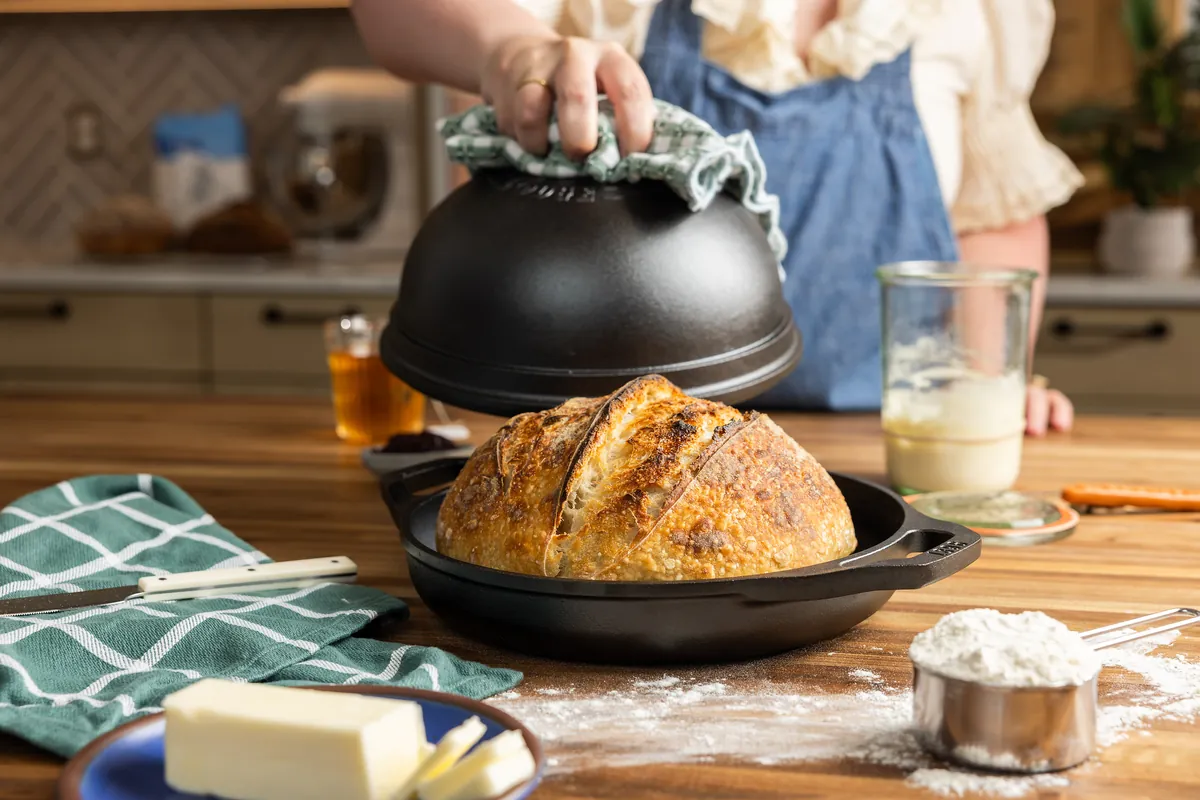
Lodge Chef Collection Seasoned Cast Iron Bread Oven, 9.5-inch
The LCBC is a useful dedicated bread oven for regular suitable round loaves when its domed format and substantial weight fit your routine. Check full oven clearance, plan lid handling and accept seasoned-iron care. The 600 F ceiling includes a note that knob discoloration is possible above 500 F.
Read specificationsSize, care, and tradeoffs
- material
- Seasoned cast iron
- size
- 9.5 inches
- contents
- Bread-oven base and domed lid
- dimensions
- 13.18 inches long by 10 inches wide by 7.25 inches high
- weight
- 14.95 pounds, per current maker page
- oven
- 600F maximum; knob may discolor above 500F
- care
- Hand wash, dry and oil
- origin
- Cast in the USA
Consider: Nearly 15 pounds according to the maker; lifting and storage need planning
Published manufacturer specifications checked 2026-10-15. Read the full specifications and care instructions for the exact model before choosing.
Useful alongside these products
A separate digital scale helps measure dough ingredients for the bread you plan to bake in this oven.
Weighing ingredients in bowls that cover a fixed display
OXO Good Grips 11-pound Food Scale
Check on AmazonSize, care, and tradeoffs
- capacity
- 11 pounds
- resolution
- 1 gram or 0.1 ounce
- display
- Pull-out display
- platform
- Removable stainless steel platform
- functions
- Tare and unit conversion
Consider: Does not resolve fractions of a gram
Manufacturer specifications ↗Product identity checked 2026-10-14. Check the Amazon listing for the exact model, seller, and current availability.
The domed cover belongs to a complete bread method
Lodge describes the dome as a way to capture steam during bread baking. That is the design purpose, rather than a guarantee of one particular crumb, crust or rise for every dough. Recipe, shaping, fermentation and the rest of the method still matter to the loaf that comes out.
Choose a suitable recipe and follow its directions on loading, covered baking and any uncovered finish. Do not treat the presence of a dome as permission to transfer every loaf method unchanged into the vessel. A dedicated tool supports a coherent process; it does not decide dough quantity or the right sequence on the baker’s behalf.
Use the 600 F ceiling with the knob guidance
The current manufacturer page lists oven use up to 600 F and notes that the stainless knob may discolor above 500 F. Keep both details in view when selecting a recipe and deciding what normal ownership should look like. A possible cosmetic change should not be mistaken for a promise that the knob will remain visually unchanged at every permitted temperature.
The maximum is a limit rather than a default setting. Follow the current instructions for the full vessel and any liner or accessory used with the dough. A material placed inside can have its own restrictions. Plan the setup before baking instead of discovering that an accessory’s guidance conflicts with the method after the oven is already hot.
Seasoned iron asks for a dry finish
The LCBC uses vegetable-oil-seasoned cast iron rather than an enamel cooking surface. Lodge specifies hand washing, drying and oiling. Accept that routine as part of buying the vessel, rather than assuming a bread-only assignment removes the care requirements of seasoned metal.
Remove residue appropriately and follow the maker’s current instructions for maintaining the surface. A full restoration and ordinary after-bake cleanup are different jobs. Do not turn every small mark into an elaborate rebuilding project, but do not preserve food residue as if it were useful seasoning either. The goal is clean cookware ready for its next regular loaf.
Storage needs to support the next bake
The dome adds height, and the substantial complete weight makes a convenient location especially useful. Check the shelf position and the movement required to retrieve the vessel. A bread oven hidden behind an awkward stack can discourage the very repeated use that makes a specialized tool a reasonable purchase.
Let both parts dry thoroughly and arrange them so retrieving one does not knock or unbalance the other. Keep suitable heat protection and a stable landing surface part of the normal baking setup. Ownership becomes easier when the whole system is predictable rather than requiring a new counter rearrangement every time you plan bread.
Who should choose the LCBC?
Choose the LCBC when a suitable covered round loaf appears regularly in your baking, the full dimensions fit and you can comfortably handle the substantial iron. Its dedicated dome and seasoned surface give it a focused role for a baker willing to follow the appropriate method and care routine.
Choose another format for long sandwich loaves or a lighter setup when handling is the obstacle. Keep an existing suitable vessel if it already does the work well. A dedicated bread oven is useful when it helps you repeat bread you enjoy making, rather than when its specialized appearance becomes the reason to acquire another heavy object.
Before you buy
What to look for
A recurring loaf that fits the format
Start with a suitable covered-bread recipe and its dough quantity rather than assuming every loaf belongs in a 9.5-inch vessel. A dedicated bread oven has a clear purpose when it supports repeated baking. An occasional experiment alone may not justify its substantial size and handling needs.
Comfort with the complete weight
Consider the published 14.95-pound empty weight through every movement, including loading, oven transfers and cleaning. Plan appropriate protection and a stable place for the separate cover. A tool that is uncomfortable to handle can be less useful than a lighter suitable setup, even when its baking shape appeals.
Care and storage that encourage use
Hand washing, thorough drying and oiling are part of this seasoned-iron purchase. Find a reachable place for the dome and base without awkward stacking. The vessel earns its footprint when cleanup and retrieval support the next bake instead of turning a regular loaf into a demanding equipment-moving exercise.
Make the decision
Choose for your kitchen
A regular covered round loaf
The LCBC has a clear assignment when you already want to repeat a suitable bread method. Follow the recipe and current vessel instructions for every stage. The dome supports a particular baking setup without establishing a measured improvement in every dough’s rise, crust or interior texture.
A baker comparing dedicated and multipurpose cookware
Identify what a separate bread oven would improve over a suitable vessel you already own. Access, fit or a recurring workflow can be useful reasons. If the existing setup is comfortable and effective for your meals, adding specialized cookware needs more justification than a recognizable name or attractive product photograph.
Long loaves or limited lifting strength
Choose around those priorities first. A different bread format or lighter suitable setup may fit better than a substantial domed vessel. The best tool is the one that supports bread you actually want to bake and that you can manage comfortably throughout the process, rather than one you avoid moving.
A few useful answers
Questions before you buy
Which Lodge bread oven is this?
This review covers the Chef Collection LCBC, the 9.5-inch seasoned cast iron bread oven with a domed cover. Confirm the exact model before ordering. A Dutch oven, combo cooker or another Lodge bread product can have a different shape and handling arrangement.
How heavy is the complete vessel?
Lodge lists 14.95 pounds before food is added. Include that weight in the whole ownership check, from storage through oven transfers and cleaning. The separate lid also needs appropriate protection and a secure landing place during use.
What temperature is permitted?
The current manufacturer page lists oven use up to 600 F and notes possible stainless-knob discoloration above 500 F. Follow the full current instructions and check any liner or accessory separately. The maximum temperature is a restriction rather than a recommended setting for every bread recipe.
Does it use enamel care or seasoning care?
The LCBC is seasoned cast iron, with a manufacturer routine of hand washing, drying and oiling. Follow those instructions rather than treating the black surface as enamel. Normal cleaning and more substantial restoration are different tasks and should be handled according to the actual surface condition.
Keep in mind
Follow the exact vessel and recipe instructions for loading, baking and care.