The second cooking surface is the reason to choose it
This is the L8DD3 with loop handles, rather than the smaller long-handled Combo Cooker. That distinction changes how you load an oven and where your hands can reach. The lid has no central knob to work around, but it is still a substantial hot pan when lifted away. Start the purchase decision with the space and handling those two pieces require, then consider the attraction of getting two uses from one cupboard position.
Five quarts describes the pot, not every dinner
A nominal capacity gives you a way to compare vessels; it does not describe the practical amount for every technique. A loaf needs room to expand. A stew needs working space for stirring and whatever headroom the recipe requires. Lay out the food you normally cook before assuming a five-quart vessel is the right size simply because it sounds versatile.
The useful cooking width also matters when browning before a braise. Meat laid in one crowded layer can release more liquid than the surface can handle at once. Plan smaller batches when necessary rather than buying around an imagined ability to brown the entire potful in one step. For a household that routinely makes a modest loaf and a pot of beans, the format can fit nicely. Large roasts and very wide loaves need their own clearance check.
Bread loading should determine your working arrangement
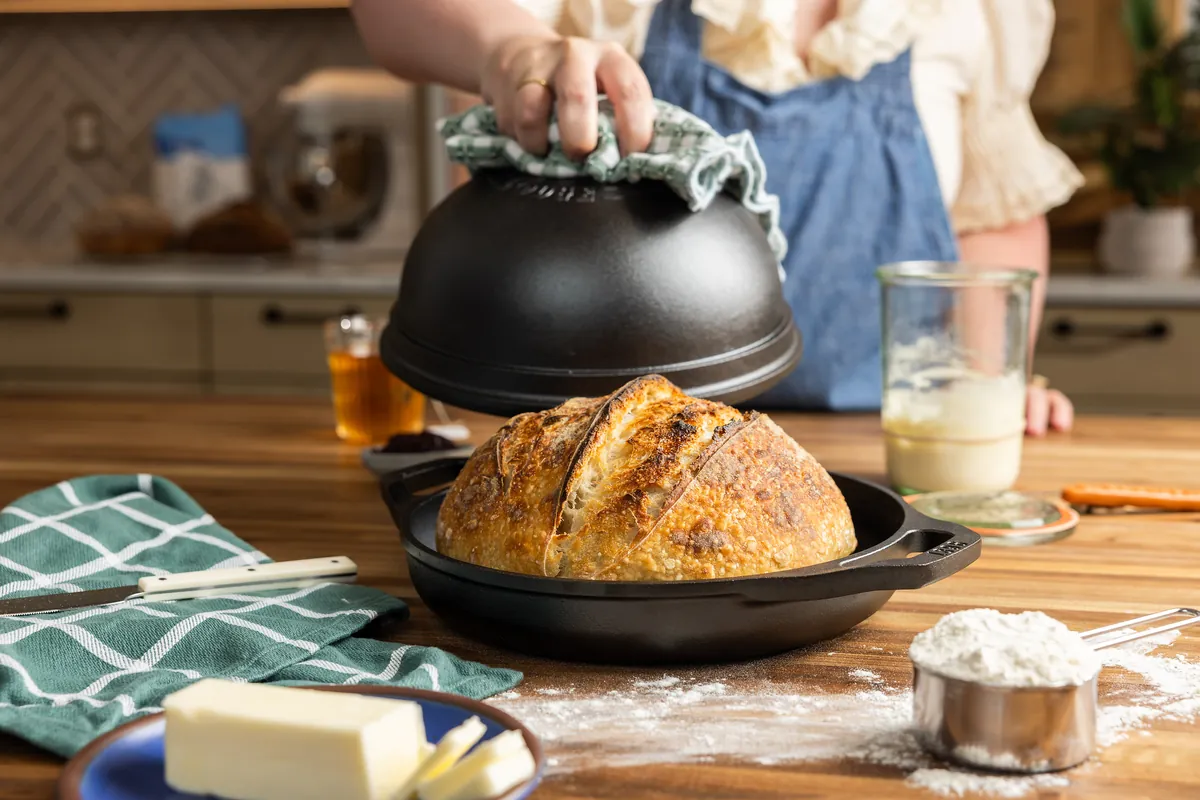
A knobless skillet lid gives this set a different bread-baking arrangement from a conventional lidded pot. Lodge shows the shallow piece used as the base and the deeper vessel as the cover. The appeal is access: a dough can be positioned on a shallow surface rather than lowered between tall walls. Follow a bread method intended for that arrangement and the maker's operating directions.
Before heating anything, rehearse where each piece will go. You need a stable, heatproof landing place for the cover, a clear route to the oven rack and mitts that let you grasp the handles securely. Keep the work surface dry and remove anything that could snag as the heavy cover is lifted. A convenient shape does not remove the need to protect your hands or keep clear of steam when opening a covered bake.
The product in this review
The details that matter
Compare the exact model, dimensions, and care instructions before ordering. These notes draw on published specifications.
Bread baking and a separate shallow cast iron pan
Lodge 5 Quart Cast Iron Double Dutch Oven
Choose the Double Dutch when you want a five-quart seasoned pot and will also cook with its shallow skillet lid. It is especially worth considering for a planned covered-bread setup. Check the 12.37-pound combined weight and hot-piece landing space before treating the compact storage shape as effortless handling.
Check on AmazonSize, care, and tradeoffs
- capacity
- 5 quarts
- material
- Seasoned cast iron
- lid
- Dual-handle skillet lid
- weight
- 12.37 pounds, both pieces
- cooktops
- All stovetops including induction
- care
- Hand wash, dry and oil
Consider: Two hot pieces need secure lifting
Manufacturer specifications ↗Research based on manufacturer specifications and product identity checked 2026-10-15. Price, seller, and availability can change; review the Amazon listing.
Treat the combined weight as part of the specification
Lodge lists 12.37 pounds for the complete Double Dutch. That is worth thinking about before adding food. Two separate manageable objects can become an awkward assembly if you try to carry them together without a plan. Check the oven rack height and the distance between the rack and the nearest heatproof surface, particularly if bending and reaching are uncomfortable.
The loop handles save the long horizontal reach of some combination cookers, but your mitts still need room alongside them. Measure the cupboard and oven position with that access in mind. Try the empty arrangement cold before cooking, then decide whether you will move the pot and lid separately whenever possible. If routine lifting is already a problem with an existing Dutch oven, the second cooking surface is unlikely to compensate for a format you find difficult to handle.
The skillet lid is useful when the menu leaves it free
The shallow piece can be used as a pan on its own, which is the strongest reason to consider this set beyond bread. A breakfast or a small skillet supper gives it an independent job. The useful question is whether those jobs occur when the deep pot does not need to remain covered. A pot and its working lid do not become two independent pieces at the same moment just because both can cook.
Write out one normal meal. If the covered pot is braising while you want a shallow pan for vegetables, you may still need another pan. If the pot has finished and the lid is free, the arrangement can work differently. Check burner space for both pieces as well. Their shared storage footprint is helpful, but cooking with them separately requires two suitable positions and the usual attention to how food fits the available flat surfaces.
Seasoned iron asks for a different cleanup routine
This is seasoned cast iron, rather than a porcelain-enameled Dutch oven. Lodge's basic routine is hand washing, thorough drying and a light application of oil. Build that into the decision. Leaving a wet heavy vessel in the sink until the next day is a different ownership pattern from washing and drying it while the rest of the kitchen is being cleared.
The shape of the lid makes its care as important as the pot's. Wash and dry the cooking face, rim and handle areas instead of treating it as an accessory that only needs an occasional wipe. Keep the surface lightly maintained rather than applying a heavy layer of oil that pools in corners. For specific stuck food or damaged seasoning, use the manufacturer's repair instructions. Do not assume that an enamel cleaner or another cookware material's routine belongs on seasoned iron.
Plan the foods you want to leave in the pot
A Dutch oven often becomes both a cooking vessel and the thing waiting on the stove while dinner is served. With this set, make the transfer and cleanup part of the recipe plan. Have suitable containers ready for leftovers, and follow food-storage guidance rather than letting the apparent sturdiness of the pot stand in for a cooling method.
For frequent tomato-rich braises or long acidic simmers, compare an enameled vessel before settling on bare seasoned iron. The practical advantage of enamel is a different cooking surface and care pattern, not a promise that every recipe will taste better. Conversely, a cook who values seasoned iron and will use the shallow piece regularly has a stronger reason to accept its maintenance. Buy around the meals and materials you actually prefer, rather than treating every Dutch oven as interchangeable.
Where it fits among other covered bread pots
The Double Dutch is a useful middle ground between a single-purpose bread vessel and a conventional pot whose lid offers no separate cooking surface. It still needs a suitable bread recipe, adequate room for the loaf and a safe handling sequence. The five-quart label alone cannot establish how a particular dough shape will fit, so compare the recipe and working dimensions rather than relying on the volume number.
Choose it when the loop handles fit your oven, the combined weight is acceptable and the shallow pan will see regular use. A lighter existing pot may remain the better daily choice if you mostly make soup. A dedicated bread oven may appeal when its specialized shape solves a specific loading problem. The L8DD3 earns its place through the useful work of both pieces; extra versatility on a product page only matters when it matches a real cooking routine.
Before you buy
What to look for
A job for both pieces
Count the shallow pan as useful only if your normal meals leave it available. A covered braise and a separate skillet side dish can still require another pan. The strongest purchase case includes independent uses for the lid as well as the deep vessel.
Reach with oven mitts
Allow room around the loop handles and test the cold arrangement at your normal rack height. Include the hot cover's landing place in the measurement. A pot can fit inside an oven while still leaving an uncomfortable reach for the cook.
Care you will actually do
Seasoned iron needs washing, drying and light oiling. Compare that routine with enamel if you favor long acidic sauces or leave cookware to soak. Choosing a surface that fits your habits is more useful than adding versatility you will avoid maintaining.
Make the decision
Choose for your kitchen
A regular covered loaf
The shallow base arrangement may suit your bread method. Establish the dough's clearance and a safe opening sequence before preheating. Keep a heatproof space ready for the deep cover and use the exact handling guidance for the chosen recipe.
A pot of stew most evenings
Consider whether the shallow lid adds enough useful work to justify this format. A conventional enameled Dutch oven may better match the surface and cleanup you prefer. Compare the actual vessels you would use for the same batch.
A crowded cookware cupboard
The two pieces share a footprint, but their total weight and handle access still matter. Store them where lifting is comfortable, and dry both thoroughly first. Compact stacking is helpful only when taking the cookware out is equally practical.
A few useful answers
Questions before you buy
Is the Double Dutch the same as the Combo Cooker?
No. This L8DD3 is the five-quart loop-handled model. The LCC3 Combo Cooker is smaller and has long handles. Compare the actual capacity and handle arrangement rather than treating the two names as different listings for one product.
Can the lid cook on its own?
Yes. The lid is also a shallow cast iron pan. It still has the care and heat-handling needs of seasoned cookware, and it cannot remain covering the deep pot while serving as a separate pan on another burner.
Does it work on induction?
Lodge lists induction compatibility. Check the working base, burner position and appliance instructions as well as the material. Compatibility does not establish that every heating zone is a convenient fit for every piece.
Should I choose it only for bread?
Bread can be a good reason, especially when the shallow loading arrangement fits your method. The value becomes stronger if you will also use the pot and shallow pan for other meals. Match the actual loaf and handling needs before buying by capacity alone.
Keep in mind
This guide covers L8DD3. The smaller long-handled LCC3 and enameled Lodge Dutch ovens have different capacities, surfaces and handling arrangements.