Buy the arrangement, not the promise of two pans
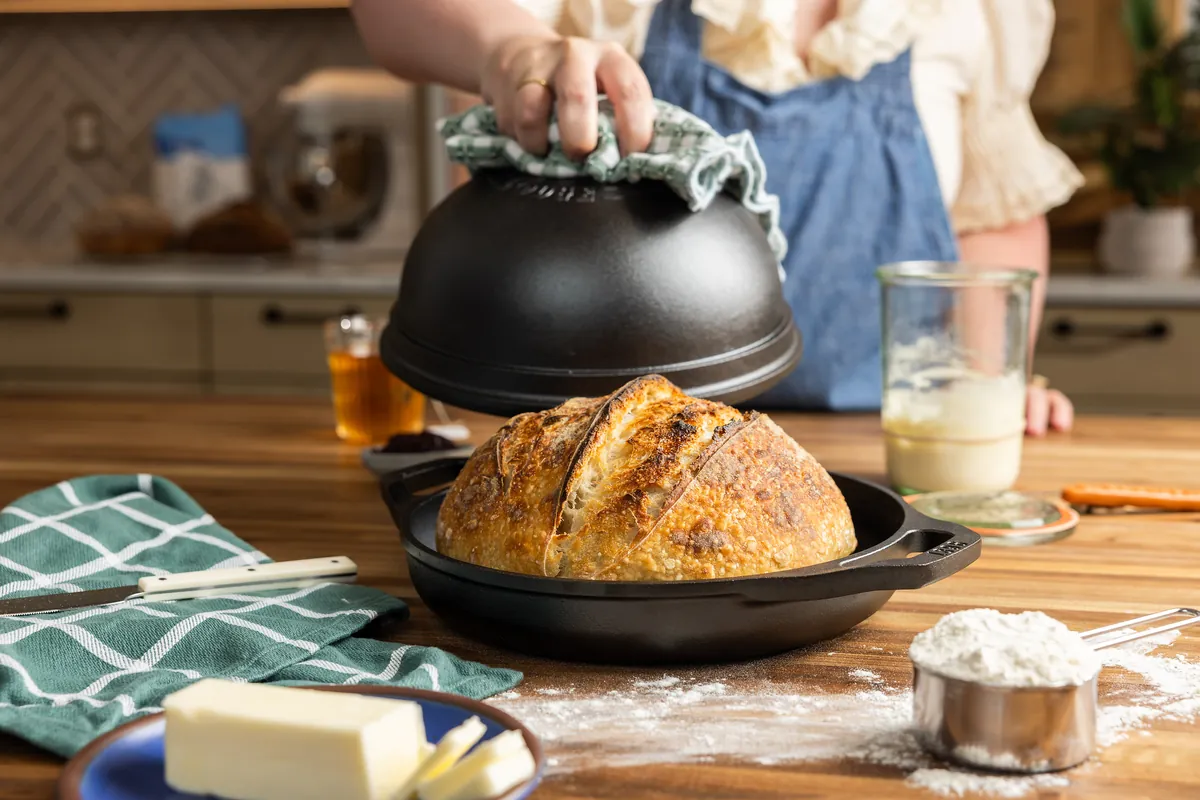
This is the long-handled LCC3, rather than Lodge's larger loop-handled Double Dutch. The distinction matters more than a photograph might suggest. A long handle can make a shallow skillet easier to position, but it also projects beyond the pot when the pieces are stacked. Look at how you will move and park both pieces before deciding that the smaller capacity automatically makes this an easier bread pot to own.
Rehearse the oven move while everything is cold
Place the empty cooker on the rack you expect to use and check whether the handle clears the door. Leave yourself a comfortable route to both handles without reaching around another hot dish. A pot that technically fits at an angle may still be awkward to lift when you are wearing bulky mitts. The practical fit is the one you can use confidently on an ordinary baking day.
Decide where the hot cover will land before starting a covered bake. It needs a dry, stable, heatproof surface large enough for the entire piece, including its handle. A cloth spread across an already busy counter is a poor substitute for planning that landing space. Think through the opening motion as well: a covered pot can release hot steam, so keep your face and hands clear as the pieces separate.
The shallow base changes bread loading
One reason bread bakers consider a combination cooker is the option to use its skillet as a shallow base beneath the deeper vessel. Positioning dough on a low surface can be more straightforward than lowering it into a tall hot pot. Use a bread method written for that configuration, together with Lodge's operating guidance. Neither the shape nor a seasoned surface determines a universal preheating schedule for every dough.
Check the dimensions of the loaf you plan to bake, not only the proofing basket. A dough can spread after it is turned out and then expand further in the oven. The listed skillet diameter is a starting point for comparison, rather than a guarantee that a particular shaped loaf will have enough room. If your regular bread method already names a vessel size, use that requirement to narrow the choice.
The product in this review
The details that matter
Compare the exact model, dimensions, and care instructions before ordering. These notes draw on published specifications.
A smaller covered bread bake and a deep pan that can also fry
Lodge 3.2 Quart Cast Iron Combo Cooker
Choose the LCC3 for a smaller covered loaf or deep-pan meal when both long handles fit your oven and working space. Its skillet lid adds a useful second job, but it also adds a hot piece to manage.
Check on AmazonSize, care, and tradeoffs
- capacity
- 3.2 quarts
- material
- Seasoned cast iron
- size
- 10.25-inch skillet lid
- handles
- Long handles on both pieces
- care
- Hand wash, dry and oil
Consider: Long handles take rack and cabinet space
Manufacturer specifications ↗Research based on manufacturer specifications and product identity checked 2026-10-15. Price, seller, and availability can change; review the Amazon listing.
Three-point-two quarts rewards smaller menus
For a smaller household, the deep piece can make sense for beans, a compact braise or another meal that benefits from covered cooking. Leave the headroom required by the recipe and enough working room to stir. A capacity printed on a box should not be treated as a suggested fill line for bubbling liquid, a rising loaf or food that must be turned with tongs.
Browning space is a separate limit. Tall sides provide depth, but they do not increase the area in contact with the burner. Spread ingredients in manageable batches when a recipe depends on browning. If you often cook a broad roast or several large portions at once, measure the food and compare a wider vessel before buying. A smaller pot is useful when its actual portion size fits your week, rather than merely its storage space.
Use the lid as a skillet on its own terms
The lid gives you a second cooking surface without committing a second deep vessel to the cupboard. It can suit a small batch of cornbread, a few portions of food or a task where access from the side is helpful. Match the food quantity to the available flat area. The fact that it also closes over a pot does not make every deep-pan recipe suitable for the shallow piece.
At the stove, position the long handle away from passing traffic and adjacent heat. Check whether the combined footprint leaves room for another pot on the neighboring burner. If you plan to cook with both pieces at once, you will need two suitable burner positions and a place for two hot handles. The storage economy can be real, but it does not translate into free cooking space while dinner is underway.
Seasoning is a routine you agree to keep
Both pieces are seasoned cast iron. After cooking, follow the maker's hand-washing guidance, dry thoroughly and maintain a light protective film of oil as directed. The rim and the underside matter as well as the cooking face. Allow enough time after dinner to put the cooker away dry; leaving the deep vessel full of wash water works against the material's care requirements.
A seasoned surface changes with use and may need attention if food sticks or rust develops. Treat that as a maintenance decision when comparing it with an enameled pot. Do not assume factory seasoning makes every first cook effortless or removes the need to use the fat and heat a recipe requires. For someone already comfortable caring for an iron skillet, the routine is familiar. For a dishwasher-only kitchen, it is a meaningful change.
Choose another material when sauces are the priority
A combination cooker is an especially specific purchase if most of your covered cooking consists of long tomato-based sauces or meals you want to refrigerate in the pot. Consider an enameled vessel when that pattern describes your kitchen. Compare the manufacturer's guidance for acidic foods and storage before building a weekly routine around seasoned iron. The best match may be the pot that asks for less adjustment after the meal.
Likewise, a lightweight saucepan or a conventional skillet can be more convenient for quick pouring and frequent lifting. The Combo Cooker's value lies in the particular jobs its two shapes share. Buying it to replace every small pot and pan puts too much weight on that versatility. Keep an existing pan if it already solves a recurring task better, and buy the combination only for jobs you actually intend to give it.
Check the listing and the whole storage footprint
The relevant model here is the 3.2-quart LCC3 with a 10.25-inch skillet lid. Compare those details when shopping, particularly if a retailer shows several Lodge combination sets together. A larger loop-handled Double Dutch has different handling and capacity, even though the two products can look related in a small search thumbnail. Package identity matters more than a broadly similar cast iron appearance.
Store the clean pieces where you can lift them without an awkward reach. If they will nest with other cookware, protect the surfaces and leave the cooker dry before closing it up. Measure the handles as part of the footprint, rather than planning cupboard space around the round body alone. A useful final question is simple: would you happily take both pieces out for the meal you cook most often, even on a busy evening?
Before you buy
What to look for
Handle clearance
Check the complete footprint on the oven rack with the door closed, then rehearse lifting each empty piece with mitts. The long handles need working room as well as storage room; a body that fits is only part of the measurement.
Real batch size
Use your regular loaf shape or dinner portions to judge the 3.2-quart deep vessel. Leave room for expansion and stirring. Neither the stated capacity nor the skillet's nominal diameter guarantees that a larger recipe can be transferred unchanged.
Care after dinner
The two seasoned iron pieces need hand washing, thorough drying and appropriate oiling. A buyer who enjoys an existing iron skillet has a useful reference point. A kitchen that relies on soaking and the dishwasher should weigh that routine carefully.
Make the decision
Choose for your kitchen
A modest round loaf
The shallow-base arrangement is worth considering if it fits your established bread method and leaves clearance for the expanding dough. Plan the cover's landing spot and the opening motion before heating the cooker, so loading convenience does not become awkward unloading.
A smaller covered supper
The deep vessel can suit portions that leave enough space for stirring and simmering. Brown in batches where the recipe calls for it, then use the lid for covered cooking. Choose a wider or larger pot if that batch routine becomes tedious.
An already crowded stove
Check the projecting handles against adjacent burners and the edge of the worktop. Using both pieces separately consumes two burner positions. If a compact storage shape is the only attraction, measure the active cooking arrangement before committing to it.
A few useful answers
Questions before you buy
Is this the same as the five-quart Double Dutch?
No. This review covers Lodge's LCC3, a 3.2-quart deep vessel with a 10.25-inch skillet lid and long handles. The five-quart Double Dutch uses a different capacity and loop-handle arrangement, which changes oven and cupboard clearance.
Can the lid cook food separately?
Yes. It is a shallow skillet as well as a cover. Judge its usable area and depth for the dish you intend to make, and allow a suitable burner position when the deep piece is in use at the same time.
Does it require seasoning care?
Yes. The pieces arrive seasoned, but still need the maker's hand-washing, drying and oiling routine. Factory seasoning does not turn iron into a maintenance-free coated pan, and the exterior and rim should also be put away dry.
Will my usual bread dough fit?
Check the vessel against the loaf size and the requirements of your bread method. Basket dimensions alone do not describe expansion during baking. A recipe designed for a larger covered pot may need a different vessel rather than a simple transfer.
Keep in mind
Compare the complete handle footprint with your oven and storage space.
Rehearse moving the two pieces while cold.