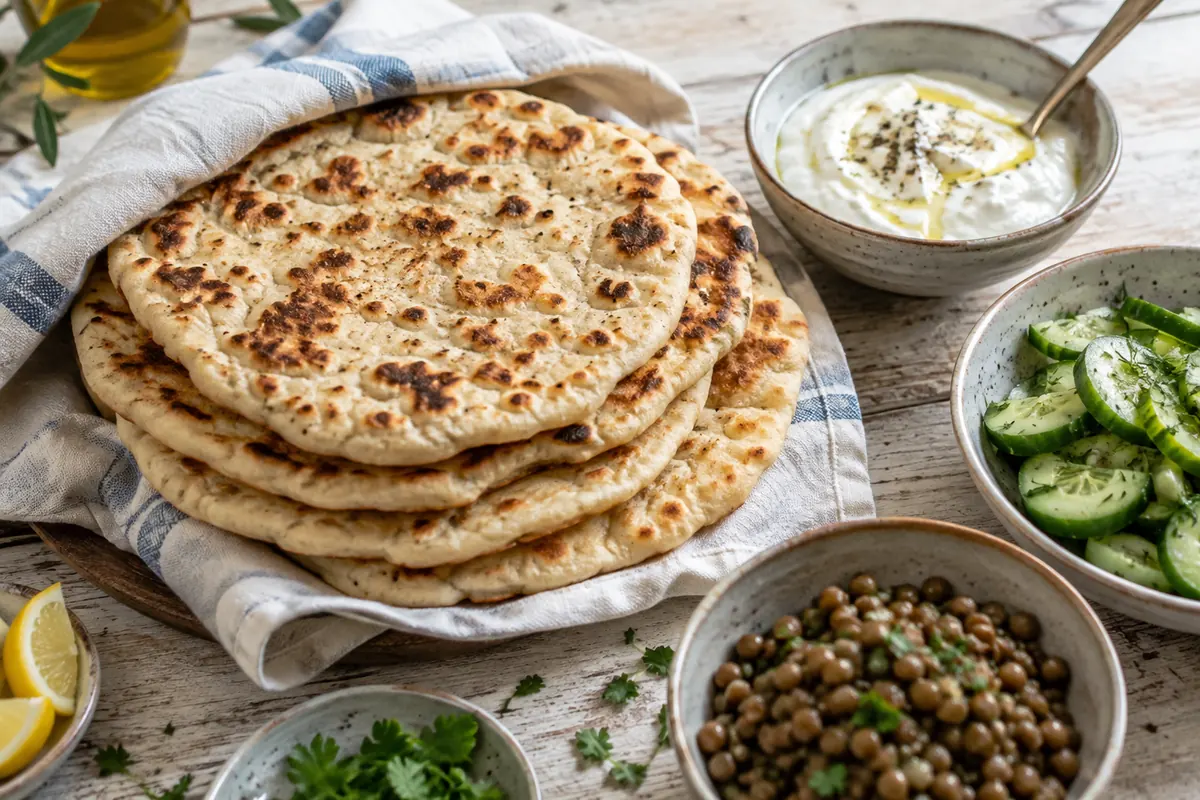
Make warm bread the anchor, not the entire plan
A bowl of seasoned chickpeas, cut vegetables, herbs, and a suitable sauce can give the bread several useful partners. A separate cooked protein is another option when its preparation fits the schedule. The meal does not need to reproduce a restaurant spread with many tiny bowls. Pick a few components with different textures and make enough of them to feel substantial. The bread should have something enjoyable to carry without being expected to turn a small amount of garnish into dinner.
Put it to work
Useful tools, at a glance
Weighing ingredients in bowls that cover a fixed display
OXO Good Grips 11-pound Food Scale
Smaller stove-to-oven dinners
Lodge 10.25-inch Cast Iron Skillet
Choose a specific kind of flatbread
Flatbread describes a broad family of foods, not one interchangeable method. Some recipes use yeast and a longer rest; others use chemical leavening or no leavener. Some include yogurt, while others do not. Start with a developed recipe that matches the bread you want and the time available. Read the entire method before mixing, including rests and the way it is cooked. A name on a short video cannot tell you whether the dough will be ready in time for your meal.
Describe the result accurately. A simple yogurt skillet bread does not need to claim to be the definitive version of naan or another named bread. King Arthur's own mix-based example calls itself naan-inspired, which is a useful reminder to keep the preparation's identity clear. Learn from sources that explain a bread's ingredients and context when you want to pursue a particular tradition. For a weeknight dinner, an honestly named homemade flatbread can be appealing on its own terms.
Let the yogurt style guide the dough
Plain yogurt products vary in thickness and moisture. A strained yogurt and a loose stirred yogurt can make quite different starting mixtures, so follow the style named in the recipe. Read the label and avoid a sweetened product in a savory dough unless the recipe specifically uses it. Keep the ingredient measured accurately. Adding more flour immediately because the dough feels tacky may move it away from the intended texture, especially when the method includes a rest that will change how it handles.
Use a scale when the recipe offers weights, and keep extra flour for handling separate from the formula. Add only what the method requires to keep the work surface manageable. If the dough seems unusually dry or wet, check the measurement and product before making a large correction. Record any necessary adjustment rather than treating it as invisible. A repeatable dough comes from understanding the actual ingredients, not from forcing every yogurt to behave like the one used in a different kitchen.
Give resting and shaping enough attention
A rest can make a dough easier to shape, but its purpose and length depend on the formula. Follow the recipe rather than skipping the pause because the ingredients are already combined. Use that interval to finish the accompaniments, set the table, and clear a safe landing place for cooked bread. Divide the dough into the intended number of portions so the pieces have a similar thickness and cooking pace. A large irregular piece can be harder to handle and harder to cook evenly than a smaller one.
Shape to fit the pan's useful surface, leaving room to turn the bread safely. Keep uncooked portions covered as directed so their surfaces do not dry while you work. If a piece springs back, use the recipe's handling advice instead of attacking it with more pressure and flour. A little unevenness is usually less troublesome than a thick center surrounded by paper-thin edges. Consistency of thickness matters for the eating texture and cooking more than a perfectly circular outline does.
Make the pan the only active job at the end
Use the pan, heat level, and oil or fat specified by the recipe. A heavy skillet can retain heat between pieces, but that does not mean it should be heated as aggressively as possible. Watch the first bread closely and adjust within the method if the surface colors before the interior cooks. Use suitable utensils and avoid damaging coated cookware. Keep the work area clear enough that you can turn the bread without reaching across a cluttered counter or a second unattended hot pan.
Cook in the number of pieces the pan can handle comfortably. Trying to fit an extra round may make both harder to turn and inspect. Have a clean place for finished bread and follow the recipe's holding advice, often involving a suitable cloth or covering to preserve the intended softness. Keep that arrangement safely away from the burner. Warm bread can wait a little when held appropriately, but planning the accompaniments ahead gives it a better chance of reaching the table while its texture is most appealing.
Choose companions with different jobs
A creamy sauce, a crisp vegetable, and a flavorful substantial component give flatbread variety without too many dishes. Consider how a complete bite will work. If the beans are already saucy, the dairy element may need only a small spoonful. If the main filling is dry, a pourable sauce can make it easier to eat. Fresh herbs can add aroma, while lemon or a suitable pickle can bring sharpness. Taste the parts together before deciding they each need more seasoning.
For an easy direction, use a reliable chickpea preparation and a chopped cucumber accompaniment, then choose whether the bread will be torn on the side or folded around the filling. A folding bread needs a manageable amount of food and a texture that can bend. Do not overload it simply because the plate has room. Our pantry and seasoning guides can help you think about the components, while individual recipes provide specific quantities and cooking instructions. Keep the distinction between a menu idea and a developed formula clear.
Buy a pan for repeated work
If your current skillet fits the recipe and is in good condition, begin there. A broad suitable cooking surface and comfortable handle are more relevant than a specialized flatbread label. Our verified cast-iron and carbon-steel reviews discuss options with different weights and care requirements. Check the manufacturer's instructions and choose a size that fits your burner. A very large pan may be awkward on a small stove even if it looks useful in a photograph, and a heavy pan needs a safe place to rest when hot.
A kitchen scale and a flexible spatula may improve the routine more than a new skillet if your main difficulty is measuring or handling sticky dough. Keep purchases tied to the problem you actually encounter. The same pan can serve other dinners when its material and method suit them, which makes the storage space easier to justify. Avoid collecting equipment to solve a dough issue that is really caused by the wrong yogurt style or skipped rest. Understanding the formula usually travels further than another accessory.
Save the components in useful forms
If bread remains, follow the recipe's storage and reheating guidance and package it so you can retrieve the amount you need. Keep perishable fillings and sauces stored safely and separately where that preserves their texture. A leftover meal should not require pulling cold cucumber, warm beans, and bread apart after they were packed into one damp container. Label what is there and plan a sensible use before making another batch. The meal's convenience continues after the table is cleared.
At the table, keep the accompaniments loose enough for people to build different bites. A soft bean filling can go inside a pliable bread with a small amount of sauce, while crisp cucumber and herbs can stay beside it until the last moment. A thicker bread may be more comfortable torn and dipped rather than folded around an overloaded center. Bring out manageable rounds of warm bread as they are ready, using the recipe's holding method. The cool components can already be on the table, leaving the final pan stage as the meal's only active finish.
Keep in mind
Use the yogurt style and resting schedule named in the chosen recipe.
Prepare cold accompaniments before the final skillet work.


