A coordinated set should solve several real needs
A set becomes useful when most of its pieces have a clear assignment. If your kitchen mainly needs one larger skillet or a single saucepan, buying several extra vessels may create more storage work than cooking value. Begin with the gaps in your present cookware, then decide whether this particular selection closes them efficiently.
Ten pieces means six vessels and four lids
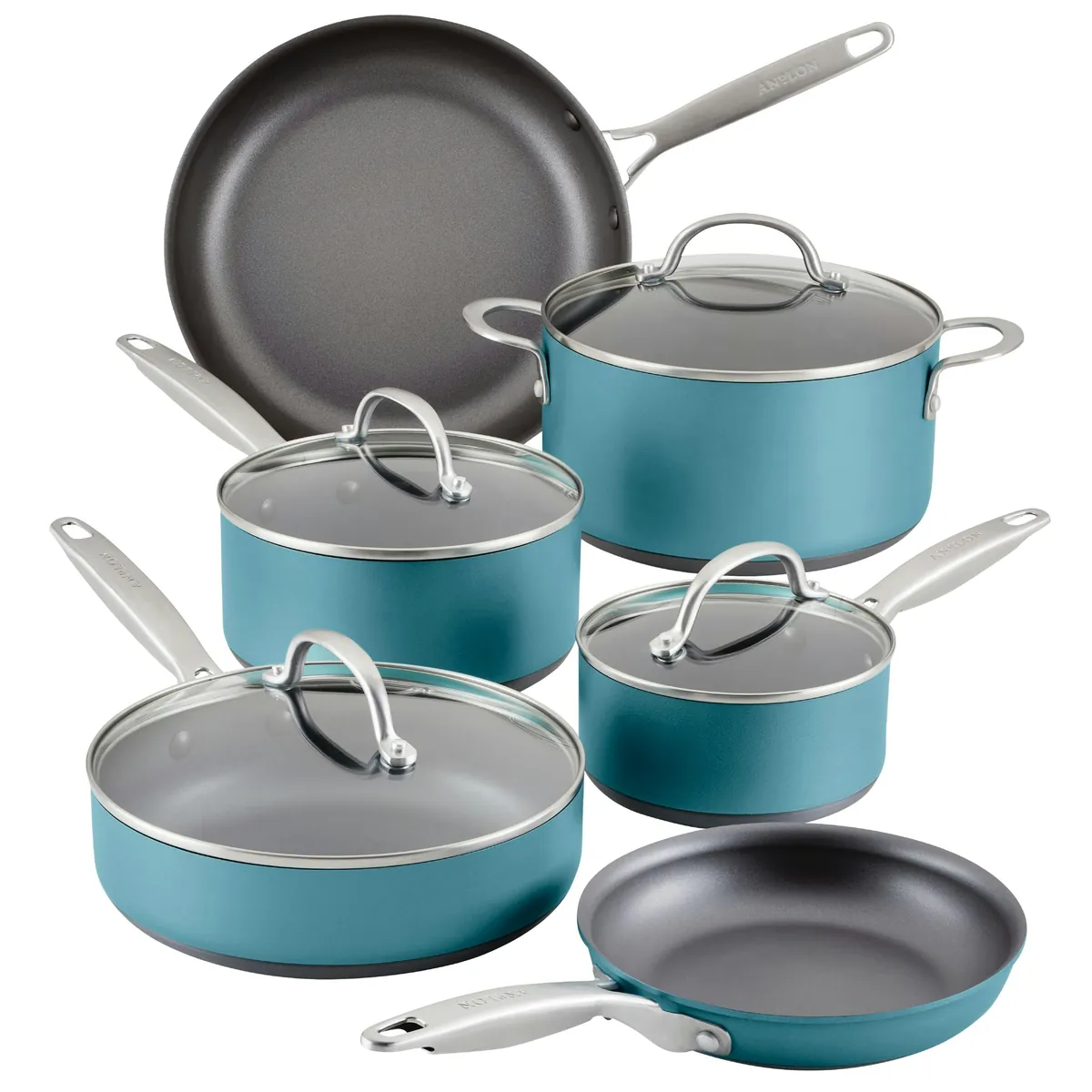
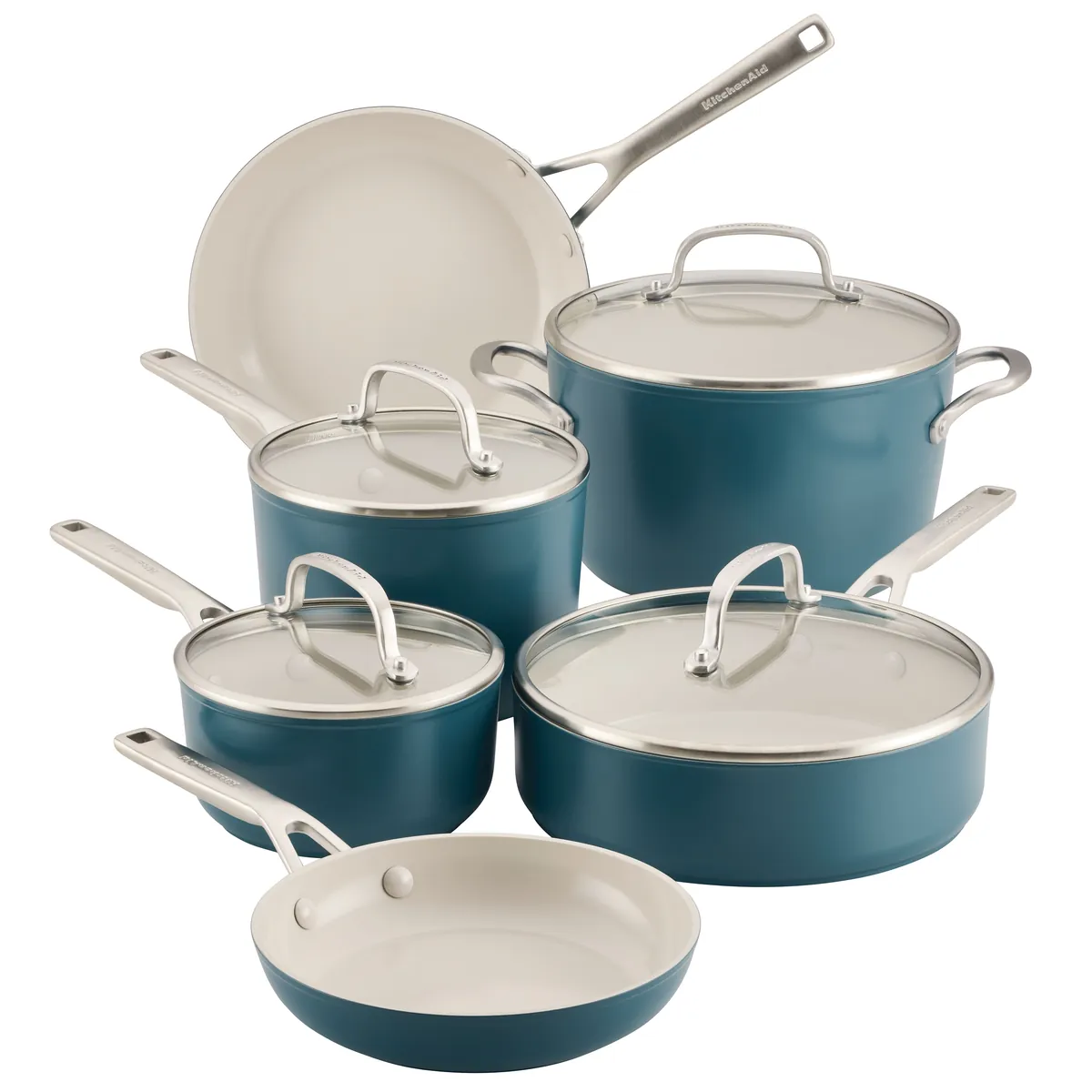
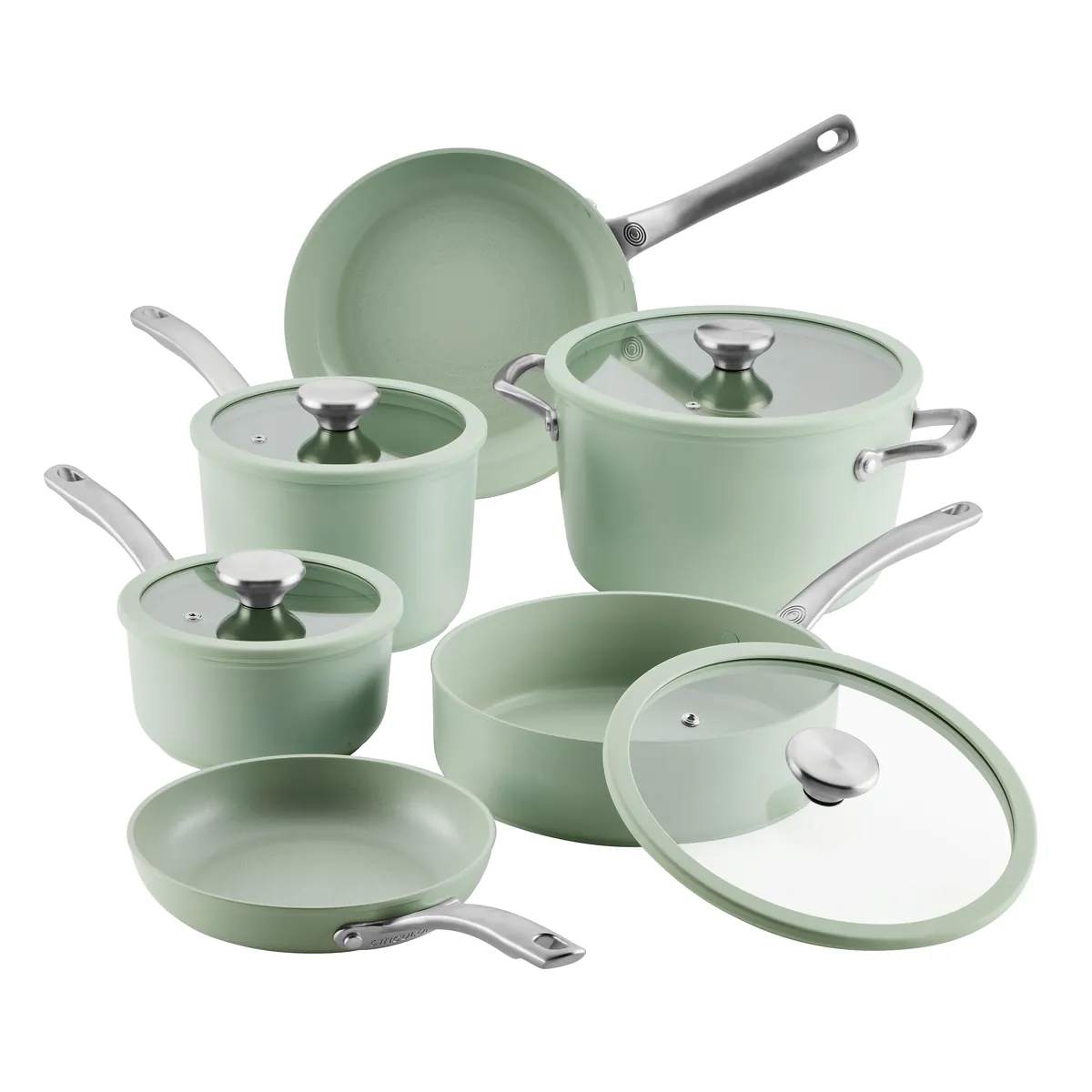
The current SKU page lists covered 1.5- and 3-quart saucepans, a covered 6-quart stockpot, a covered 3-quart saute pan, and open 8- and 10-inch skillets. The lids contribute four pieces to the total. Read that inventory as six places to cook, with covers supporting particular methods.
Map the pieces to an ordinary dinner. A saucepan can handle one component while a skillet works on another, but unused duplicate capacities do not become useful simply because they share a finish. Consider which vessels would be on the stove together and which might remain in the cupboard. The complete inventory is more informative than the package count alone.
The largest included skillet is a meaningful limit
The included open skillets reach 10 inches nominally. If your main frustration is food crowding a pan that size, this set does not automatically supply the wider fry pan you were looking for. A deeper covered saute vessel has a different shape and should not be treated as identical flat cooking area merely because it can contain more.
Think about how your usual proteins and vegetables sit against the base. A vessel that holds a meal can still crowd it during browning. Choose the included shapes for their appropriate jobs and keep an additional suitable pan when a broad searing surface is a recurring need. A coordinated collection need not eliminate every other piece of cookware.
The product in this review
The details that matter
Compare the exact model, dimensions, and care instructions before ordering. These notes draw on published specifications.
Induction cooking with ceramic-coated cookware
Circulon Halo with LaserDefense Ceramic Nonstick 10-Piece Cookware Set, Sage
Choose the Sage 16155 set when its six vessels fill several real cookware gaps and you want a coordinated ceramic nonstick collection. Check the 10-inch largest skillet, space for four lids and separate 500 F pan versus 350 F lid limits before treating the package as a complete answer to every dinner.
Read specificationsSize, care, and tradeoffs
- material
- Aluminum with ceramic nonstick interior
- finish
- Sage
- pieces
- 10: six vessels and four lids
- contents
- 1.5- and 3-quart saucepans with lids; 6-quart stockpot with lid; 3-quart saute pan with lid; 8- and 10-inch open skillets
- handles
- Cast stainless steel
- lids
- Tempered glass with silicone rims
- cooktops
- All cooktops including induction
- oven
- Cookware 500F; lids 350F
- care
- Manufacturer lists dishwasher-safe cookware
Consider: The largest included skillet is 10 inches
Published manufacturer specifications checked 2026-10-15. Read the full specifications and care instructions for the exact model before choosing.
Useful alongside these products
These separately sold silicone-head tongs turn food without putting a metal tool against the ceramic cooking surface.
Tossing pasta and turning food with silicone heads
OXO Good Grips 12-inch Silicone-head Tongs
Check on AmazonSize, care, and tradeoffs
- material
- Stainless steel with silicone heads
- length
- 12 inches nominal
- storage
- Locking closed
- care
- Dishwasher safe
Consider: Do not leave the tool resting against a hot pan or open flame
Manufacturer specifications ↗Product identity checked 2026-10-14. Check the Amazon listing for the exact model, seller, and current availability.
Ceramic nonstick is a surface choice, not a method shortcut
The recorded body material is aluminum with a ceramic nonstick interior. That offers a different ownership choice from uncoated stainless steel or seasoned iron. Follow the maker’s current preparation and utensil guidance, and use heat and food loading appropriate to each recipe.
A release surface is most useful when the surrounding method supports it. Prepare ingredients before heating, use suitable tools and avoid treating the pan as a cutting board. Do not assume the coating removes the difference between gently cooking a delicate ingredient, browning a protein and making a sauce from fond. Another surface may remain the better tool for a particular technique.
The lids have a lower oven limit than the pans
Circulon’s current guidance gives the pans a 500 F oven ceiling and the glass lids a 350 F limit. A covered oven recipe must respect the complete setup, including the lower-rated cover. Keep those restrictions clear when a dish moves from burner to oven rather than remembering only the larger number.
The maker also identifies induction compatibility. Check your cooktop’s cookware and size guidance, along with the current instructions for the exact set. A compatible material and a generous pan ceiling provide flexibility, but neither establishes the best heat for every food. The recipe and the components actually being used should decide the practical cooking setup.
Evaluate durability language without inventing a lifespan
LaserDefense is the maker’s name for its ceramic surface design. The manufacturer publishes comparative durability claims, but those should not be converted into a guaranteed number of household years or a promise that every tool and cleaning habit leaves the surface unchanged. A purchasing decision still needs a care routine you can keep.
Choose appropriate utensils and follow current cleaning directions. If you regularly cut in pans or attack residue with whatever sharp tool is nearest, consider whether a coated set fits those habits. Useful cookware is a partnership between the surface and its treatment. Buying a coordinated package does not remove that relationship or make every vessel equally suitable for forceful scraping.
Plan storage for the covers as well as the pans
A six-vessel set needs meaningful cupboard space, with four separate lids to organize. Check the complete handles and shapes rather than assuming the collection will nest neatly because it was sold together. Retrieving one pan should not require balancing several covers or dragging a sharp rim across a working surface.
The manufacturer lists dishwasher compatibility. Follow the current component instructions and arrange washing and drying so the set returns to a complete usable setup. Even with dishwasher permission, everyday cleanup still involves food residue, rims and lids. A collection is more convenient when storage and cleaning support regular access instead of turning several new pans into a cupboard puzzle.
Who should choose the Sage 16155 set?
Choose this set when you need multiple small and medium cooking vessels, like the ceramic surface and can give most of the included pieces recurring jobs. The coordinated Sage finish can be an appealing ownership feature once the practical sizes, lid limits and storage arrangement are settled.
Choose individual cookware when only one or two gaps need filling, or add a broader suitable skillet if large single-layer batches are central to dinner. Keep serviceable existing pieces that already fit their jobs. The set is a sensible purchase when its inventory works for your meals, rather than when matching finishes become a reason to replace useful cookware without a clear benefit.
Before you buy
What to look for
Useful vessels rather than a headline count
Assign a recurring meal task to each of the six cooking vessels and consider which would be used together. The four lids have value when their covered methods matter, but they are not additional pans. A set is most useful when the actual inventory closes several real gaps without creating mostly unused duplicates.
Skillet size for your normal batches
The included open skillets top out at 10 inches nominally. Judge whether that suits the food you normally spread in one layer. A deeper covered pan serves another purpose, so do not assume total volume replaces the broad base required for a large browning job or eliminates the need for another appropriate skillet.
A full storage and care arrangement
Find practical places for pans and separate lids before buying. Follow current component-care directions and use tools appropriate to the coated surfaces. A coordinated finish is pleasant when the whole set remains easy to reach and maintain, rather than making normal retrieval and cleanup more complicated than the mixed cookware it replaces.
Make the decision
Choose for your kitchen
Equipping several genuine cookware gaps
The set has a clear role when your kitchen needs complementary saucepans, a larger liquid-cooking vessel and small-to-medium frying options together. Map them to repeated meals first. The package can simplify selection without requiring a claim that matching cookware automatically improves results or makes every individual piece necessary.
A preference for coordinated ceramic cookware
Choose the finish and surface after confirming the practical inventory. Appearance can be a reasonable preference when the sizes and care fit your routine. It should support regular use rather than override a known problem with skillet width, lower glass-lid heat limits or insufficient cupboard space.
Replacing only one worn-out pan
An individual purchase may be more useful when the remaining cookware is serviceable. Identify the specific size and method needed instead of buying a whole set to solve one gap. A mixed collection with clear roles can be convenient, while unused matching pieces still require storage and eventual maintenance.
A few useful answers
Questions before you buy
How many actual pans are included?
The ten-piece total comprises six cooking vessels and four lids. Read the current SKU 16155 inventory when ordering, including each vessel’s capacity and whether it is covered. A package count alone does not describe the number of separate cooking surfaces available for dinner.
Can the covered pans go in a 500 F oven?
The manufacturer lists 500 F for the pans but 350 F for the glass lids. A covered setup must respect the lower limit. Follow current instructions for the components actually in use rather than applying the pan’s larger number to the complete set automatically.
Does the set include a 12-inch skillet?
The current listed open skillets are 8 and 10 inches. Choose another suitable vessel if a larger flat cooking area is a recurring need. The covered saute pan has a different shape and should not be treated as an identical replacement based only on how much food it can contain.
Do manufacturer durability comparisons guarantee years of use?
They do not establish a measured lifespan for your household. Treat comparative claims as the maker’s claims and follow the current care guidance. Useful ownership still depends on utensils, cleaning and cooking habits rather than converting a marketing multiplier into a guaranteed replacement schedule.
Keep in mind
Confirm the current selected Sage set contents and the separate pan and lid heat limits before cooking.