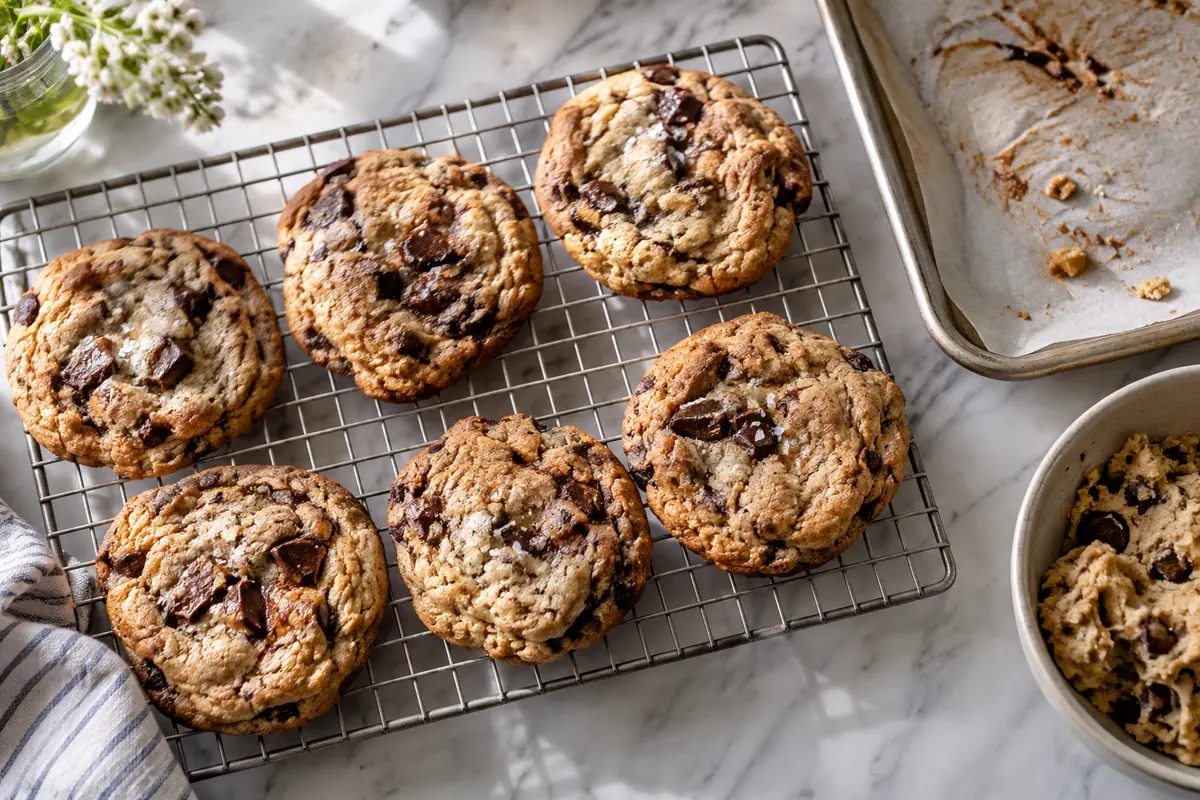
Decide what a small batch should give you
Then choose a recipe that suits the decision. Drop cookies, muffins, and uncomplicated snack cakes offer clear portions and manageable mixing. Elaborate layered cakes bring a different collection of bowls, fillings, and finishing jobs even when the cake itself becomes smaller. If the real goal is a relaxed evening bake, reducing the number of components can save more effort than reducing every ingredient by half. A square of plain cake with good fruit can be plenty of dessert.
Put it to work
Useful tools, at a glance
Weighing ingredients in bowls that cover a fixed display
OXO Good Grips 11-pound Food Scale
Read the complete formula before dividing
Make a new ingredient list rather than doing arithmetic while butter softens on the counter. Keep the original quantities beside your reduced amounts until you have checked them. A missed half teaspoon of leavener is easy to overlook when every other line has changed. Write the new yield and portion size too, so the instructions and shopping list describe the same batch. Keep ingredients in the order they enter the bowl, which makes a quiet omission less likely.
Eggs need particular attention. If a formula requires half an egg, beat the egg until uniform and weigh the portion needed; a kitchen scale makes this less awkward than estimating half a yolk in its shell. Keep food handling and prompt refrigeration in mind for the unused portion. Resist replacing an egg with a splash of milk just to simplify the numbers. Eggs contribute more than liquid, and an improvised substitution can change structure, richness, and the way the batter sets.
Match the pan to the batter depth
For a straightforward rectangular cake, the area of the pan base provides a useful starting point. A half quantity spread over the original full pan will be much shallower. That changes the balance of edge to center and makes timing harder to borrow from the original directions. Choose a smaller pan that keeps the batter close to its intended depth, with enough headroom for expansion. For sloped loaf pans and shaped molds, capacity and geometry need more attention than a single length measurement.
A quarter sheet is useful for a few cookies because their individual thickness stays the same while the empty surrounding space gets smaller. The verified Nordic Ware Naturals quarter sheet is one option in our equipment library; check its dimensions against your oven before buying. A small tray is a convenience rather than a requirement. A larger suitable tray can hold a few cookies perfectly well, provided spacing and the recipe's cooking conditions are maintained. Buy a pan because it solves a recurring job, not because a single reduced batch seems to demand it.
Keep the mixing method recognizable
A mixer designed around a large bowl may struggle to reach a very small quantity of butter and sugar. Watch what the paddle actually contacts. If the mixture stays below it, a smaller bowl and a hand tool may give you better control. Scrape the bowl frequently and look for the texture described in the recipe rather than assuming the usual machine time still applies. There is little benefit in running a mixer for several minutes while part of the butter remains untouched at the bottom.
Small quantities also move quickly from mixed to overworked. When flour enters a tender cake or cookie dough, stop when the method tells you to stop and finish stray dry patches carefully. Adding more flour because a tiny dough feels sticky can distort the formula disproportionately. Keep a flexible spatula close, allow any specified rest, and judge the dough after that rest. A small batch deserves the same sequence as a large one, even when each individual stage takes less time.
Treat baking time as something to observe
Reducing the number of cookies does not automatically halve the time each cookie needs. Their size, thickness, pan material, and oven conditions still matter. A smaller cake may finish sooner, but the relationship is not a neat equation. Set a reminder early enough to begin checking and use the recipe's stated signs of doneness. A timer is an invitation to inspect the food, not proof that the middle has finished cooking. Avoid opening the door constantly during a delicate rise.
Pay attention to the edges and center separately. Colored edges around a visibly loose middle can mean the bake still needs time, while a shallow batch may be nearly finished before a deep one would be. Use the recipe's specific cues, such as its stated springiness or crumb check. Set the pan on a stable heatproof surface for inspection and return it promptly if needed. Avoid cutting open a delicate hot cake merely to settle the question; the opening can damage a structure that still needs its specified cooling stage.
Choose between baking less and freezing some
Sometimes the most useful small batch is a full dough divided into future portions. Where the recipe supports freezing unbaked dough, portion it before freezing so a later bake does not require chipping pieces from a solid block. Label the package with the dough's name, date, portion size, and baking instructions, including any directions for baking from frozen. Keep strong-smelling foods away from loosely wrapped dough. A freezer full of unidentified pale lumps is not much of a convenience.
Other bakes are simpler to freeze after cooking and cooling. Individual slices are easier to retrieve than an entire loaf, while delicate toppings may be better added after thawing. Follow recipe-specific storage advice rather than assuming every filling behaves like a plain cookie. If your household enjoys baking as an activity, reducing the formula may still be the better choice. The aim is food you look forward to using, not a supply of leftovers created to justify turning the oven on.
Make the cleanup smaller too
Read the weighing order before setting out bowls. Ingredients that are combined at the same stage can often share a bowl, while components that must remain separate should stay separate. Put a small bowl on the scale, tare it, and add each measured ingredient thoughtfully. Keep the scale within its rated capacity and protect it from hot pans. Precision does not require covering every clear surface with equipment. A compact setup is especially helpful when the same counter is also where dinner will be prepared.
Plan how the finished bake will cool. A tray squeezed against the wall or balanced above a sink can make a modest project unnecessarily awkward. Clear a landing place before the food goes into the oven, and wash the mixing tools while it bakes if the method leaves you time. When the batch is small, the few minutes of tidying can be close to the length of the bake itself. Leave yourself free to enjoy the result while it is at its best.
Serve the small batch in useful portions
Plan the serving before adding a finish. A few plain cookies can be baked as needed from recipe-supported frozen portions, while a small cake may be easier to slice and freeze after cooling. Keep a perishable cream or fruit accompaniment separate so an unfrosted portion retains its own storage options. For a two-person dessert, put only the intended serving on the plate and package the rest according to the recipe. That gives a smaller bake a clear destination without requiring every piece to be decorated at once.
There is also no requirement to miniaturize everything. A few good cookies, a small loaf, or an eight-inch square cake may be the right scale for different occasions. Serve the fresh portion well, store the remainder properly, and stop when the amount matches your appetite and schedule. Small-batch baking works best when it reduces friction around the good part: a manageable piece of something delicious, made when you actually want to eat it.
Keep in mind
Write reduced quantities down before beginning, including eggs and leavening.
For a shaped or sloped pan, check the recipe's capacity guidance as well as its footprint.


