Let cottage cheese taste like an ingredient
Start by tasting the product you bought. Notice the size of the curds, the amount of visible liquid, and the saltiness. A plain spoonful gives you information that a recipe name cannot. If it already tastes well seasoned, a savory spread may need less added salt than you expect. If it is loose, a filling may need a recipe that accounts for that moisture. This small assessment can prevent an unnecessary attempt to correct the dish after several other ingredients have joined it.
Put it to work
Useful tools, at a glance
Rinsing ingredients and straining small batches
Cuisinart Stainless Steel Mesh Strainers, Set of 3
Small batches of herbs and sauces
Cuisinart Mini-Prep Plus 3-cup Food Processor, White
Read the tub before choosing the method
Products differ in curd size, milkfat, and ingredient lists. For a bowl or toast, choose curds whose texture you enjoy as sold. For a filling or sauce, use the product style named by the recipe, because visible liquid and added stabilizing ingredients can change the starting mixture. Follow the actual tub's storage and use instructions. A low-fat product and a fuller-fat one may both have good uses, but a pale color does not establish that their consistency or cooking behavior will match in the same formula.
Draining also changes an ingredient. If the method asks for drained cottage cheese, use the specified approach and allow time for it. If it does not, do not remove a large amount of liquid merely because you prefer a thicker spoonful before cooking. That moisture may be part of the recipe's balance. A mesh strainer can be useful for an instructed draining step, but it does not tell you how much liquid a new recipe needs. Choose the dish first and use the tool to carry out its method.
Keep the curds when they improve the bite
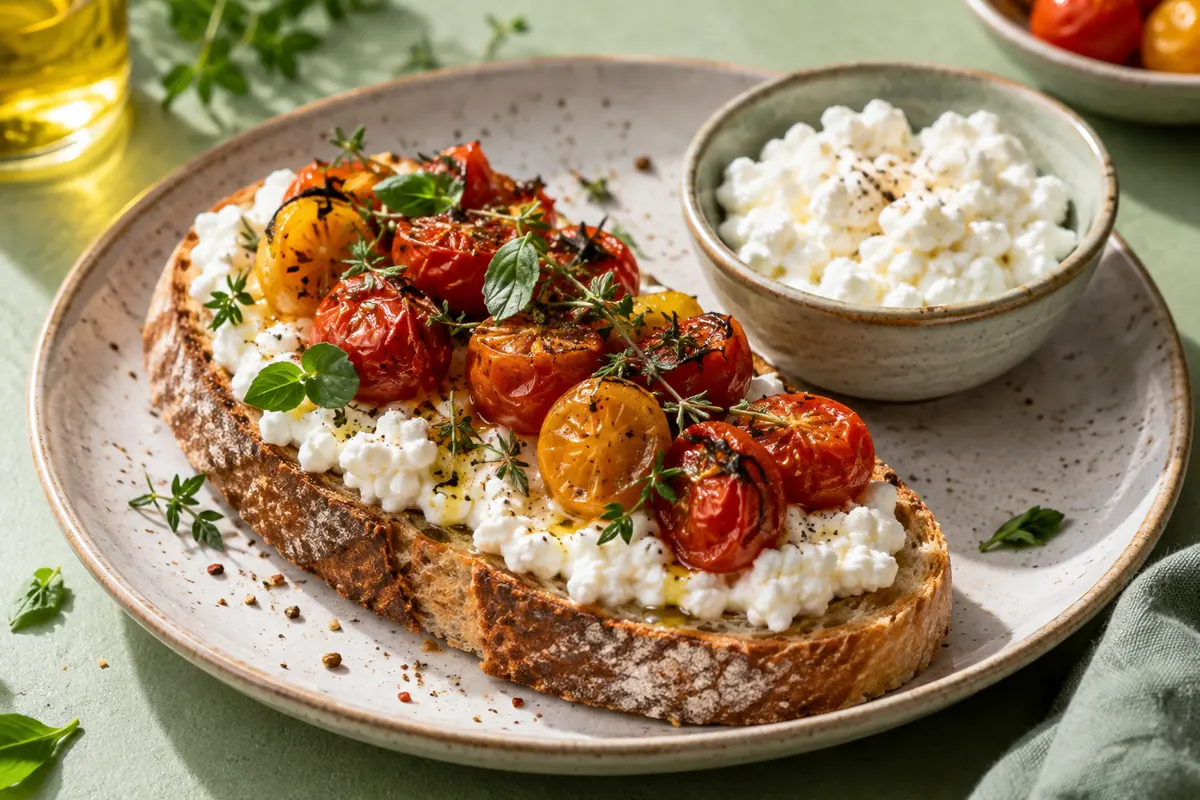
There is no rule that cottage cheese must disappear into a blender. On toast, beside roasted vegetables, or in a bowl with herbs, the curds can provide a pleasing contrast. Add accompaniments that give the spoonful direction: something crisp, something aromatic, or a little acidity. A soft dairy ingredient beside a soft vegetable may need that contrast more than it needs another layer of richness. Begin with a modest serving and taste a complete bite before adding more seasoning.
Toast is a useful place to start because it puts structure underneath the cheese. Dry the surface of cut vegetables when appropriate so they do not immediately soak the bread. Add fragile herbs close to serving and keep perishable components chilled until assembly. This is a flexible meal idea rather than a formula with a claimed yield or tested time. For a more substantial dish, use a reliable recipe whose quantities and method match the ingredients you plan to use. A straightforward serving can be satisfying without being disguised as a different food.
Blend only when you want a smoother result
Blending changes the texture, which can make cottage cheese useful for certain dips and sauces. It does not erase its salt, acidity, or moisture. Taste the blended base before adding strong seasonings, and follow a recipe if you need a specific consistency. A small quantity may be easier to process in a suitable small food processor than in a large blender jar whose blades cannot engage it properly. Check the appliance's minimum practical amount and operating instructions rather than running an unsuitable setup for longer.
Stop and scrape as the method and machine allow, with the appliance safely off. Add liquid cautiously if the recipe calls for it. Too much can turn a spread into a pourable sauce, and adding more cheese later may create a larger batch than you wanted. Keep the task proportionate: if you enjoy the curds and only want a topping for toast, the extra machine may add little. Blending earns its place when the final texture improves the dish you actually plan to eat.
Choose a sauce recipe that accounts for heat
Dairy sauces require more thought than pouring a cold ingredient into the hottest part of the pan. A recipe using cottage cheese may blend it with other ingredients and warm it in a controlled way. Follow that sequence rather than treating it as interchangeable with a sauce built around heavy cream or a starch-thickened base. Daisy's published pasta method is one example of the ingredient being used deliberately in a sauce. It establishes a cooking direction, not a guarantee that any improvised mixture will behave identically.
Consider the full sauce before changing it. Tomatoes bring water and acidity, pasta contributes starch, and cheese adds its own seasoning. If the sauce becomes too thick, use the liquid and method the recipe specifies, adding gradually. If it appears separated or grainy, more heat is not automatically the cure. Keep the cooking gentle where directed and assess the result honestly. A sauce should be judged by how it coats and tastes with the food, rather than whether it resembles a social-media close-up for a few seconds.
Use fillings and baking formulas as complete systems
In a baked filling, cottage cheese may share the work with eggs, starch, other cheeses, or vegetables. Each component can affect how the dish sets and how much moisture it releases. Use a recipe that specifies the product and preparation, then follow its pan size and cooking directions. Replacing another cheese by volume without considering drainage or salt can change the result substantially. Keep any adaptation small and clearly recorded so you know what to revisit if the filling turns watery or unexpectedly firm.
The same caution applies to baking. A batter is a relationship between flour, liquid, fat, leavening, and structure. Adding a large spoonful of cottage cheese because it sounds useful changes that relationship. Choose a developed baking recipe that already includes it rather than expecting an unrelated formula to absorb the addition without consequence. You can still experiment, but give an experiment a manageable batch and avoid serving it as the only important dish at a gathering. A reliable meal leaves room to learn without making every component uncertain.
Season in the order the food will be eaten
Salt the final dish after considering its other ingredients. Bread, preserved vegetables, hard cheese, and packaged sauces can all contribute seasoning. Taste the cottage cheese with its actual partners instead of correcting it in isolation. Add black pepper, herbs, chile, or citrus in small amounts according to the direction you want. A mild base can carry bold flavor, but several strong additions at once make it difficult to identify which one is helping. Keep the first version simple enough to understand.
For a cold dip, let the recipe's required resting or chilling time happen before making a final judgment. For a warm dish, taste an appropriately cooled spoonful so temperature does not obscure the balance. Use clean utensils and keep handling and storage appropriate for dairy. A lively flavor does not establish a longer storage life, and blending does not refresh an old product. Buy a quantity you can use comfortably and plan a second sensible meal only if the remaining ingredient has been stored correctly.
Keep the uses that make dinner better
A useful cottage cheese habit might be as modest as toast with chopped herbs or a particular pasta sauce you enjoy repeating. It does not need to spread into every category of food. Notice whether the ingredient improves the texture, helps the method, or simply gives you a flavor you like. If the best part of the dish comes from everything added to cover it, choose a different ingredient next time. Practical cooking allows an ordinary food to have a few good jobs.
Keep a few uses tied to the tub's actual texture. Distinct curds can sit over toast with chopped herbs and a crisp vegetable alongside. A recipe-developed blended spread can become a separate component for dipping, while a baked filling needs its own balance of eggs, vegetables, and other ingredients. Reserve enough for the next intended use before adding strong seasonings to the whole tub. Our fresh-cheese guide explains related ingredients, but the useful decision here is specific: leave the curds visible, blend for smoothness, or use a complete cooking formula.
Keep in mind
Taste the actual product before seasoning; salt, curd size, and moisture differ.
Use a developed formula for heated sauces or baking rather than a blanket one-for-one substitution.