A tin can be the start of dinner
Start with the fish itself. Sardines, mackerel, tuna, anchovies, mussels, and other preserved seafood have different textures, intensities, and usual roles. A tin of anchovies intended mainly for seasoning is a different starting point from a tin of fish meant to be eaten in larger pieces. Read the species, preparation, and packing medium. Smoked, oil-packed, water-packed, and sauced products will lead dinner in different directions. The design on the box can be lovely, but it cannot tell you whether the contents suit the meal you have in mind.
Put it to work
Useful tools, at a glance
A medium plastic prep board
OXO Good Grips Plastic Utility Cutting Board
Let the packing liquid inform the plate
Oil-packed fish may already bring richness, while fish in a tomato or mustard sauce arrives with a prepared flavor. Taste a small piece before adding another oily dressing or strong sauce. Reserve a little of a suitable packing oil if you plan to use it on bread or in the meal, but you do not need to pour the whole tin onto the plate. A shallow serving dish makes it easier to lift pieces cleanly and keeps liquid from running beneath everything else you have arranged.
Water-packed fish may benefit from a different approach, perhaps a modest dressing or a soft spread underneath. The point is not that one packing style is better; it is that the rest of the plate should respond to it. A highly seasoned tin may want plain bread and cucumber. A simpler fish may welcome mustard, citrus, or chopped herbs. If you serve several tins, name the varieties so people can choose deliberately, and keep utensils separate when different allergens or sauces are involved.
Make bread do more than fill space
Bread is both an accompaniment and a tool for carrying the fish. Thin crisp toast supports a small topping, while a sturdier slice can hold a more substantial open sandwich. Cut it into pieces people can lift comfortably and avoid making every slice so hard that the fish falls off when someone bites. If using a creamy spread, apply it in a restrained layer. Its job can be to hold the topping and add contrast, rather than become the largest component of every bite.
Serve toast close to eating and keep it away from a wet plate until needed. A stack covered tightly while warm can soften in its own steam. Crackers offer an immediately ready alternative, though their salt matters beside fish and pickles. Choose one bread or cracker base before adding several similar options. A soft slice suits an open sandwich with a spread beneath the fish, while a firmer crisp piece can support a small sardine portion. Keep enough plain bread available to taste a highly seasoned tin without another strong coating.
Choose freshness with a practical purpose
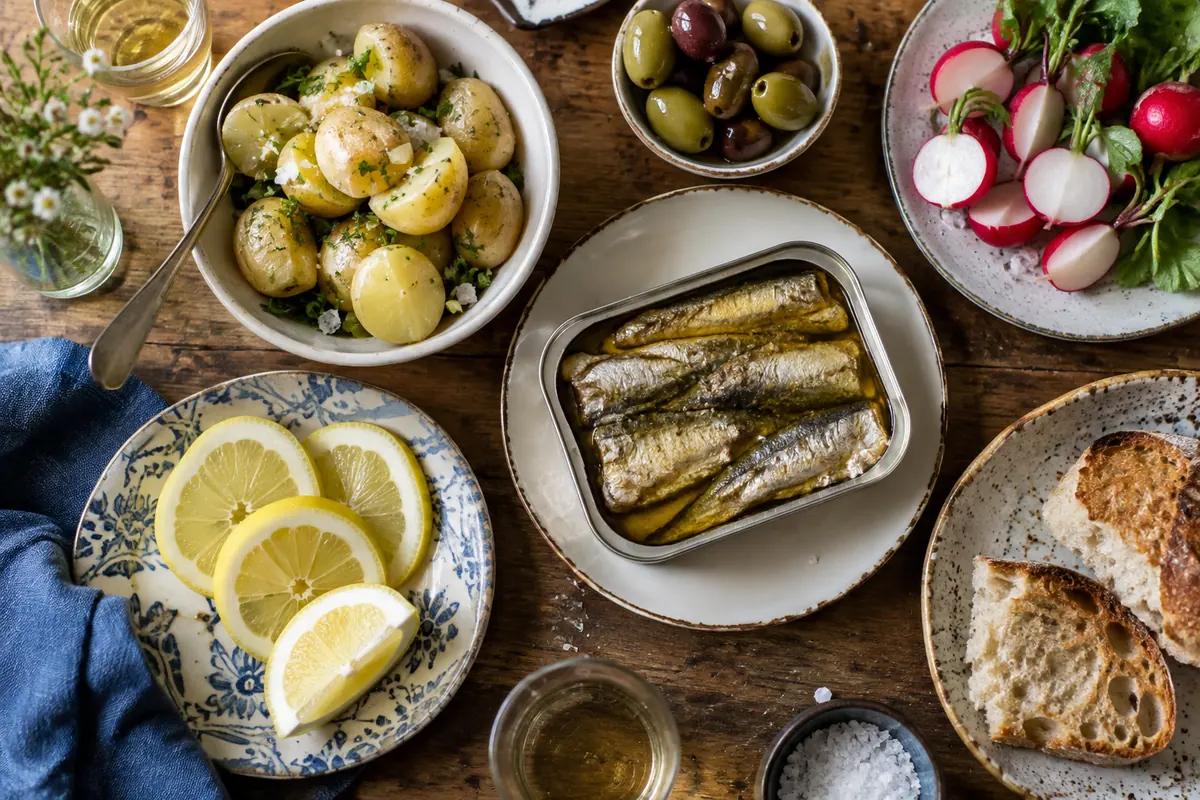
Tomatoes, cucumber, radishes, tender leaves, or a simple slaw can give a rich fish plate something fresh to move between. Use what is good and available instead of buying a long list for color alone. Cut the vegetables to suit the meal: cucumber rounds can be picked up, tomato wedges can sit beside toast, and a lightly dressed leaf can provide a separate forkful. If a vegetable is very juicy, keep it in its own bowl so the bread does not spend dinner soaking underneath it.
Acid belongs in the plan, but it can arrive in several forms. Lemon, a pickle, a small amount of vinegar in a salad, or a tart mustard sauce can each play the role. You may need only one or two. Covering the fish in lemon before anyone tastes it removes the chance to experience the tin's own seasoning. Offer wedges at the table, or dress a separate vegetable lightly. That lets a richer or saltier tin remain enjoyable without making every element of the supper equally sour.
Use a ready-to-eat bean component
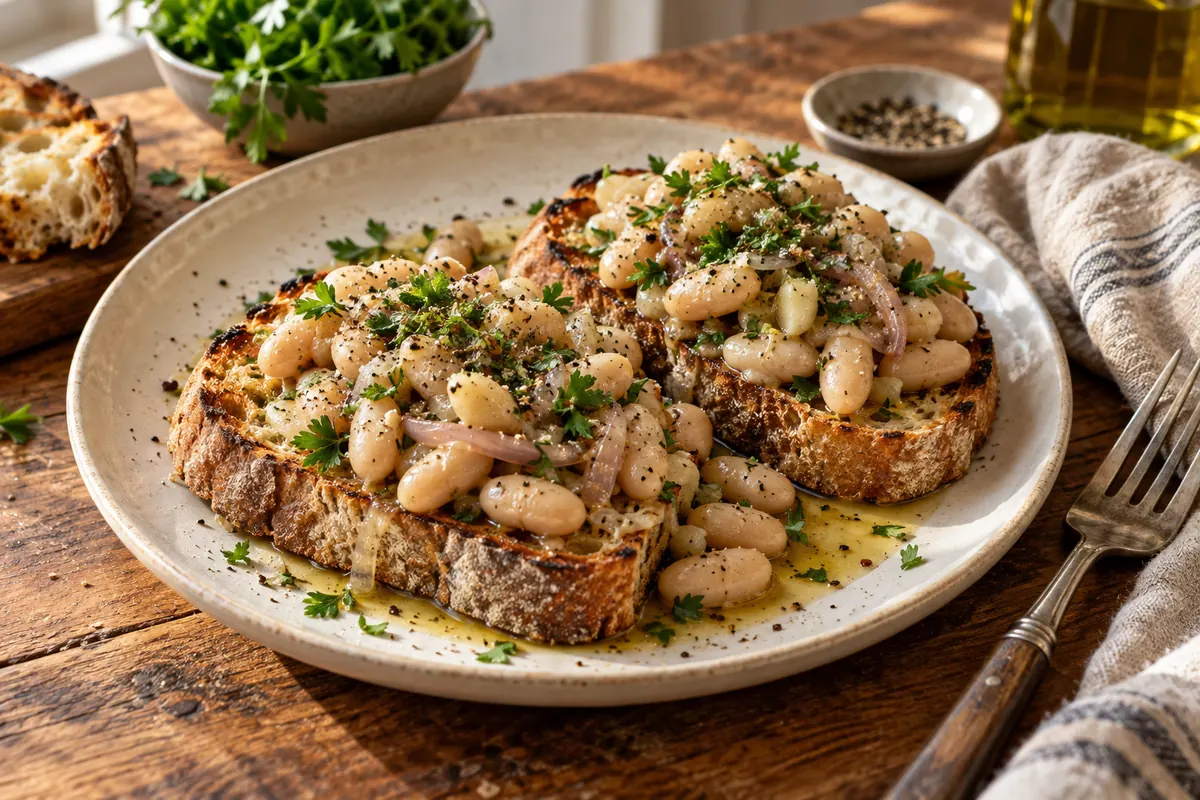
A small bowl of prepared beans can make the assembled supper more substantial. Drain canned beans well and dress them lightly with lemon, herbs, or another suitable finish, keeping them properly chilled before service. Taste the dressing alongside the fish: an oily tin may need a sharper bean accompaniment, while a strongly sauced fish can sit beside relatively plain beans. Serve the two in separate dishes so diners choose the proportion. This gives the table a soft component without turning the meal into a second hot cooking project.
If cooking for several people, plan portions around appetite and the number of other components rather than assuming one tin has a universal serving count. The package gives useful information, but people eating fish with bread and beans may want a different amount from people sampling several tins after another course. Put out a manageable first selection and keep additional food ready if needed. Opening every tin in advance creates a storage problem if the table is already full and everyone becomes satisfied sooner than expected.
A short menu makes the table easier
A small-plate supper benefits from a little order. Place the fish with a serving utensil, keep bread within reach, and give any wet vegetable or pickle its own container. People should be able to understand the meal without moving six objects to reach a fork. If children or guests are unfamiliar with a fish, describe the product plainly and let them choose a small taste. Do not hide bones, strong seasoning, or an allergen behind a vague name intended to make the food sound more approachable.
Consider whether you want a shared table or individual plates. Shared dishes suit a relaxed meal, but a prepared plate can make portioning and dietary needs clearer. Either arrangement can be simple. A fish tin with a pull tab does not eliminate the need for clean preparation surfaces, suitable utensils, and careful handling after opening. Transfer opened leftovers to a suitable covered container and refrigerate according to reliable guidance and the product instructions. The unopened tin's long cupboard life does not continue unchanged once dinner begins.
Build a useful pantry one tin at a time
Choose a small selection with a reason for each tin. One mild preparation can introduce an unfamiliar species, while a more assertive smoked or sauced product can offer a different bite. Read skin and bone information rather than assuming neighboring tins are prepared identically. If serving both, keep them named and in separate dishes with their own utensils. Avoid opening a large assortment before anyone has eaten; an unopened shelf-stable tin can stay available as a reserve, while opened fish immediately joins the meal's perishable storage plan.
Build the final table around a few complete bites. A sardine can sit on plain toast with a tomato wedge alongside, letting the fish's packing medium supply most of the richness. A milder flaked fish can take a little mustard or a soft spread beneath it. Beans and cucumber can fill the space between those bites without competing with them. Keep the fish, wet vegetables, and bread apart until diners assemble a serving. For a hot pasta or potato dinner, use the separate canned-fish cooking guide and its different sequence.
Keep in mind
Read the fish species, preparation, and packing medium before planning accompaniments.
Refrigerate opened leftovers appropriately; unopened shelf life does not apply after opening.