The purple shelf holds several different ingredients
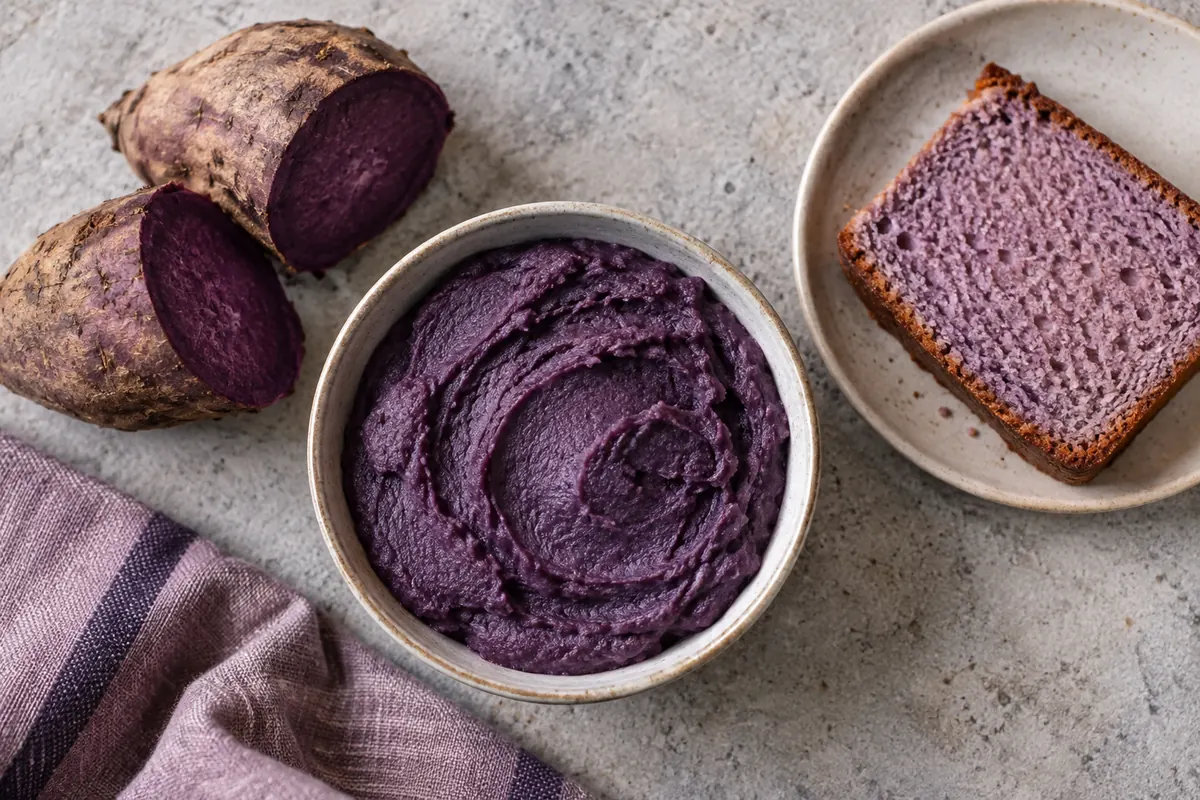
Ube is purple yam, identified in Philippine Department of Science and Technology resources as Dioscorea alata. It is a yam rather than a general name for every purple root vegetable. Purple sweet potatoes and taro belong to different plants, even when a shop display groups similarly colored products together. Look for the ingredient name and the form on the actual package. A color photograph alone cannot establish what is inside, how it has been processed, or what it will contribute to a loaf or filling.
Put it to work
Useful tools, at a glance
Weighing ingredients in bowls that cover a fixed display
OXO Good Grips 11-pound Food Scale
Cooked yam brings substance as well as flavor
A recipe written for cooked yam expects more than a few drops of purple flavor. The mashed ingredient contributes body and moisture, and its preparation affects how evenly it mixes into a batter. Follow the recipe's directions for cooking, peeling, cooling, and mashing the tuber. If using a frozen prepared product, establish whether it is raw grated yam, cooked mashed yam, or a sweetened mixture. Those descriptions matter more to the bake than whether the packet has an attractive picture of a cake.
Measure in the form the recipe specifies. A weight of cooked, peeled mash is not automatically the weight of an unpeeled tuber from the shop. A kitchen scale helps keep that distinction clear, particularly when pieces vary in size. Do not correct an unexpectedly stiff or loose batter by adding large amounts of flour before checking whether the yam was prepared correctly. The formula may have been designed around a different product, and extra flour can create a new problem without resolving the original mismatch.
Halaya is already a finished preparation
Ube halaya is a Filipino sweet preparation commonly made with cooked yam and milk, with recipes varying in their other ingredients. A commercial jar should be read as a particular prepared food, rather than assumed to be plain yam. Check its label for sweetness, dairy, texture, and storage instructions. It can be a useful filling or an ingredient in a cake designed to use it. It is less useful as an improvised replacement in a formula whose sugar and liquids were already balanced around unsweetened mash.
When choosing a recipe for halaya, look for enough detail to identify the intended consistency and quantity. A firm homemade preparation and a looser commercial spread can behave differently in a swirl or sandwich filling. Keep fillings within the recipe's suggested amount so the center does not become an oversized wet layer. Taste the halaya itself before pairing it with sweet frosting. A restrained finish can let its character remain clearer than a second, equally sweet component piled on top of a small slice.
Powder and flavoring require their own instructions
A powdered product may be intended for rehydration, direct mixing, or a particular prepared dessert. Read what the maker actually says, including whether other ingredients have been added. Replacing a spoonful of flour with an arbitrary amount of purple powder is not a reliable route to a good cake. If the recipe calls for a named type of powder, find that type or choose another formula. This is one of those purchases where a clear back label is more useful than a promising front panel.
Bottled ube flavoring or extract supplies another contribution, often in a small dose. Depending on the product, it may also supply color. It does not bring the physical substance of mashed yam or halaya, so a batter designed for either of those ingredients still needs that component. Follow the stated usage and the recipe's amount instead of pouring until the mixture reaches a desired purple. Keep flavoring for the project that names it, and use a halaya filling only where its sweetness and consistency belong in the complete dessert.
Choose the cake around the ingredient
A loaf, a chiffon, and a layered celebration cake are different projects with different demands. For a first ube bake, choose the recipe that best matches both your purchased ingredient and your available pan. Read the method through to cooling and assembly before starting. A cake that needs inverted cooling or a particular tube pan cannot be simplified just by pouring it into the nearest tin. The necessary tools follow the method; they should not be guessed from a finished photograph.
For a loaf-style project, a scale and the specified loaf pan are useful, unglamorous supports. Weighing helps with a dense prepared ingredient that is awkward to level in a cup. The correct pan gives the batter the depth the author planned for. If the only pan available differs substantially, look for a recipe designed for it rather than treating the original baking time as transferable. Deep color at the edges is not a substitute for following the recipe's doneness cues in the center.
Line or prepare the pan exactly as the recipe directs, too. Releasing a delicate cake cleanly depends on that early step, and an unfamiliar filling is enough to learn without also improvising how the finished loaf will leave its tin.
Let texture decide the accompaniment
An ube dessert with a soft, rich filling may benefit from a simple cake or bread around it. A lighter cake may suit a modest cream accompaniment, provided the recipe supports the assembly and storage. Decide which element should lead instead of adding every familiar dessert component. Coconut can be a compatible flavor, but sweetened coconut products change the overall sweetness and moisture. Keep those distinctions visible when planning the plate. A pleasant pairing depends on the form of each ingredient, not only the names.
If a trial slice seems too sweet, inspect the combination before changing the cake formula. Sweetened halaya, flavored syrup, frosting, and a sweet drink may all be contributing to the same bite. Serving the next slice more simply is an easier adjustment than removing an unknown amount of sugar from a baking formula. If the crumb is heavy, review the ingredient form, mixing, pan, and bake separately. Calling every problem an ube issue hides the ordinary baking decisions that still govern the result.
Keep the identity and the kitchen note together
Assign the remaining ingredient according to its form. Sweetened halaya can supply a filling in a recipe developed for it, while plain cooked mash belongs in a formula that accounts for its body and moisture. Powder needs its own preparation directions, and a small bottle of flavoring should remain a measured addition rather than a replacement for yam. Follow each product's storage instructions after opening, including refrigeration where required. Keeping these foods in their intended roles prevents a nearly empty jar from becoming an arbitrary extra layer of sugar or liquid in the next cake.
Ube deserves more precise attention than a promise of purple food. Buying the correct form respects the ingredient and saves the effort of repairing a mismatched formula later. Begin with one coherent project, use the pan it requires, and keep other flavorings restrained enough to taste what you made. The next purchase then becomes an informed choice: another jar for a filling, cooked yam for a particular cake, or a different recipe altogether. That is a far more useful baking habit than choosing the brightest package.