Give the apple a savory job
Think about the whole plate instead of building an apple dish and finding dinner afterward. Pork and mustard offer one familiar direction, while lentils, cabbage, and a sharp dressing make another. Apples can also suit a warm grain bowl whose roasted vegetables need a brighter edge. Leave cinnamon and sugar out of the first decision. They may have a place in a particular recipe, but the fruit already supplies sweetness, and savory cooking gives you other ways to shape it.
Put it to work
Useful tools, at a glance
A medium plastic prep board
OXO Good Grips Plastic Utility Cutting Board
Skillet sauces and ordinary browning in uncoated stainless steel
Tramontina Signature 10-inch Tri-Ply Clad Fry Pan
Choose by texture, then by the name on the bag
Named varieties give a useful starting point. University of Minnesota describes Honeycrisp as juicy and crisp, with good fresh-eating and cooking uses, while Haralson is listed for cooking and fresh eating. SnowSweet is described as sweet, low in acid, and slow to brown when cut, making its sweetness a real consideration in a savory salad. These examples do not replace tasting the fruit. Choose a crisp raw apple for a slaw, or follow a cooked recipe's requested style when wedges or a soft accompaniment are the goal. Availability and stored condition still matter.
Buy a modest amount when trying an unfamiliar variety. A crisp raw bite does not tell you exactly how a wedge will cook, and fruit held for different periods may feel different in the pan. Keep the label until you know whether you liked the result. If the recipe specifies a firm, tart apple, preserve that intention instead of substituting solely on color. The balance of the dish depends on the fruit's character as well as its quantity.
Cut for the bite you want to eat
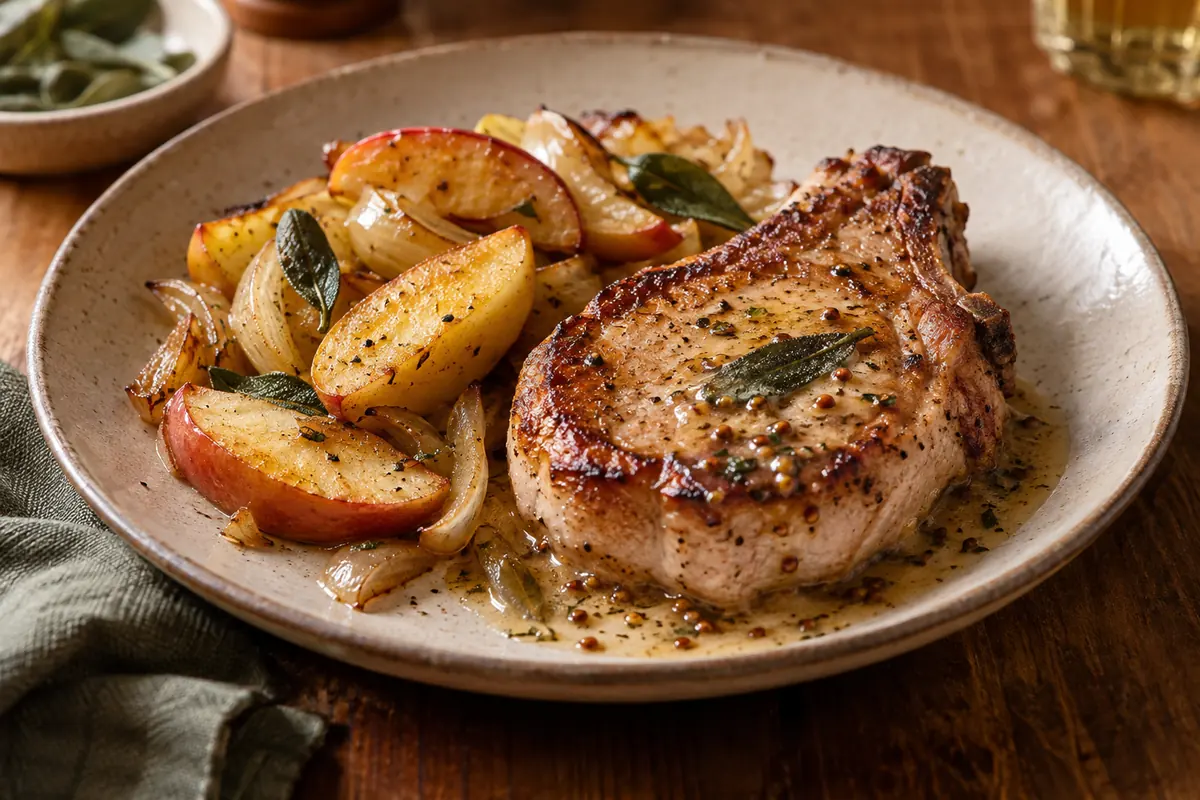
Broad wedges can develop a browned face while keeping a distinct center. Smaller pieces distribute through a filling or sauce, but they are easier to lose among onions and other soft ingredients. Thin raw slices can bring crispness without forcing someone to tackle a large piece with every forkful. Match the cut to the other food. A substantial pork chop can carry wedges; a finely shredded slaw usually works better with pieces that mingle rather than sit on top as a separate fruit course.
Wash the fruit under running water before cutting and remove damaged areas as appropriate. Decide whether the skin helps the dish. It gives a raw salad color and a little chew, while some soft preparations call for peeled fruit. Use a stable board, a sharp suitable knife, and a flat surface on the apple once you have made the first cut. Prepare only the amount the recipe needs. More fruit means more moisture and sweetness, which can change the pan's behavior as well as the finished plate.
Brown wedges without turning them into a sauce
Give apple wedges enough room to contact the pan. A mound of fruit releases moisture into itself, making a soft preparation even when you hoped for browned sides. Use an appropriate amount of fat and the heat called for by your recipe, then allow a cut face time against the surface. Check the underside before turning rather than moving each wedge continuously. If the fruit is already tender and beginning to break, stop chasing a darker color at the expense of the texture you wanted.
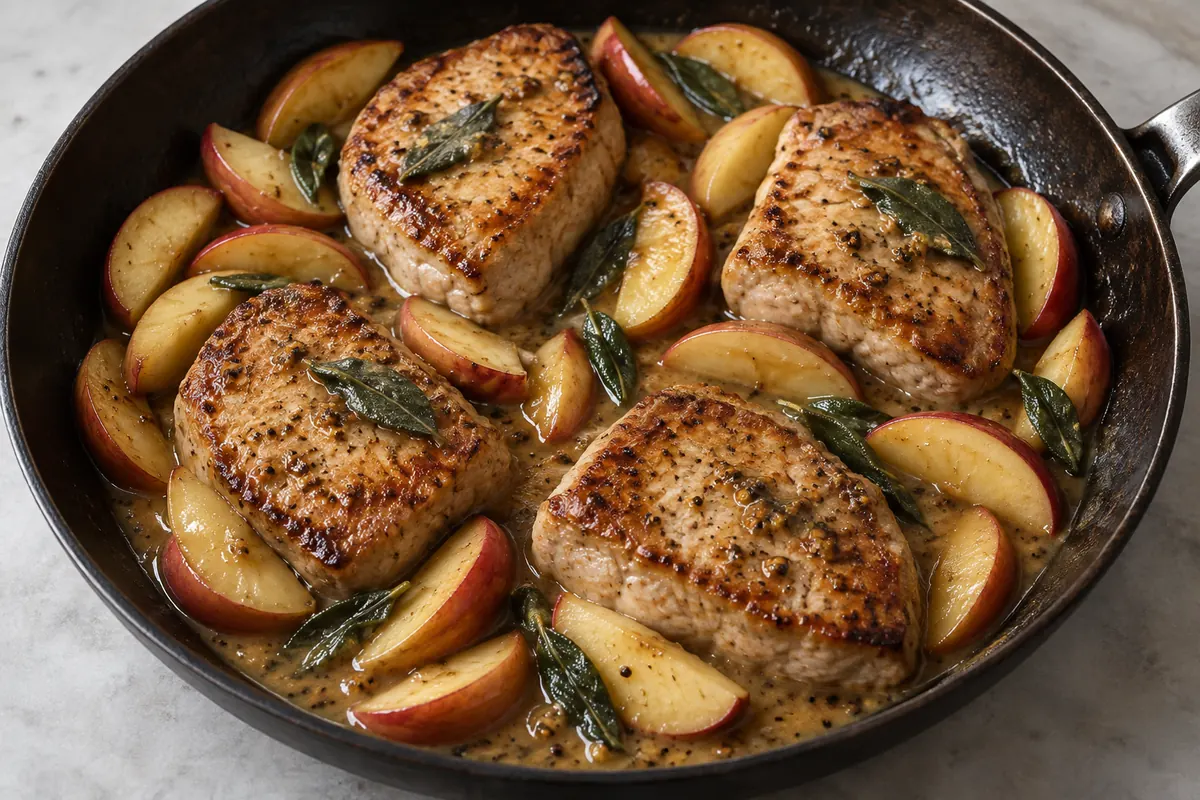
Cooking apples separately can make sense when the main ingredient has a different schedule. It lets you remove the fruit at the right point and return it when the sauce is ready. Keep raw-meat utensils away from the finished apples, and use a reliable recipe for the meat itself. Our apple and sage pork chops offer a complete direction for that pairing. Treat the accompanying fruit as a separate texture decision rather than using it to judge whether the pork has cooked sufficiently.
Balance sweetness with something that belongs at dinner
Mustard, vinegar, black pepper, herbs, and the savory depth of cooked onions can each give apple a different setting. Choose one or two directions rather than using everything sharp in the cupboard. Taste a complete forkful of apple and the main food before adjusting the sauce. A bite of fruit alone may seem sweet while the full plate is balanced. Conversely, a sauce that tastes pleasantly sharp on a spoon can become too forceful when the apple is tart and the side dish is dressed too.
Acidity is easiest to add gradually. Mix a small amount into the sauce or dressing, taste, then decide whether the next addition is necessary. If cheese, stock, cured meat, or a condiment contributes salt, account for it before seasoning the entire pan. Sweetness can be moderated by changing the proportion of fruit to the rest of the meal, not only by adding more acid. Sometimes serving fewer wedges and more cabbage gives the plate the balance it was missing.
Keep raw apples crisp in salads
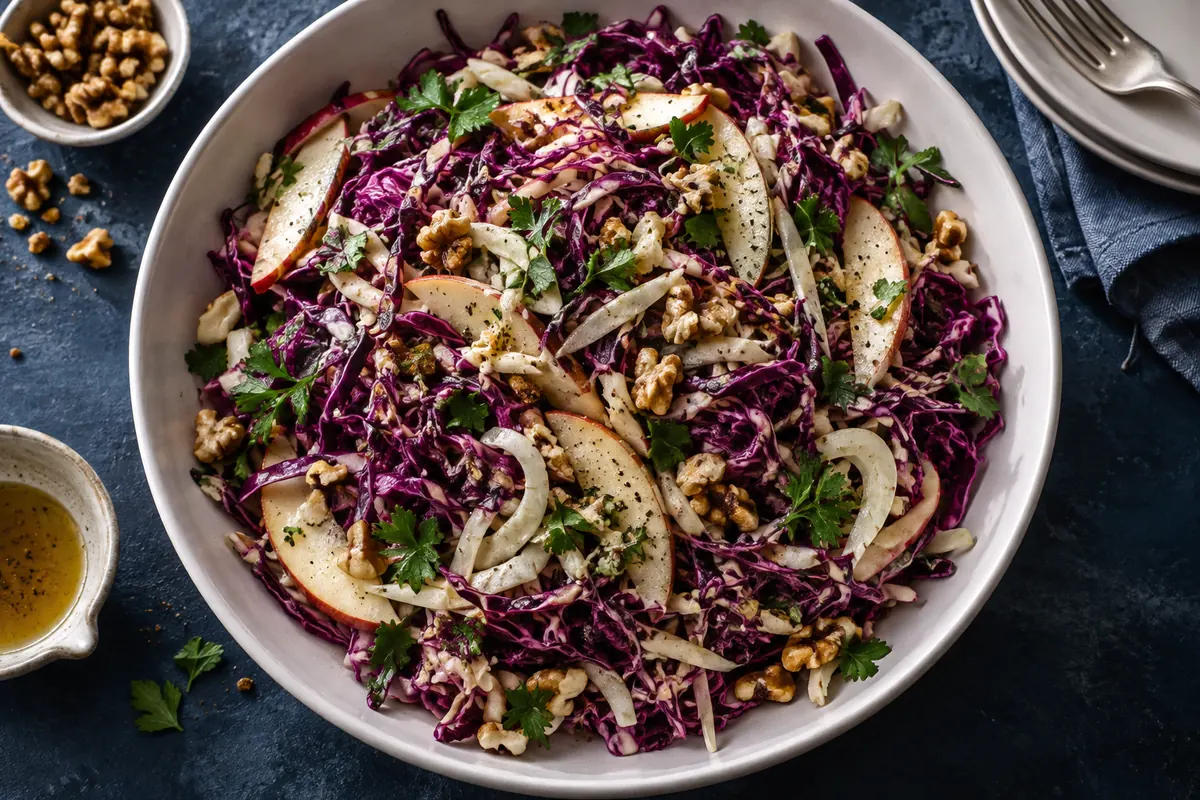
In a salad, cut apples close enough to serving that their texture remains the feature. Follow the chosen recipe if an acidic dressing is used to limit browning, and expect the coating to affect flavor too. A little discoloration is a presentation issue, not a reason to drown the fruit in lemon. Pair the slices with vegetables that stand up to them: cabbage, fennel, and sturdy leaves can give a different experience from tender lettuce weighed down by a large quantity of fruit.
Keep nuts or other crisp finishing ingredients separate until the point that suits the dish. If the salad is being packed ahead, consider storing the dressing and apple separately so each component arrives in good condition. Use clean utensils and keep perishable additions chilled appropriately. A salad with apple, cheese, and a creamy dressing has different handling needs from a whole apple sitting in a fruit bowl. Plan the journey and the waiting time as carefully as the first appealing arrangement on the plate.
Turn a cooked portion into a different meal
Cooked apples and onions can accompany beans, become a small component of a warm lentil bowl, or sit beside roasted cabbage. The next meal needs its own proportion and seasoning. A spoonful that was excellent with pork may dominate a lighter dish, so add it in stages. If the apples have softened completely, use that fact deliberately instead of trying to restore firm wedges. They might become part of a sauce whose texture is supposed to be smooth and spoonable.
Handle the leftovers according to the complete dish and current guidance. Cool perishable cooked food promptly in suitable shallow portions, and keep the date visible. Reheat foods that require it thoroughly rather than merely taking the chill off the surface. Avoid making a large batch solely because apples are available. A small amount prepared for two clear meals is easier to use well than a container that becomes an obligation every time you open the refrigerator.
Use the equipment that makes the cut and pan manageable
A stable cutting board and a comfortable chef's knife cover most apple preparation. A wide skillet helps when distinct browned wedges are the goal, while a smaller saucepan may suit a deliberately soft accompaniment. Our verified OXO utility board and Tramontina steel skillet are relevant examples, but check the size against your counter and burner before buying. A large pan creates space only if it receives heat where the food is sitting and can be lifted safely when full.
Use the apple's role to choose the final arrangement. Thin raw slices can run through cabbage beside a rich main dish; browned wedges can sit separately where their cut faces remain visible; softer apple and onion can supply a small accompaniment to lentils or beans. Keep the fruit proportion modest until you taste a complete bite. A sweet apple may need a sharper companion, while a tart one may already provide the contrast. This gives apples a clear place in dinner without automatically adding the cinnamon, syrup, or sugar associated with a dessert.
Keep in mind
Choose apple texture for the intended preparation, and taste the actual fruit before adjusting acidity.
Prepare raw fruit with clean equipment and follow handling guidance for the complete finished dish.