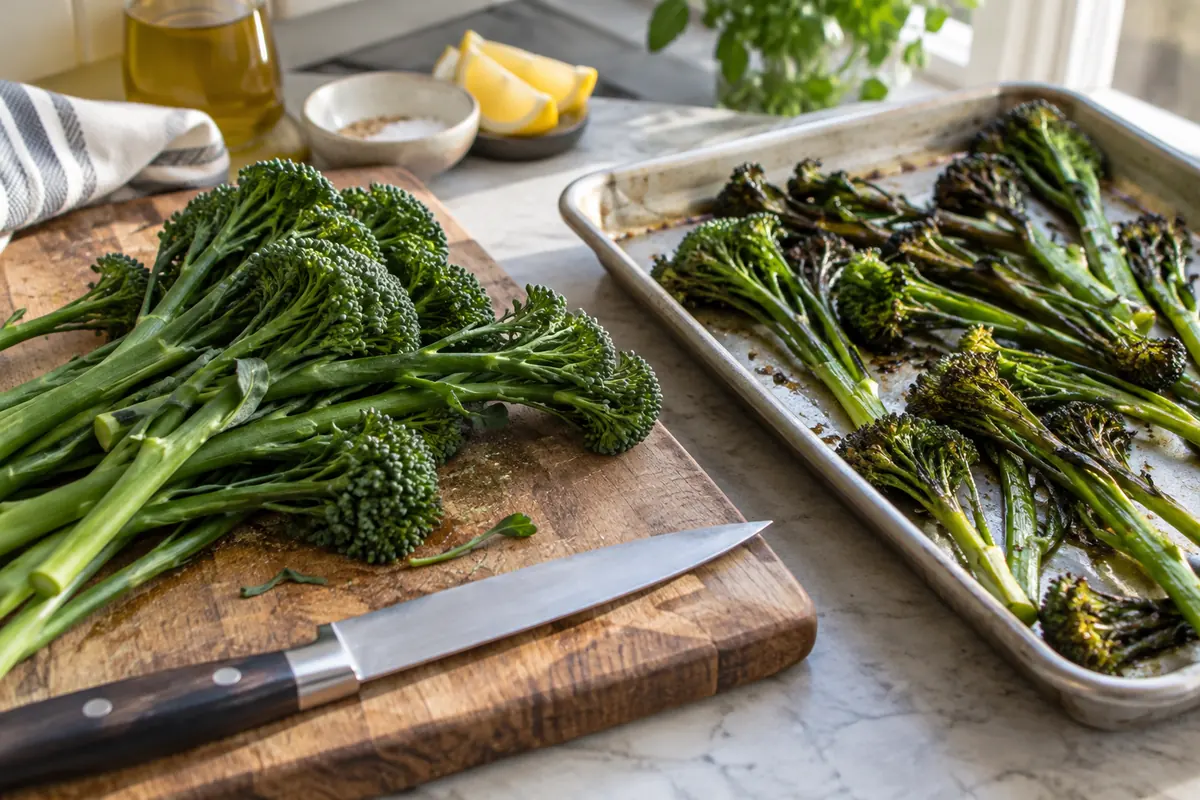
The long stem is the reason to buy it
Broccolini is a broccoli and gai lan cross, as the University of Minnesota's variety trial explains; it is distinct from broccoli rabe. A name on a shop sign can be imprecise, so look at the actual vegetable and ask when uncertain. This guide concerns the long, relatively slender stems topped with small broccoli-like florets. If you bring home broad leafy greens or a large dense broccoli head, adjust the preparation rather than forcing a different vegetable into the same sequence.
Put it to work
Useful tools, at a glance
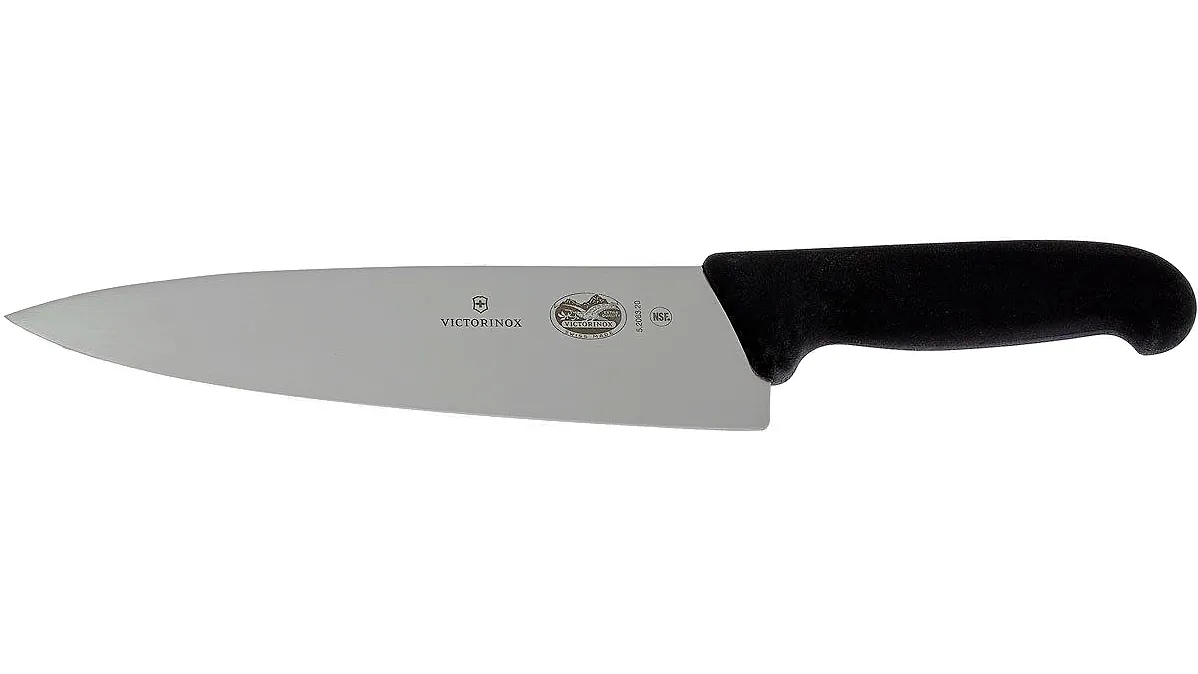
General chopping with a wide chef knife
Victorinox Fibrox Pro 8-inch Chef Knife
Buy for the meal and inspect the stems
Look for a bunch in good condition, with firm stems and florets that suit the preparation you want. Avoid buying a large quantity just because the spears look attractive in a package. A modest amount can stretch across a grain bowl or pasta, while a generous side dish needs more room in the pan. Check the cut ends and the thickness of the individual stalks. A bunch with very uneven stems may need a little sorting before it cooks evenly.
Refrigerate perishable produce and keep it separate from raw meat, poultry, and seafood. Wash the broccolini under running water before preparing it, paying attention to any debris around the florets, and dry it well when roasting is the plan. FDA advises washing produce without soap. Letting excess water drip into a hot oiled pan can create splatter and delay browning. A clean towel and a few minutes of draining are simple preparations that make the cooking stage easier to control.
Trim the end rather than shortening every spear
Cut away a dry or woody end, then assess the remaining stem. Some stalks need very little trimming. A thicker one may benefit from being split lengthwise so its center can cook at a similar pace to the slender pieces. Keep the floret attached when that makes handling easier. A sharp knife on a stable board is more useful here than a rule that every spear must lose a fixed number of inches.
If the lower stem has a tough exterior, peel a little of that area rather than discarding the entire length automatically. You can also separate the thicker lower pieces and start them earlier. Group similar sizes together as you work. This small amount of sorting prevents the familiar problem of waiting for one resistant stalk while the rest of the tray darkens. Keep the pieces large enough to lift and turn comfortably; a pile of tiny fragments is harder to manage.
Roast for contact, then check the thickest point
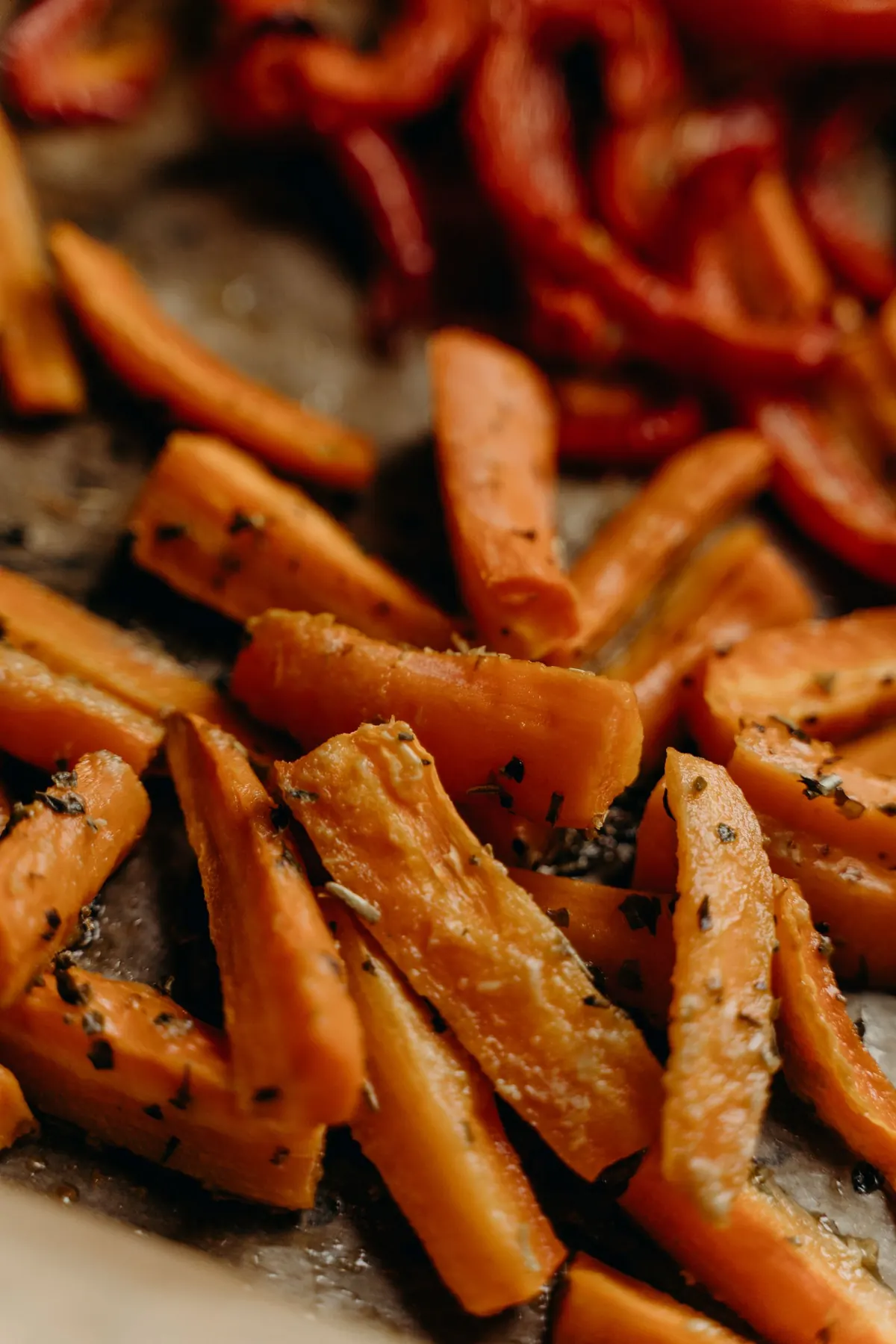
For roasting, toss the dried spears with a light coating of oil and seasoning, spread them on a suitable metal tray, and leave room between them. A Nordic Ware half sheet is one useful option when its size fits the oven. A smaller batch on an existing tray may be better than crowding the surface. Turn some cut faces toward the metal so the thicker stems get direct contact, and keep fragile florets from being trapped underneath a heavy pile.
Use a preheated oven and follow the heat guidance for the tray and any coating. Check early, turn as needed, and test a thick stem with a small knife. Browned tips are only one cue. If the stems remain hard while the florets are becoming too dark, use a gentler finish or change the cut next time. Avoid assuming that longer at the same high heat will improve both parts equally. The stem and the floret have different shapes and can need different attention.
Use a covered pan when tenderness matters most
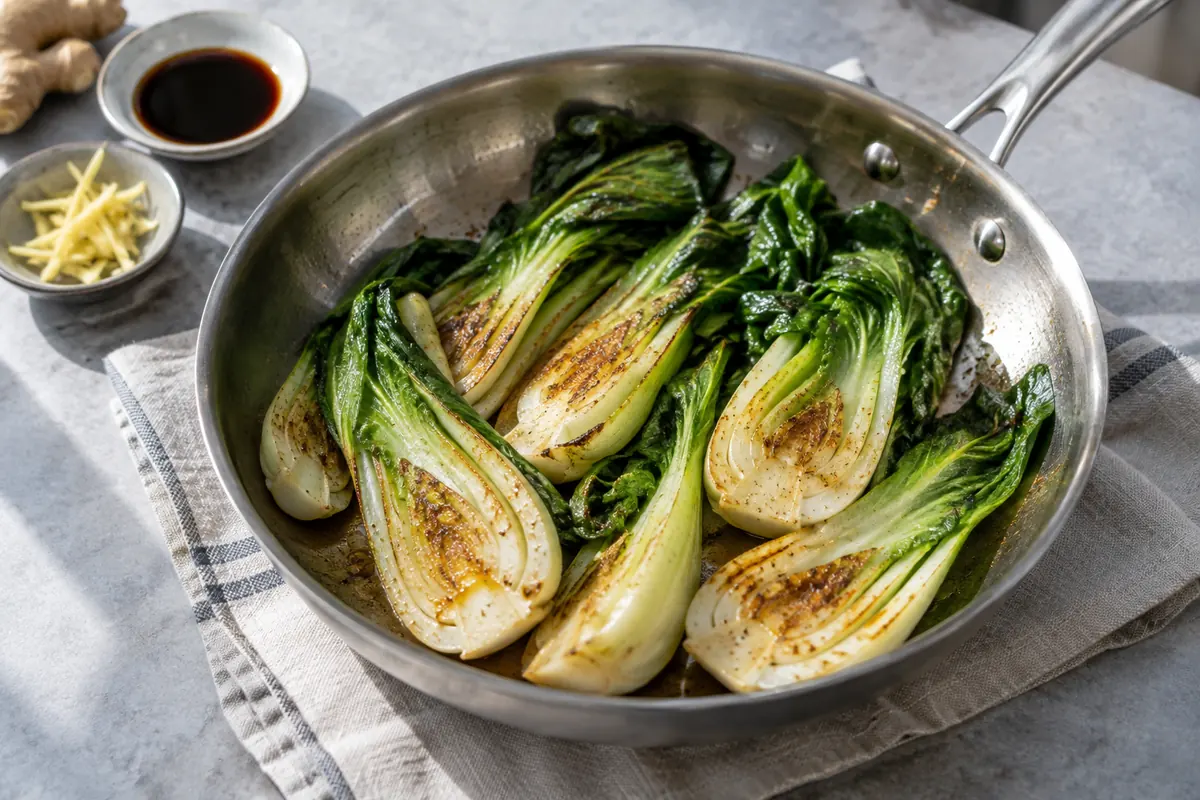
A skillet gives you another way to manage that difference. Start the thicker stems with a little water and cover briefly so steam can help soften them, then uncover and let the moisture evaporate before finishing with oil and color as the recipe directs. Keep your hands clear of steam when lifting the lid. This approach is useful when the bunch has larger stems or when you want a tender vegetable with only a few browned patches.
Do not pour cold water into a very hot, nearly dry oiled pan. Plan the water stage from the beginning and follow the pan's instructions. Once the liquid has gone, reduce the heat if necessary before adding small garlic pieces or delicate seasonings. A lid that fits and a pan with enough room are the practical tools. The goal is a controlled change from moist cooking to a drier finish, rather than a dramatic blast of heat at the end.
Choose a finish that reaches the stems
A little lemon juice, olive oil, and salt can be enough, but taste a piece of stem as well as a floret. The florets collect seasoning easily while a thick smooth stem can remain comparatively plain. Cut finished spears into shorter lengths if that makes the dressing easier to distribute, or spoon some sauce across the stems instead of only decorating the tips. Serve extra dressing separately when keeping a browned surface matters.
For a creamy finish, loosen tahini with water and lemon until it pours, or use a modest yogurt sauce where it suits the rest of dinner. Add nuts, seeds, or toasted crumbs for one contrasting texture. Avoid weighing down a small amount of broccolini with every condiment on the shelf. The vegetable can carry a generous sauce, but its long stems should still be easy to see and eat. A simple finish also leaves room for the main dish's seasoning.
Make the vegetable part of a complete plate
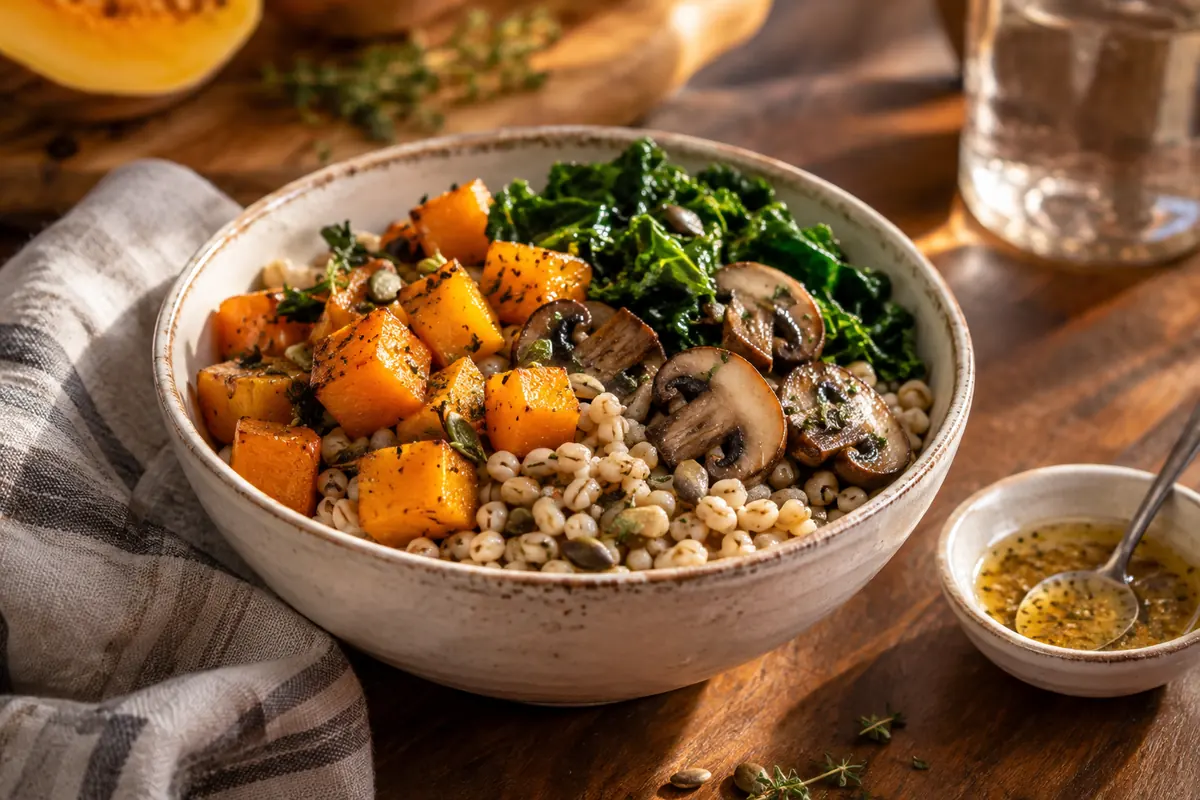
Broccolini can sit beside fish, eggs, beans, or a grain bowl without needing to become a large standalone project. With pasta, cook the stems to the texture you want before folding them through the sauce, and shorten them so the fork can manage both pasta and vegetable. With barley or rice, leave a few longer pieces for contrast but keep some dressing available to moisten the grain. Think about how the plate will be eaten, not only how the spears will lie across it.
When sharing oven space with a main dish, plan separate cooking endpoints. A tray of vegetables does not need to wait until a roast is done simply because both went into the oven together. Keep raw-meat juices away from vegetables that will not receive the appropriate cooking, and use separate tools as needed. Cook the broccolini earlier if necessary and give it a brief finish, rather than letting it spend an extended time in a cooling oven while other food catches up.
Use a softer leftover in a different form
Refrigerate cooked leftovers promptly in shallow containers, keep the refrigerator at 40°F or below, and use within three to four days or freeze. Reheat leftovers to 165°F. A stored spear may lose the fresh batch's crispness, so choose a use that welcomes a softer texture. Chop it into a bean skillet, add it to a soup near the end, or use it in an egg dish cooked to the appropriate endpoint. Keep any crunchy topping separate until serving.
Keep longer spears for a plate where they can be lifted with a fork, such as fish with rice or beans with lemon sauce. For pasta, shorten the cooked stems so a forkful can hold both noodle and vegetable without pulling an entire spear across the plate. A few chopped leftovers can instead join soup, where softened florets are welcome. The useful cut is the one that makes the stem easy to eat. Season along that stem as well as the tips, leaving some browned surface visible above any creamy sauce.
Keep in mind
Split thick stems lengthwise when the bunch has uneven stalks.
Check stem tenderness separately from the color of the florets.