A grain bowl needs a grain you want to eat
The renewed retail attention to fiber-containing pantry foods in Whole Foods Market's 2026 forecast makes grains a useful adjacent topic, without proving that barley bowls are a measured search trend. The cooking question is independent of that forecast: can one pot of a fairly plain grain help turn ordinary vegetables into a meal you want to repeat? Barley is especially useful when a bowl needs a little chew and a mild flavor that will not compete with its dressing.
Put it to work
Useful tools, at a glance
Rinsing ingredients and straining small batches
Cuisinart Stainless Steel Mesh Strainers, Set of 3
Pearled and hulled are different purchases
Pearled barley has had more of its outer layers removed and is not classified as a whole grain. Hulled barley retains more of the kernel and generally needs longer cooking. Quick-cooking products create another timing category. Read the actual package before making a weeknight promise based on a recipe written for a different form. A bag that cooks in a relatively short time and a bag that needs a longer simmer can both be useful, but they fit different evenings.
Barley contains gluten, so it is not suitable when a gluten-free grain is required. Choose a different ingredient and verify the complete meal for the relevant dietary need. A grain bowl's wholesome appearance does not establish that it fits every restriction. For flavor and texture, begin with the barley you can reliably buy and learn its behavior. A familiar package and a clear cooking method are more helpful than collecting several varieties that need different treatment and remain half-used in the cupboard.
Cook for tenderness, then decide what to do with the liquid
Follow the package's liquid and timing guidance, using a pot with room for the grain to expand. Begin checking near the suggested finish and taste several kernels. Pleasant chew is different from a hard, chalky center. If the grain needs longer, keep enough liquid in the pot and continue gently rather than letting the bottom dry out. A lid and a steady simmer can make the cooking stage predictable, but the kernel remains the best guide to its texture.
For a salad-like bowl, drain excess liquid and let surface steam escape briefly before adding the other components. Do not leave cooked grain sitting out as a cooling strategy for later storage. For a brothy bowl, retain suitable liquid or add a separate flavorful broth when serving. These are different destinations. A grain meant to sit beneath a dressing should not bring an accidental cup of cooking water that dilutes every other ingredient in the bowl.
Choose vegetables that create a second texture
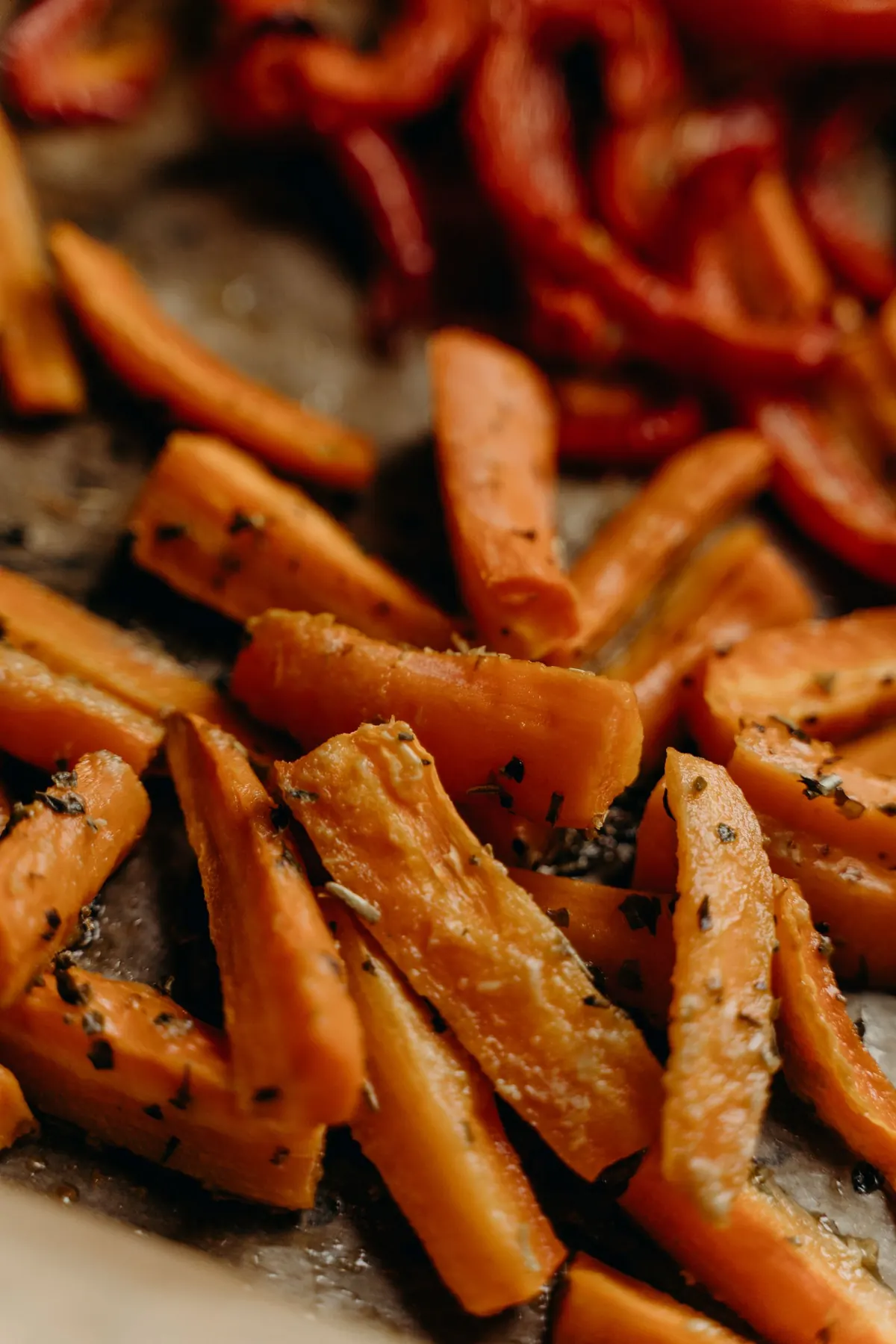
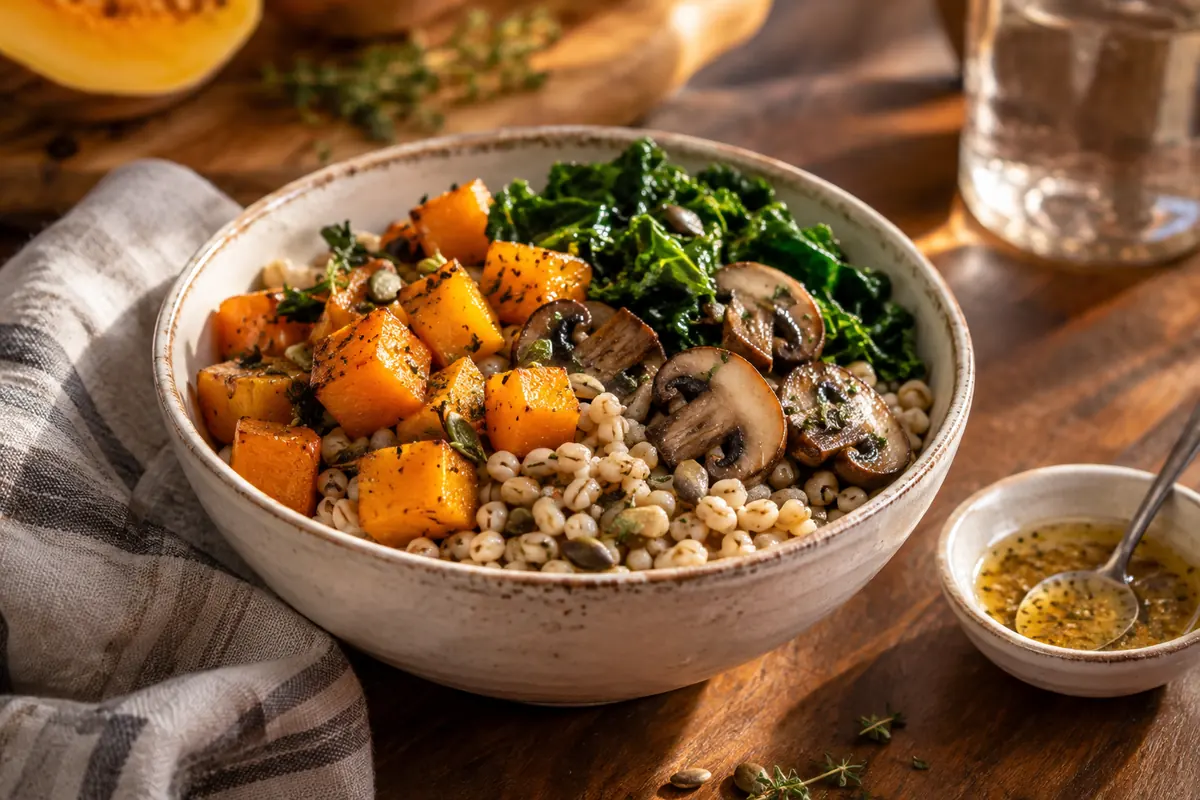
Roasted carrots, squash, cabbage, or mushrooms can work well beside barley because their browned surfaces add another dimension. Cook them with the space and heat they need rather than piling them on top of wet grain in the oven. The grain can warm separately while the vegetables finish. A little raw or lightly cooked vegetable can then add a fresher element, provided it is cut for comfortable eating. Think about the spoonful rather than arranging isolated piles only for appearance.
If every component is soft, introduce a deliberate contrast: a crisp radish, a small amount of toasted seeds, or a leafy accompaniment dressed near serving. If everything is firm and dry, add something spoonable, such as beans with a little broth or a thin yogurt sauce. The point is not to include every texture in every meal. It is to notice what the bowl lacks and add one ingredient that solves that specific problem.
A dressing should reach the kernels
Barley's mild flavor benefits from a dressing that can disperse rather than sit as a thick mound on top. Lemon and olive oil with herbs make one straightforward direction. Mustard and vinegar offer another. Mix the dressing separately and taste it with a spoonful of grain before coating the whole batch. The grain will soften the apparent sharpness, so the final mixture may need a little more seasoning than a taste of the dressing alone suggests.
For a creamy sauce, loosen tahini or yogurt to a pourable consistency with suitable liquid and add salt and acid gradually. Account for salty toppings such as cheese, olives, or capers before making the base too strongly seasoned. Dress only the portion you intend to eat when you want the stored grain to remain flexible. A plainly cooked batch can become several meals, while a whole pot coated in one strong sauce has already made most of those choices for you.
Use the same pot in a different format
A portion of cooked barley can go into soup near the end, making it more substantial without requiring a second long grain-cooking stage. Add enough broth to suit the texture you want and remember that grain can continue absorbing liquid as it stands. For a pan of cooked mushrooms and onions, barley can become a warm side with a small amount of butter or oil and herbs. Neither preparation has to resemble the previous evening's bowl.
A cold lunch can combine barley with lentils and crisp vegetables, while a warm dinner can pair it with roasted fish or chicken prepared safely by its own method. Choose a portion that fits the meal. A large heap of grain beneath several heavy toppings may make lunch more cumbersome than satisfying. A smaller serving with a well-seasoned accompaniment often creates a clearer plate. The advantage of a prepared grain is flexibility, not an instruction to use as much of it as possible at every meal.
Make storage part of the batch size
Cooked grain belongs in prompt refrigeration, not on the counter until the next day. Divide it into shallow portions, refrigerate within two hours, and keep the refrigerator at 40°F or below. Use refrigerated leftovers within three to four days or freeze later portions. Reheat leftovers to 165°F, adding a little suitable liquid if the grain has become dry. Check the center as well as the steaming edge when reheating a dense container.
Freeze amounts that correspond to a real bowl or soup rather than one solid block that is awkward to divide. Label the date and whether the grain is plain or seasoned. Follow the container's expansion and heating instructions, and keep delicate toppings separate. If the household only wants barley once or twice, cook a smaller batch. Saving a theoretical few minutes by making an enormous pot does not help if the remaining portions become a refrigerator burden that nobody wants to eat.
Let the bowl have one clear direction
Before assembling, describe the meal in a short phrase: lemony barley with carrots and chickpeas, or barley in mushroom broth with greens. If the description requires naming six sauces, the bowl may need fewer ingredients. This is especially useful when using leftovers with their own seasonings. A curry, a strongly dressed salad, and plain grain do not automatically become a coherent dinner because they fit in the same vessel. Choose the components whose flavors make sense together.
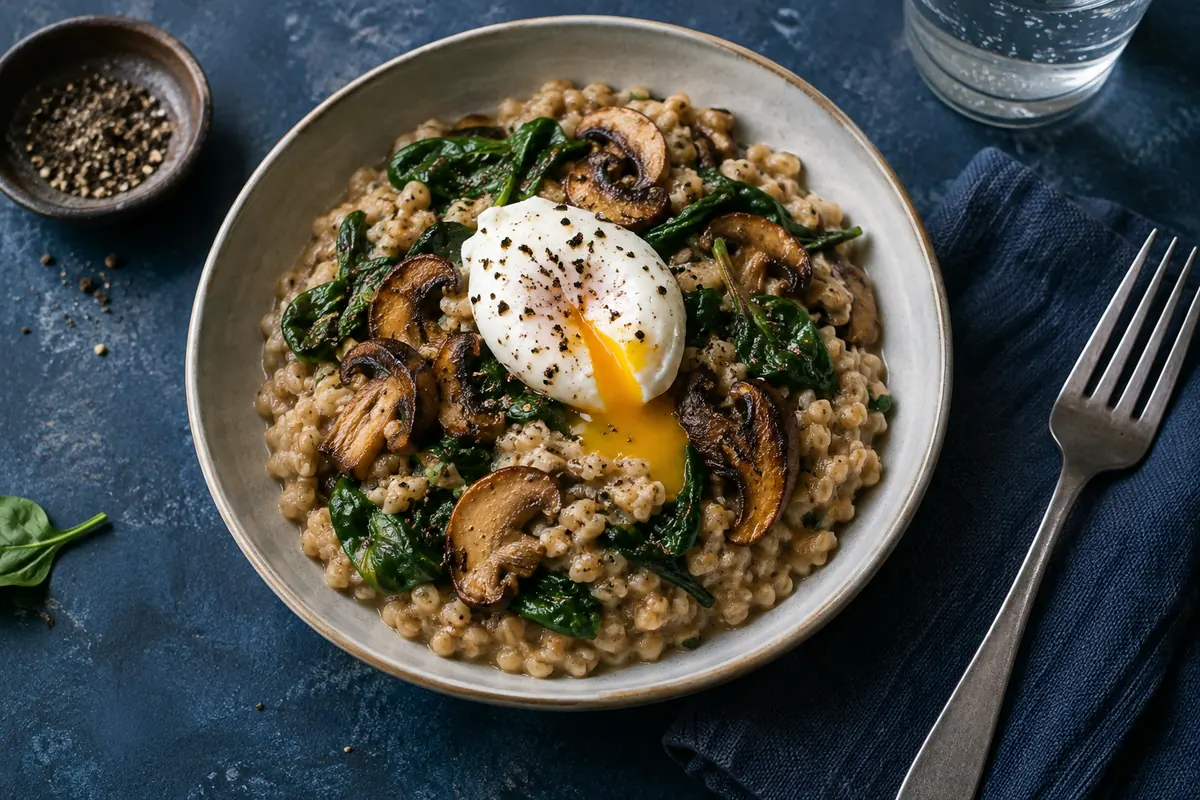
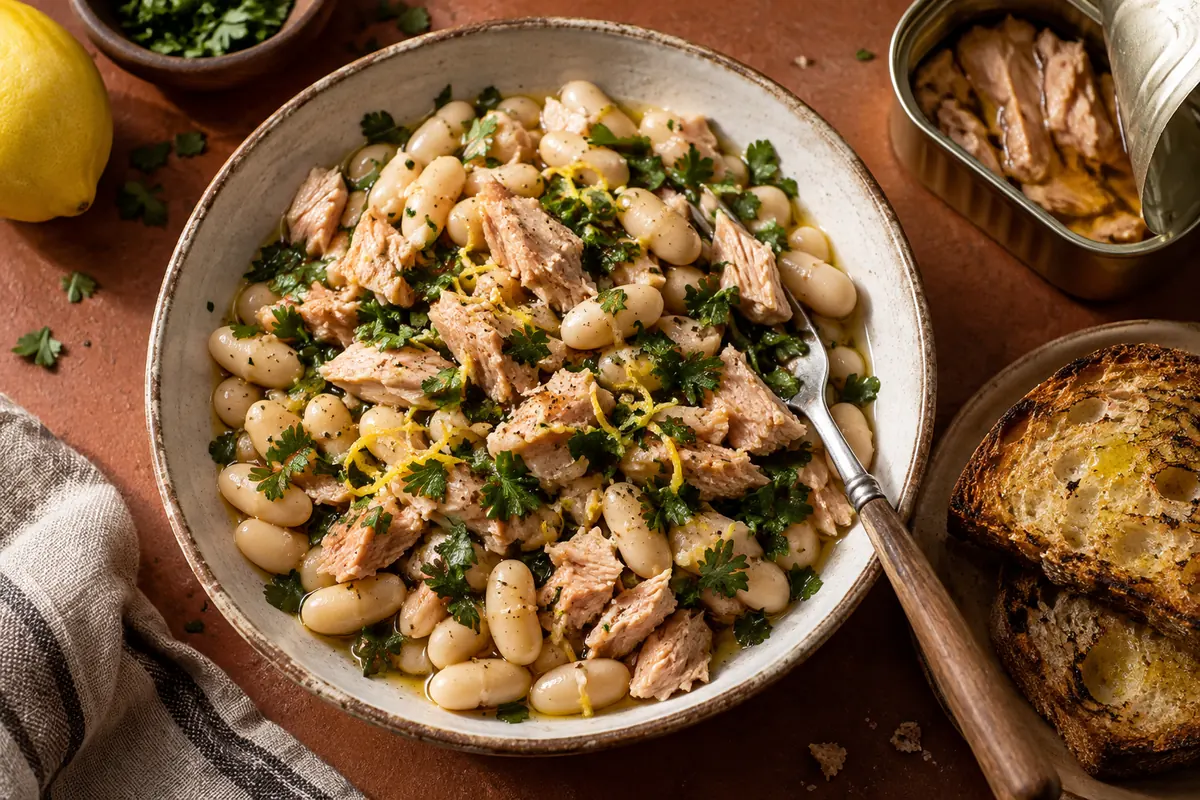
Use the kernels differently according to their surroundings. In a warm mushroom bowl, a little broth can collect between the barley and soften the impression of chew. For a lunch with celery, parsley, and white beans, drain the grain well and use a dressing that reaches the whole mixture. Alongside roast chicken or fish, a smaller spoonful of barley with herbs can serve as a side rather than a deep base. Choose the amount of grain after deciding what else is on the plate, so the final bites remain balanced.
Keep in mind
Barley contains gluten. Pearled barley and hulled barley also have different cooking times.
Taste the kernels for tenderness rather than relying on a fixed minute count.