Substantial should describe the meal, not the chewing
The current attention to beans sits alongside Whole Foods Market's 2026 forecast about fiber-containing foods. That forecast supports a broad editorial interest, not a measured claim about this exact salad phrase. In practice, beans have long belonged in dressed salads. The useful question is what a packed lunch needs now: ingredients that hold their shape, a portion that suits the eater, and a plan for the components that deteriorate fastest once mixed.
Put it to work
Useful tools, at a glance
Repeated lunch portions in matching containers
Rubbermaid Brilliance 3.2-cup Containers, Set of 5
Two kinds of bean are usually enough
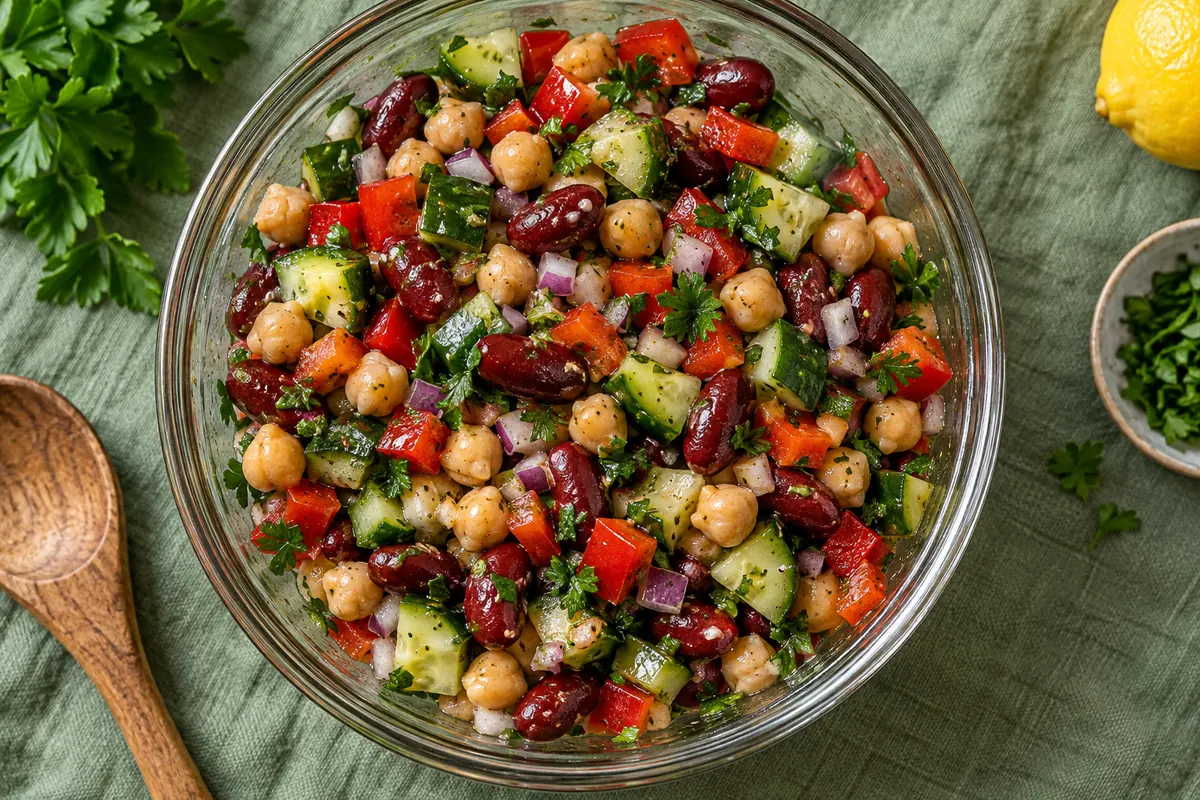
Choose one bean that stays firm and another whose texture you enjoy alongside it. Chickpeas bring a more resistant bite; white beans may be creamier; kidney or black beans bring their own flavor and appearance. There is no requirement to use five varieties. More cans can make the bowl larger without improving the contrast. If cooking from dry, stop at a fully cooked but intact texture rather than taking the beans to the point where stirring turns them into a spread.
For canned beans, drain them well and rinse as appropriate, then let excess water run away before dressing. A sieve resting over a bowl makes this easy while you chop the vegetables. Check for broken beans and handle particularly soft varieties gently. The difference between a pleasingly creamy bean and a damaged one matters more when the entire salad is mixed repeatedly. Use a broad spoon to fold rather than beating the ingredients together as if making a cake batter.
Crisp vegetables need a manageable cut
Celery, bell pepper, carrot, and radish can provide a firm counterpoint to beans. Cut them into pieces small enough to share a forkful with a bean but large enough to remain recognizable. A huge cube of raw onion can overwhelm the same spoonful that contains a beautifully seasoned chickpea. Taste a piece of the onion before committing the entire amount, and reduce it if it is particularly strong. A measured garnish is easier to add than to remove.
Watery vegetables require more thought. Cucumber can work, but a very seedy center and a long stay in dressing may leave extra liquid at the bottom. Tomatoes bring welcome flavor but can soften and release juice. Add them closer to eating when you want the stored base to remain crisp. Do not treat every leftover vegetable in the refrigerator as an automatic salad ingredient. Give each addition a job, then stop when the bowl has enough contrast.
Dress for beans rather than for lettuce
Beans usually need assertive seasoning because their mild interiors make a timid dressing disappear. Start with an acid you like, such as lemon juice or wine vinegar, then balance it with oil and a suitable amount of salt. Mustard can help a vinaigrette feel coherent and adds its own flavor. Mix a small amount separately, taste it with an actual bean, and adjust that combination. Judging neat dressing from a spoon can exaggerate the sharpness you will perceive in the salad.
Add dressing gradually and fold gently. After a short rest in the refrigerator, taste again because the balance will have changed. The solution to a dull bowl may be a little more acid or salt rather than twice as much oil. Pickles, olives, capers, and cheese can supply concentrated seasoning, so account for them before adding everything else. If the bowl tastes confused, choose fewer strong accents next time. A clear lemon-and-herb direction is easier to enjoy than several competing prepared sauces.
Keep herbs and fragile extras on a separate schedule
Parsley is sturdier than some delicate herbs, but even a generous chopped herb finish changes as it sits in dressing. Reserve part of it for the portion you are eating now. Tender leaves, avocado, crisp breadcrumbs, and toasted nuts generally make better last-minute additions than long-term residents of the main tub. Separating them does not make preparation complicated. A small container or a simple note on the lid can preserve the one texture that makes tomorrow's lunch feel fresh.
Cheese also deserves a deliberate choice. A firm crumbly cheese gives a different result from soft cubes that smear through the dressing. Add only what suits the flavor direction, and check any allergy or dietary requirements. If the salad is meant to be adaptable, keep its basic bean-and-vegetable mixture neutral enough to take different finishes. One portion can have herbs and cheese; another can join a cooked grain. That is more flexibility than making an enormous batch with every possible topping already mixed in.
Pack a lunch you can actually eat
A container should allow a little room to stir the portion without spilling dressing onto the desk. A wide, shallow shape can make the ingredients easier to combine than a narrow jar packed tightly to the lid. Use a leak-resistant container that suits the journey, then carry the salad under suitable cold conditions until it can be refrigerated. A sealed lid prevents a spill; it does not make perishable food safe at room temperature for a long commute and an entire morning.
Think about the rest of the meal before filling the box. Bread, a cooked grain, or a separate piece of fruit may suit the day better than simply doubling the salad. If bringing it to a shared table, identify the ingredients that might matter to other diners, including mustard, dairy, sesame, or nuts. Keep serving utensils clean and avoid letting a large bowl sit out repeatedly. A make-ahead dish is convenient because the work happens earlier, not because chilling stops being important.
A week's plan does not mean a week in one tub
Use a conservative leftover plan: refrigerate promptly at 40°F or below and use a prepared bean salad within three to four days, unless an ingredient requires a shorter limit. Make smaller batches when the household will not finish a large one. A salad with vinegar is still a refrigerated prepared food; a tangy taste does not establish a safe preserving process. Follow tested directions if making a genuinely preserved product rather than treating ordinary lunch dressing as canning liquid.
For a longer plan, store or freeze plain cooked beans appropriately and assemble a fresh salad later. Freezing the complete mixture can damage crisp vegetables and leave a watery result after thawing. Keeping the beans separate preserves more choices. Date the components and put the portion you intend to eat first where you will see it. The best meal preparation is not the fullest refrigerator; it is a sequence of meals that are used while their texture and storage time still make sense.
Use a spoonful to decide the next adjustment
Before packing the whole batch, taste a spoonful containing bean, vegetable, and dressing together. A pleasant bean on its own does not guarantee a balanced mouthful. If the salad is too soft, more chopped celery may help the current portion, while firmer beans or gentler handling will improve the next batch. If it is watery, drain the ingredients more carefully next time and keep the tomatoes separate. If every bite tastes of onion, reduce that ingredient before changing the entire dressing.
A finished bean salad can fill a pita, sit beside a baked potato, or become the substantial part of a lunch plate with bread. Those uses need different amounts of dressing. Drain a spoonful before filling bread so liquid does not collect in the bottom; leave a little extra dressing for a potato's mild interior. For a shared supper, put the bean mixture in a shallow bowl and offer tomatoes and herbs separately. The beans remain easy to serve while the fragile additions reach the plate in better condition.
Keep in mind
Reserve watery vegetables and crisp toppings for the portion you are eating.
A tangy dressing does not make a prepared bean salad shelf stable.