Crunch is a job an ingredient can do
Beans fit the broad pantry attention in Whole Foods Market's 2026 food forecast, but this particular use is a cooking angle rather than a measured search-trend claim. The technique is also established in extension cooking resources. The more interesting question is how to move roasted chickpeas from snack bowl to dinner plate. Choose a meal that needs their texture, roast an amount that fits the pan, and add them close enough to eating that the work remains noticeable.
Put it to work
Useful tools, at a glance
Roasting and baking with an uncoated pan
Nordic Ware Naturals Half Sheet, 2-Pack
Start with cooked chickpeas and a dry surface
Canned chickpeas are a convenient starting point. Drain and rinse them as appropriate, then let excess water run away and dry the surface with a clean towel. Chickpeas cooked from dry can also work when they are fully cooked and drained. The oven has to remove moisture before the surface becomes crisp, so beginning with a puddle adds work without adding flavor. Loose skins can be removed if they come away easily, but peeling every chickpea is not a requirement for an ordinary dinner.
Use a rimmed sheet pan so the chickpeas stay contained when moved. Spread them in a single layer with enough space to roll and turn. A small batch on a suitably sized tray is usually more practical than a large batch crowded onto whatever pan is closest. If you plan to roast vegetables at the same time, consider separate trays. Juices from a heap of vegetables can keep the chickpeas soft, and the two ingredients may need different times before they are ready.
Follow a clear roasting method and watch the result
A roasting temperature around 400°F is a common starting point in extension recipes, but use a complete method and a pan suited to that heat. Different methods add oil and seasoning at different stages. Choose one sequence rather than combining the highest heat from one recipe with the longest time from another. Shake or turn the chickpeas as directed so the same patch does not stay against the metal for the entire roast. Check near the end because small, dry pieces can move from pleasantly toasted to bitter quickly.
Judge the cooled texture as well as the hot one. A chickpea taken directly from the oven may still feel different from one that has had a short chance to release steam. Let a sample cool enough to taste safely. If it remains soft, the batch may need more drying time; if it is hard in an unpleasant way, more roasting is not necessarily the solution. Use the most pleasantly crisp pieces as a surface garnish. A softer but safely cooked portion can join beans or vegetables without being presented as a crunchy topping.
Seasoning should stay attached without scorching
A modest coating of oil can help seasonings adhere, but a heavy pool does not guarantee crispness. Use the amount and sequence in the chosen method. Small quantities of ground spices can toast quickly, so watch for burning and add delicate flavors later when appropriate. Salt and pepper may be enough for a chickpea topping that will meet a strongly flavored dressing. A complex spice mixture can be enjoyable, but it should fit the dinner rather than compete with every other component.
Lemon juice and other wet finishes can soften the surface, so consider adding zest or serving acid in the accompanying sauce instead. Fresh herbs can be scattered over the plate rather than mixed into a hot storage container. If the chickpeas taste too strongly seasoned alone, try one with the vegetable or grain they will accompany before making a final judgment. The garnish and the base are meant to work together. Season the complete spoonful, not just the isolated ingredient.
Give them a place on the plate where texture survives
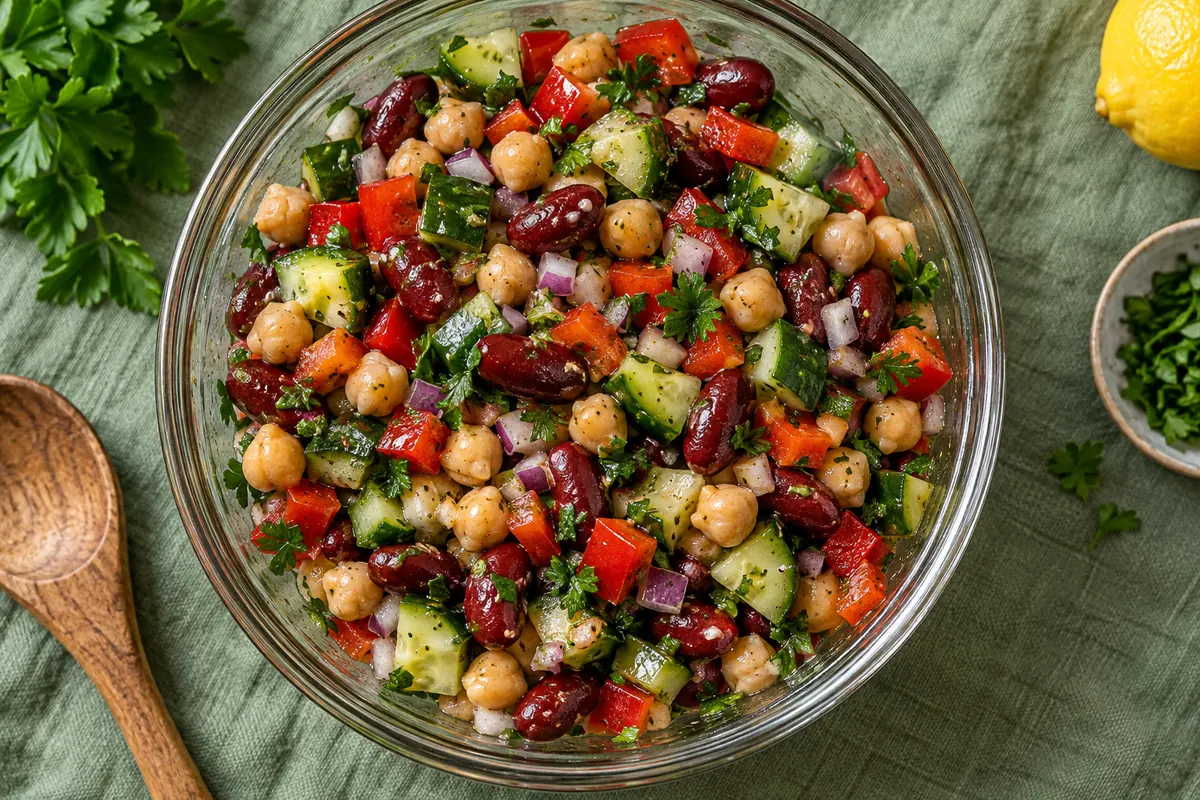
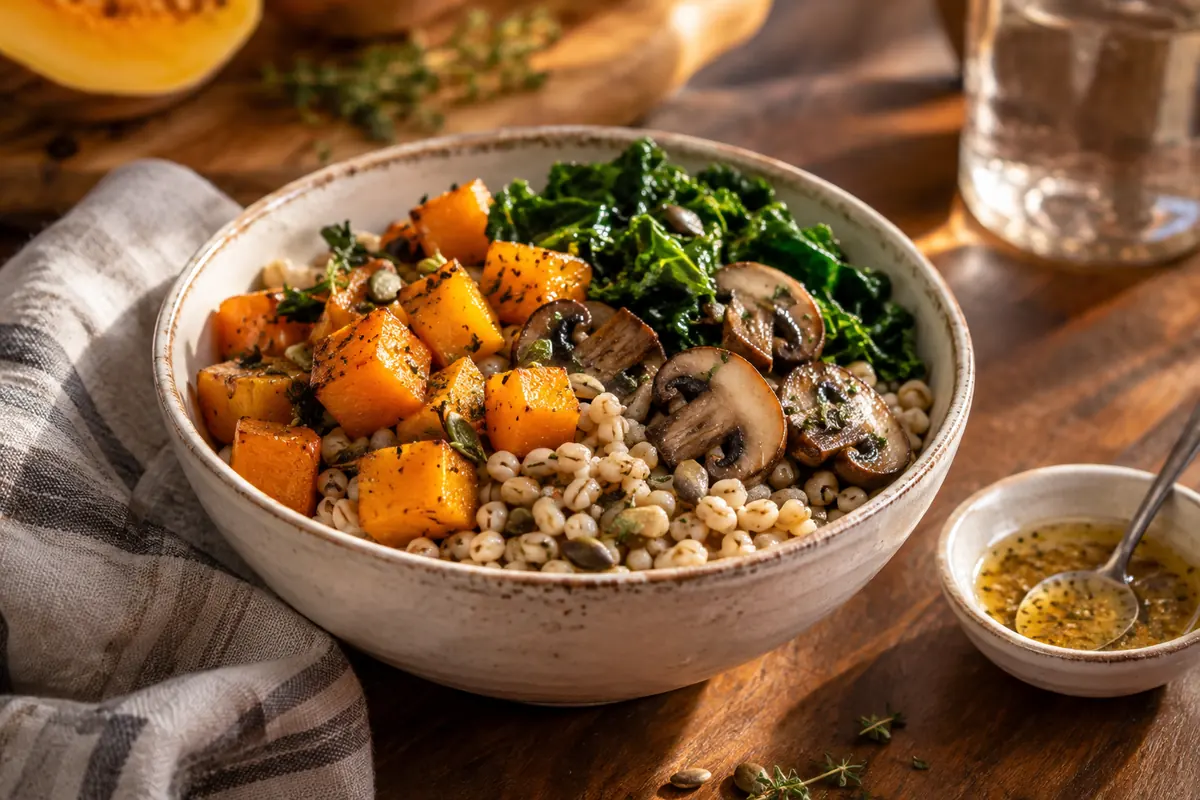
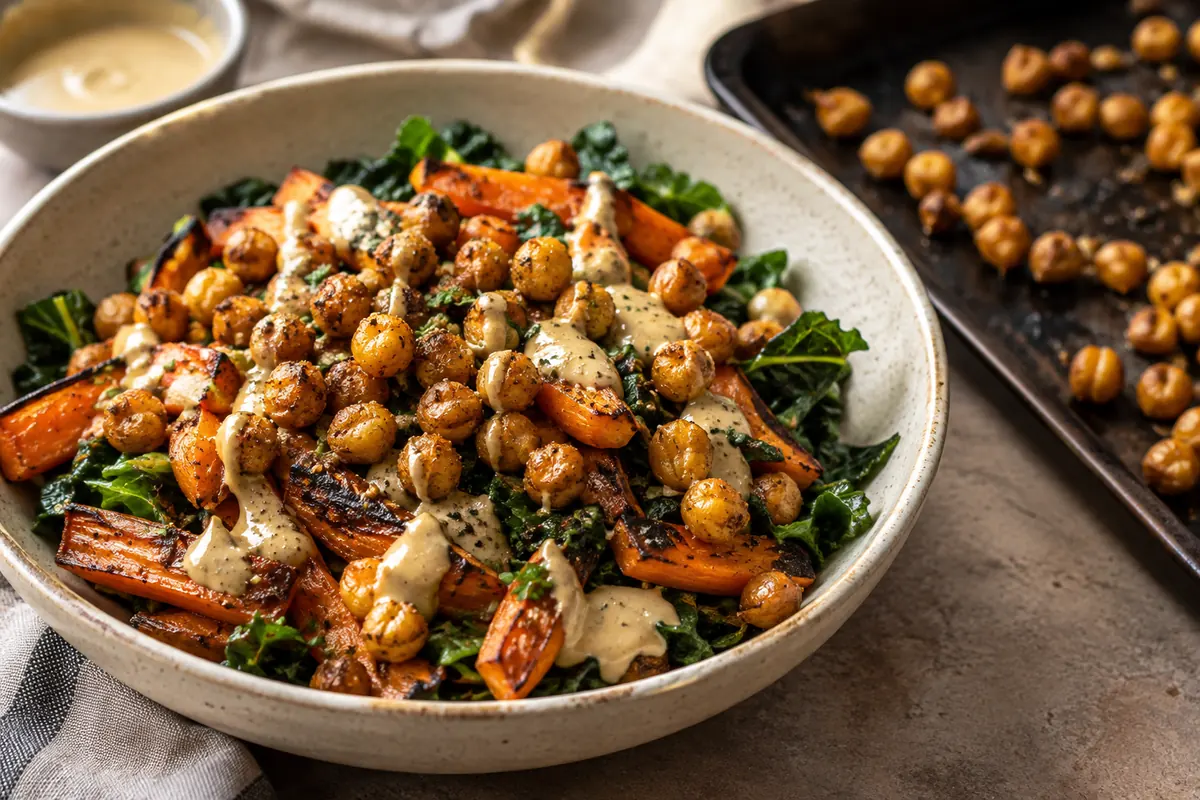
Scatter chickpeas over a dressed salad immediately before eating rather than mixing them into the main batch hours ahead. For roasted carrots or squash, keep some sauce underneath or beside the vegetables and leave the chickpeas exposed on top. A grain bowl can use a small handful as a finishing layer. You do not need to cover every surface. A few crisp bites can create enough contrast while allowing the other ingredients to remain recognizable.
A soup offers a different challenge. Chickpeas will soften quickly once submerged, so add only the portion you intend to eat immediately or serve them in a separate bowl for scattering. The same applies to creamy oats, polenta, or a bean puree. If you actually prefer softer roasted chickpeas after they meet the sauce, that is a valid choice, but it is a different texture goal. Decide what the meal needs rather than assuming every roasted bean must remain crisp from the first bite to the last.
Make storage an honest compromise
Homemade roasted chickpeas vary in moisture, and a snack that feels dry outside may still retain a soft center. Follow the storage advice in the method you used rather than assigning an unverified room-temperature shelf life. Utah State University's cited roasting method directs refrigerated storage in an airtight container. Cooling before closing the container helps avoid trapped steam, but it does not turn a home batch into a commercially packaged shelf-stable product. Texture may soften during storage even when the food is handled appropriately.
If the main purpose is dinner crunch, roast a modest quantity close to the meal or re-crisp a safely stored portion using a suitable method. Keep it separate from wet vegetables and dressings until serving. Do not make a huge batch simply because the oven is on if the household will not enjoy the stored version. A smaller amount that is eaten at its best can be more useful than a large tub that becomes another ingredient requiring repair before anyone wants it.
Choose the next dinner by what it lacks
Look at a familiar meal and ask whether a crisp bean would improve it. Soft roasted vegetables with tahini are a strong candidate. A salad already full of croutons, nuts, and crisp raw vegetables may need no extra crunch at all. A dish that is already heavily spiced may suit plain salted chickpeas better than another strong seasoning. This is a more reliable way to use the technique than adding the same garnish to every plate because a batch is available.
Start with one tray and one meal, then notice the texture when the chickpeas are eaten with the rest. Adjust drying, space, and finishing time before changing every spice. The method becomes useful when it answers a real dinner question: how to make a soft bowl more interesting, how to finish a tray of vegetables, or how to give a salad another kind of bite. That is a lasting role for roasted chickpeas beyond a snack eaten straight from the pan.
Keep in mind
Taste a cooled sample when judging crispness.
Keep roasted chickpeas separate from dressings until serving and follow the chosen recipe's storage directions.