The paste is already a combination
Sempio's Classic Gochujang, for example, lists rice, corn syrup, soybeans, and wheat-containing ingredients among its components. That specific label illustrates why neither gluten-free nor soy-free is a safe assumption for the category. Other products use different formulas and may have different certifications. Buy a paste whose actual ingredients suit the people eating it, and note whether a recipe calls for plain gochujang or a ready-to-use seasoned sauce. A thin bottled dipping sauce and a dense tub of paste will not require identical dilution or seasoning.
Put it to work
Useful tools, at a glance
Tossing pasta and turning food with silicone heads
OXO Good Grips 12-inch Silicone-head Tongs
Skillet sauces and ordinary browning in uncoated stainless steel
Tramontina Signature 10-inch Tri-Ply Clad Fry Pan
Give the glaze enough liquid to move
A dense spoonful placed directly in a hot pan can stick in one spot while the surrounding food remains uncoated. Mix the glaze in a bowl first, using the liquid and proportions from a suitable recipe. Water or another compatible liquid allows the paste to disperse; acidity and sweetness should be chosen for the finished dish. Stir out lumps before the mixture meets the heat. This small preparation step is especially valuable during a quick stir-fry, when searching for a measuring spoon can mean missing the moment to lower the burner.
Judge the mixture by its intended job. A brushing glaze can be thicker than a sauce that must travel through a pan of vegetables. A dressing for a cold bowl may need a different balance again. If you want extra chile heat without extra sweetness, consider the recipe's suggested chile ingredient rather than repeatedly adding more of every sauce component. Keep a little plain liquid available near the stove. When a glaze tightens too quickly, a modest splash can help it coat the food before it becomes a sticky layer on the pan.
Brown the food before the sugar arrives
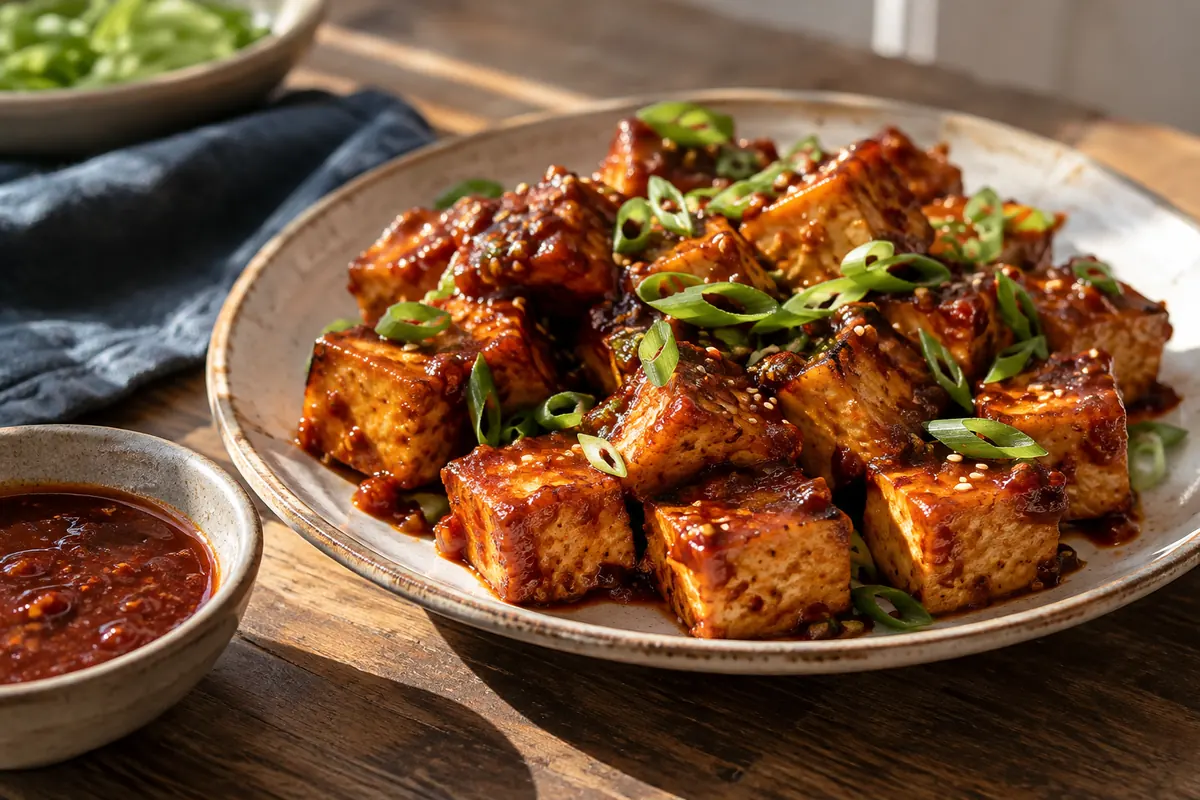
Tofu, mushrooms, chicken, and vegetables need different cooking times, but they share a useful distinction: developing a browned surface and reducing a sweet glaze are separate tasks. Cook the main ingredient by the method and doneness guidance appropriate to it, then add the prepared glaze at the finishing stage. For tofu, that can mean crisping pieces first and coating them briefly afterward. For meat, a glossy surface is not a doneness test. Use reliable cooking instructions and a thermometer where appropriate rather than letting the sauce's color make the decision.
Adding the glaze late does not mean ignoring the burner. A hot, nearly dry pan can reduce a small amount of liquid rapidly. Lower the heat before pouring in the sauce, turn the food through it, and watch how quickly it thickens. The goal is a coating that clings while still moving, with no dark bitter residue underneath. If the glaze is already thick enough in the bowl, it may need little more than gentle warming. More time in the pan is not automatically a deeper or more sophisticated flavor.
A wide pan needs a smaller ambition
The temptation to fit dinner for four into one small pan can undermine both browning and glazing. Crowded ingredients release moisture, so the first stage becomes steaming; later, a large quantity of food can make it difficult to distribute a concentrated sauce evenly. Cook in batches when needed and combine briefly at the end in a vessel with room to turn. A broad skillet is useful only if the burner and portion size suit it. The aim is a controllable layer of food, not the largest pan that happens to fit the stovetop.
Protect the pan's surface while stirring. A flexible spatula or suitable tongs can turn the food and sweep the bottom without scraping a nonstick coating with metal. If residue begins darkening before the food is coated, reduce the heat and add a little suitable liquid promptly. Do not scrape a burned patch into the sauce simply because it resembles browned cooking residue. The aroma is informative here: a pleasant toasted note and an acrid smell call for different responses. A glaze should taste savory and rounded, not demand that rice conceal its bitterness.
Choose a companion that gives the sauce room
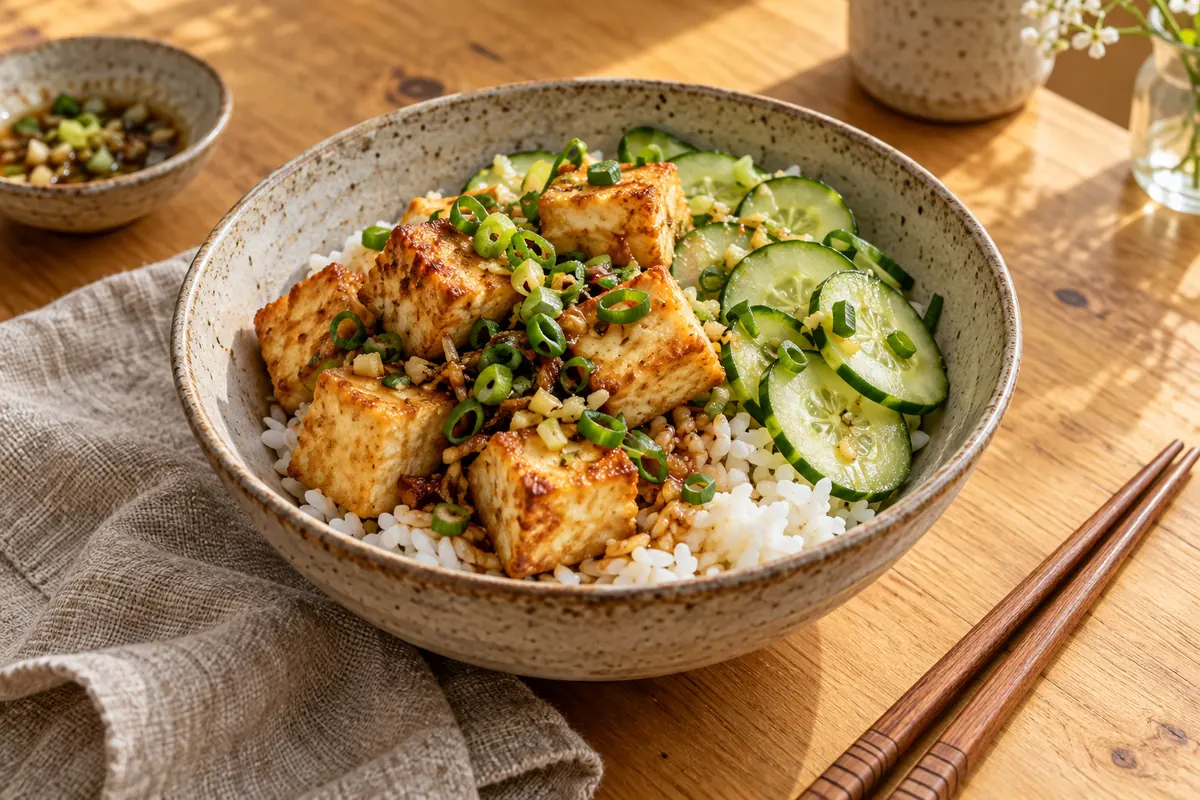
A gochujang-glazed component usually benefits from a calmer base. Plain rice, a lightly dressed vegetable, or a crisp cucumber side can make the meal feel complete without adding another concentrated sauce. Keep the serving ratio in mind. A large mound of heavily coated food over a small spoonful of rice can feel much stronger than the same glaze distributed through a balanced bowl. Taste the full bite before deciding that the recipe needs still more salt, sugar, or chile. The accompaniment is part of the seasoning equation.
Fresh elements are useful when they contribute a different sensation. Scallion brings a crisp aromatic finish, sesame provides a small dry texture, and a tart pickle can contrast with sweetness. You do not need all three, and a jarred pickle may add considerable salt or sugar of its own. Choose one clear contrast. For a family meal, reserve some cooked food before glazing if heat preferences differ, then offer the finished sauce in an appropriate clean portion. A flexible dinner can still have a clear flavor without requiring every plate to be identical.
Separate raw-food contact from the serving sauce
When a glaze also serves as a marinade, divide a clean serving portion before it touches raw meat or seafood. Do not brush a finished meal with a mixture that has contacted raw animal food unless it has been handled and cooked safely according to reliable guidance. A separate bowl and brush are a simpler arrangement than trying to remember which utensil touched which stage. The fact that a sauce is red, fermented, spicy, or salty does not remove the need for normal food-safety practices.
The same clarity helps with leftovers. Store the cooked food promptly in suitable containers, and do not put unused clean paste back into a container that held raw ingredients. Reheat leftovers appropriately, recognizing that the glaze may thicken further and need a small amount of liquid. A soft reheated coating is a reasonable expectation; the crisp surface from the first cooking may not survive storage under sauce. If that texture is important, cook and store the base separately when practical, then glaze the reheated portion shortly before serving.
Make one tub serve several methods
A tub of gochujang can support more than a sweet sticky dinner. In suitable recipes it can season stews, dressings, dipping sauces, and marinades, each with a different balance of liquid and heat. Start with one use you can repeat, then try another method that does a different job. The lesson from a glaze is timing; the lesson from a dressing is dilution and balance. Keeping those techniques separate makes the ingredient more versatile than treating every application as the same sauce poured over a different protein.
For an easy vegetable dinner, brown mushrooms or cook tofu by a suitable method, then lower the heat before turning the prepared glaze through the finished pieces. Put rice and a crisp cucumber accompaniment on the table before that final coating stage. The glaze can then reach the plate while it still moves instead of sitting in a hot pan and thickening. Store the paste according to its label and keep clean utensils for serving. A small mixing bowl and a pan with room to turn the food are more useful here than an elaborate collection of sauce equipment.
Keep in mind
Gochujang products vary in sweetness, heat, and allergens; read the exact label.
Mix a glaze before cooking and add it after the main browning stage over controlled heat.