Let the package be specific
The appeal is broader than convenience. A curry sauce can connect rice, tender vegetables, and a protein in a single plate with a clear flavor. McCormick's 2026 sauce forecast explicitly included Japanese curry among the themes its flavor team identified. That is a commercial forecast, not a measurement of how often your neighbors cook it. Its practical value here is as a prompt to understand a pantry staple on its own terms, rather than calling every curry a variation of the same spice mixture.
Put it to work
Useful tools, at a glance
Soups and braises in an enameled pot
Lodge Essential Enamel 6-quart Dutch Oven, Island Spice Red
Choose ingredients that share a schedule
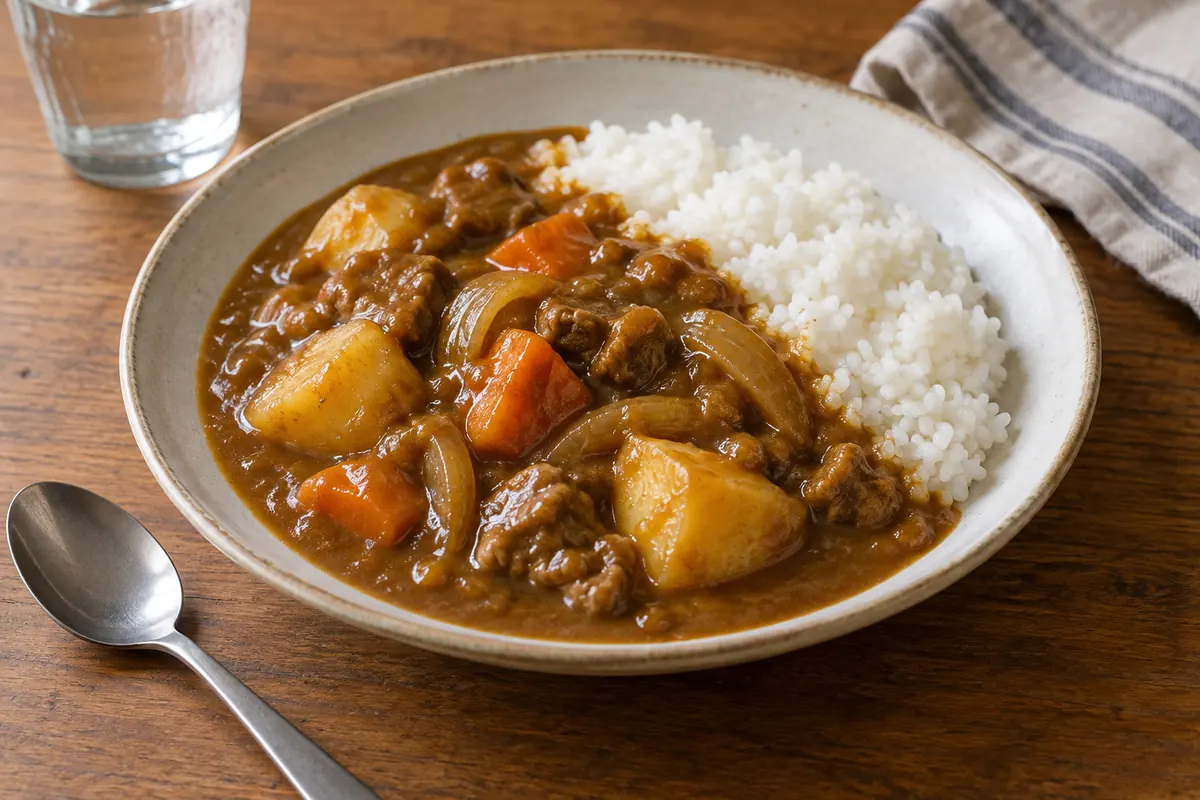
Onion, carrot, and potato are familiar partners, but the way you cut them matters as much as the shopping list. Large potato pieces and tiny carrot dice will not reach tenderness together. Cut with the intended simmer in mind and follow the recipe's sequence. If using meat, choose a cut appropriate to the cooking time rather than assuming all beef or chicken behaves alike. A long-braising cut cannot be made tender simply by surrounding it with a thick sauce, and a quick-cooking ingredient can suffer while waiting for oversized vegetables.
Vegetarian versions need the same attention to structure. Mushrooms can provide a savory component, beans may make a convenient substantial addition, and vegetables can bring sweetness and texture. Check the roux ingredients if the meal needs to be vegetarian, vegan, or free of a particular allergen. The word vegetable on a serving suggestion does not establish everything inside the block. Avoid making several substitutions at once on the first attempt; a modest familiar combination gives you a clearer picture of how the particular sauce thickens and tastes.
Build flavor before the sauce becomes thick
Prepare the ingredients and the measured liquid before heating the pot. Sautéing onions and other ingredients according to the package or recipe can develop flavor, but the amount of browning should fit the dish rather than become an automatic contest for the darkest possible base. Keep the bottom from scorching, and use a little of the planned liquid to loosen appropriate browned residue when the method calls for it. A thick curry will eventually hide the base visually, which makes careful attention at this early stage especially worthwhile.
Simmer the vegetables and any protein in the liquid until they reach the stage directed before adding the roux. A fork or knife gives a more useful picture of a potato's center than the color of the surrounding broth. The thickening stage is not the time to discover that the vegetables need another long cook. A covered or uncovered simmer also changes evaporation, so follow the recipe's instruction and check the liquid level. The sauce depends on a workable balance of water and roux, not only the number of blocks.
Turn off the heat for the roux
S&B's official curry guidance advises taking the pot off the heat before adding its roux. The point is to help the blocks dissolve evenly rather than form starchy lumps in boiling liquid. Break the portion into manageable pieces, add it as directed, and stir until it disperses. This pause is part of the method rather than wasted cooking time. If you add a whole dense block and immediately turn the burner high, you make the outside thicken while the center is still trying to melt.
Return to the gentle heat specified by the package once the roux is incorporated, and stir along the bottom while the sauce finishes. As the liquid thickens, it can catch more readily. A spoon that reaches the corners is useful, especially in a wider pot. If the sauce becomes too thick, adjust with a little suitable liquid and let it combine before adding more. If it is thin, follow the maker's troubleshooting guidance and give the sauce its proper finishing time rather than immediately dropping in extra blocks and doubling the seasoning.
Keep optional additions truly optional
Advice about Japanese curry often accumulates a long list of supposed secret additions: fruit, chocolate, coffee, sauces, or dairy. Each changes sweetness, bitterness, acidity, salt, or body. Begin by cooking the base according to its directions and tasting it with rice. A recipe developer's carefully chosen addition in a specific formula is different from adding every suggestion to a pot that was already balanced. If you want to experiment, take a small portion into a separate pan or bowl so dinner does not depend on an untested combination.
Use the plate to adjust contrast before altering the curry itself. Rice gives a strongly seasoned sauce a mild companion, while a suitable tart pickle offers a separate sharp bite. A crisp cutlet belongs on top or alongside, where sauce can be added without immediately soaking the whole surface. An egg is another optional accompaniment with its own safe cooking method. Choose one of these additions for the first plate. The curry's onion, vegetables, and roux should still be easy to taste, rather than serving as a base for several equally rich toppings.
Rice belongs in the cooking schedule
Start the rice with enough time to finish and rest according to its method while the curry simmers. A good sauce waiting for a hurried pot of rice is an avoidable ending. Choose the amount around the number of people and the balance you want on the plate. Curry sauce should reach the rice easily, but neither component needs to bury the other. Serve a modest first portion and offer more rather than filling every plate to the edge before anyone has judged their appetite.
If using a crisp topping, keep it out of the simmering pot and put it on the plate close to serving. A breaded item will gradually soften under sauce, so pour with that texture in mind. A small fresh or pickled accompaniment can provide contrast, but it should suit the people eating it and the ingredients already in the curry. Prepare the topping only after the main pot is under control. There is little benefit in an elaborate garnish if the sauce catches while attention is divided between three last-minute pans.
Plan the second meal safely
A large pot is convenient only when the extra portions have a clear storage plan. Cool and refrigerate curry promptly using reliable food-safety guidance, dividing into suitable shallow containers rather than leaving a deep pot warm for an extended period. Treat cooked rice with equal care. Reheat leftovers thoroughly as appropriate and stir so the thick sauce heats evenly. The fact that curry may taste good the next day is not a reason to let it sit at room temperature while waiting for that day to arrive.
Refrigerated curry may be thicker than it was at dinner. Reheat it safely with a little suitable liquid, stirring along the bottom and through the center so a dense sauce heats evenly. A later serving can use the sauce over freshly prepared rice while its crisp topping is reheated or cooked separately. If using a recipe developed for curry noodles or another leftover dish, keep its liquid and cooking sequence intact. Replacing rice with noodles changes how the sauce reaches the bowl; simply adding dry noodles to the stored curry does not supply that method.
Keep in mind
Follow the water and roux proportions on the particular package, including its heat-off stage.
Cool curry and cooked rice promptly and store extra portions in suitable shallow containers.