Start with the space, before the shopping list
Write down the jobs the oven must perform: roasting the main dish, cooking a casserole, warming bread, or reheating something made ahead. Then give each dish another possible route where the recipe supports one. Mashed potatoes might belong on the stove; a crisp vegetable salad needs no oven time. A smaller menu with deliberate contrasts can feel more complete than a larger one whose dishes all arrive soft, beige, and late. Capacity becomes a useful design constraint when you decide it early.
Put it to work
Useful tools, at a glance
A compact foldable thermometer for spot checks
Lavatools Javelin Instant-read Thermometer, Sambal
Mixed quantities of leftovers stored in glass
Pyrex Simply Store Glass Storage Set, 18 Pieces
Choose the main dish for the actual number of diners
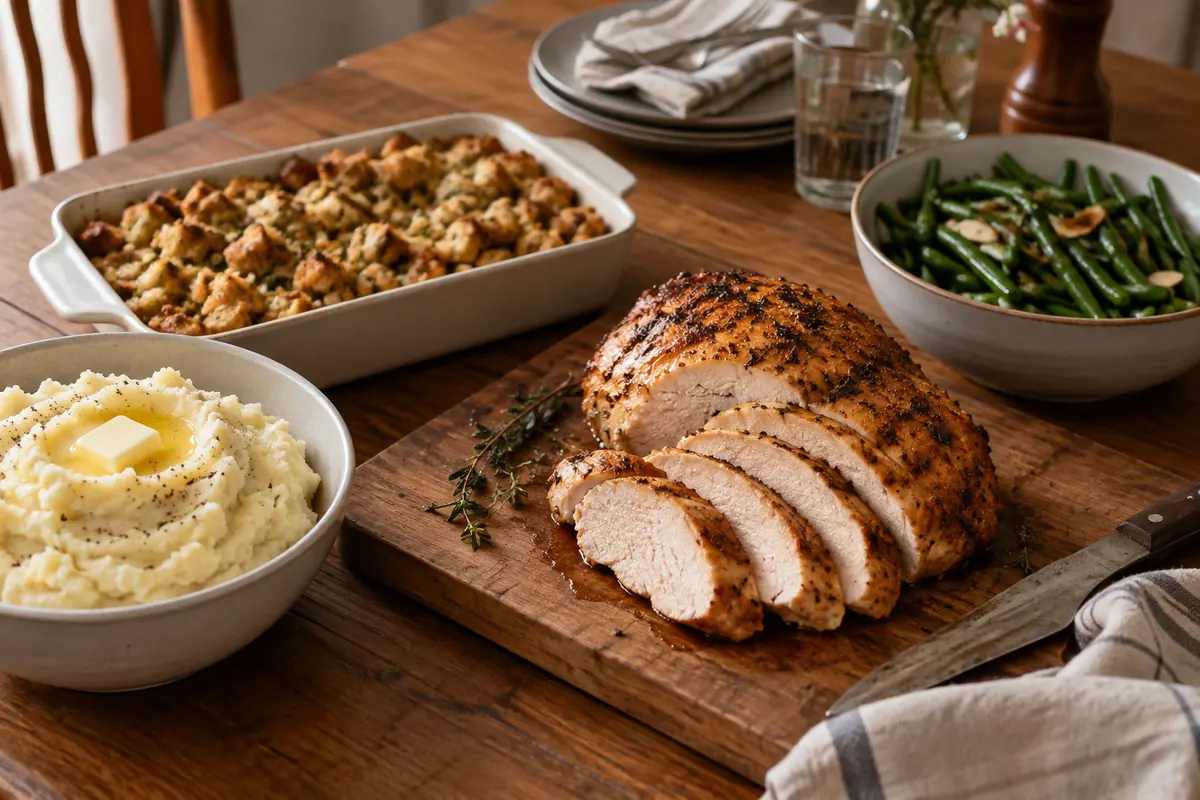
A whole turkey is one option, not a requirement for every gathering. A turkey breast or another suitably sized main can suit a smaller table and leave a different oven footprint. Read a reliable recipe for the exact cut and weight you intend to buy. Bone-in and boneless pieces do not share every cooking detail, and a smaller piece is not simply a whole bird with the timer shortened by guesswork. Decide whether leftovers are wanted and include them in the quantity calculation rather than buying by habit.
Plan safe thawing before the refrigerator is crowded with side dishes. USDA identifies refrigerator, cold-water, and microwave thawing methods, each with conditions that matter. Follow the method for your actual turkey and cook immediately when the guidance requires it. Do not leave frozen poultry on a counter while hoping the center catches up. A written thawing plan is part of the meal schedule, and a tray positioned to contain drips protects the other food already waiting in the refrigerator.
Divide the menu into preparation and finishing
Making ahead is most helpful when it removes a clearly defined task. Chopping vegetables, measuring dry ingredients, preparing a recipe-supported sauce, or baking a suitable dessert can reduce work without asking the oven to reheat the entire dinner. Look at each recipe and mark the point where it can pause safely and without losing the texture you want. Some foods hold well as components but become disappointing when fully assembled too early. A crisp topping, for example, may be better kept separate until its final bake.
Give every advance dish a container, a refrigerator location, and a finishing instruction. Include the time needed for safe reheating, not just the time needed to take off a lid. If a recipe does not provide a make-ahead method, choose another one rather than inventing a storage life for a holiday crowd. An advance task should make the serving day easier to understand. A refrigerator full of unlabeled bowls whose next steps are uncertain merely moves the confusion to a colder room.
Write an oven schedule that includes reheating
Work backward from an approximate serving time and use the main recipe's timing range as a planning tool. Include preheating, checking doneness, moving hot pans, and any resting period specified by the recipe. Then assign the remaining rack space. A casserole waiting for the turkey to leave still needs enough time to heat properly; turning the oven much hotter to recover a late schedule may burn its surface while leaving the center cool. Choose compatible temperatures or cook the dishes sequentially with a clear serving plan.
A timetable cannot replace temperature checks. USDA advises an oven setting no lower than 325 F when roasting turkey and a minimum internal temperature of 165 F for turkey and stuffing. Check the appropriate thick areas without touching bone, following its guidance for the cut. Leftover dishes being reheated need their own thorough heating check. Keep the thermometer accessible and clean rather than burying it beneath serving spoons. An attractive browned surface and a punctual timer cannot tell you what is happening at the center.
Give cold and stovetop dishes real importance
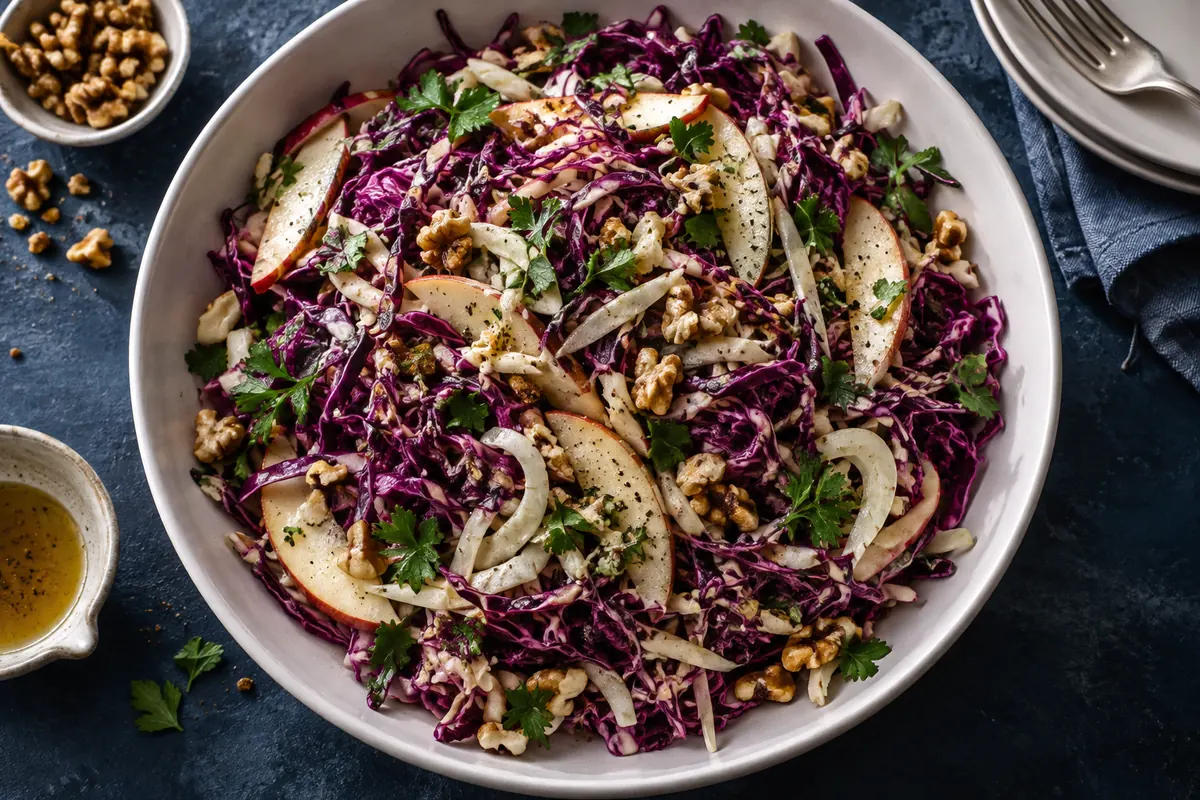
A no-oven side should feel chosen, not like an apology for limited space. A crunchy cabbage and apple salad brings a different texture to roast poultry and stuffing. A stovetop vegetable can provide a fresh finish if you have a burner and enough attention to cook it at the right moment. Choose dishes whose flavor and serving temperature suit their role. A cold salad that needs constant last-minute chopping can create as much pressure as an extra casserole, so prepare its components thoughtfully.
Keep the stove schedule visible too. Four burners do not always hold four large pans comfortably, and a long handle can block the route to another pot. Choose one task that can finish before guests sit down and one that requires a brief final action. If gravy will need stirring, avoid assigning the same cook three other delicate finishing jobs. Ask for help in concrete terms: dress the salad, put bread on the table, or carry a serving bowl. Specific jobs are easier to hand over than a general request to rescue dinner.
Use smaller dishes without creating more work
Compact dishes can make a small oven more flexible, but scaling a casserole changes its depth and heating behavior. Use a recipe designed for the quantity or follow reliable pan-size advice rather than treating volume as the only variable. A deep bowl holding the same amount as a shallow dish will not necessarily cook the same way. Check that the container is rated for the intended heat, and follow its instructions about temperature changes. A storage lid is not automatically an oven cover.
The best container may serve two jobs, provided its instructions allow both. A suitable shallow dish can help with rapid cooling and later reheating, while a clearly labeled separate container can hold the crisp finish. Buy only after measuring the space you need to fill. Our Pyrex storage comparison explains why exact product instructions matter, and the verified Lavatools thermometer provides a tool for checking the food itself. Neither removes the need for a sound recipe and enough time on the schedule.
Make the table part of the cooking plan
Set out serving dishes and utensils before the kitchen becomes busy. Label them temporarily if several foods look similar or if someone else will finish the table. Decide which items can be served in their cooking dishes and which need transferring. Every transfer takes counter space and creates another hot object to handle. Keep a clear landing area for the roasting pan, and make sure the cutting board will not move during carving. Those small arrangements matter more when the room offers only one obvious place to work.
Serve manageable amounts and replenish safely rather than placing every portion on the table immediately. Follow food-safety guidance for holding temperatures and the time perishable food spends at room temperature. A long relaxed meal still needs a plan for the food that is not being eaten yet. Put suitable containers within reach before guests arrive so packing leftovers is straightforward. The end of dinner is a poor time to discover that all the lids are missing or that the refrigerator has no remaining shelf space.
Give the final oven space to the dishes that need it
Reserve the busiest oven window for the foods whose texture depends on it. A roast and a casserole need their specified cooking or reheating checks, while a dressed cabbage salad can wait in properly chilled components and bread may require only its recipe-supported final warming. Have gravy equipment ready on the stove before the roast comes out. During the main dish's prescribed rest, use only the oven work that comfortably fits that interval. Do not assign a dense cold casserole an unrealistically short reheating slot simply because the rack has become available.
Do not judge the meal by whether you reproduced a photograph of someone else's table. A properly cooked main, a few contrasting sides, and a dessert you enjoy can make a generous gathering. The small oven has done its job when the food reaches the table in good condition and the cook can sit down too. Keep the dishes that earned their oven time and give the others a different place in the menu. Next year's dinner starts with knowing what this year's kitchen could comfortably do.
Keep in mind
USDA advises a minimum 165 F internal temperature for turkey and stuffing and at least a 325 F oven for roasting turkey.
Use recipe-specific make-ahead instructions and follow current safe cooling, storage, and reheating guidance.