A lump is a preparation clue
Matcha is consumed as suspended fine tea particles, so a drink can settle while it stands. That is different from finding a dry lump that resists the first stirring. Make the drink close to serving and stir or whisk it again if needed. Do not judge the whole method from a glass that has spent a long time on a desk. Notice whether the freshly prepared drink feels even, whether there are dry spots, and how the tea tastes before deciding that a different powder is the only possible answer.
Put it to work
Useful tools, at a glance
Rinsing ingredients and straining small batches
Cuisinart Stainless Steel Mesh Strainers, Set of 3
Weighing ingredients in bowls that cover a fixed display
OXO Good Grips 11-pound Food Scale
Use a modest, measured amount
A generous scoop can create a stronger, thicker drink than expected, especially when the spoon changes between cups. Begin with the tea maker's stated amount and the intended water and milk. If using a scale , check that it can sensibly display the small quantity being measured; a consistent measuring spoon can also help when the directions provide one. Sift that measured portion into the receiving bowl before adding liquid. This keeps dry powder from being added to a nearly finished latte simply because its large glass made the original serving look small.
Tea seller Ippodo provides separate preparation guidance for matcha drinks, including a latte built from sifted matcha, hot water, and milk. Treat that as one maker's specific starting method, rather than an absolute formula for every powder and preference. The larger lesson is its sequence: first prepare the tea base, then add the milk. Dropping powder directly into a full glass of cold milk gives you a much larger volume to work through before you have dealt with the clumps themselves.
Sift where the powder can spread
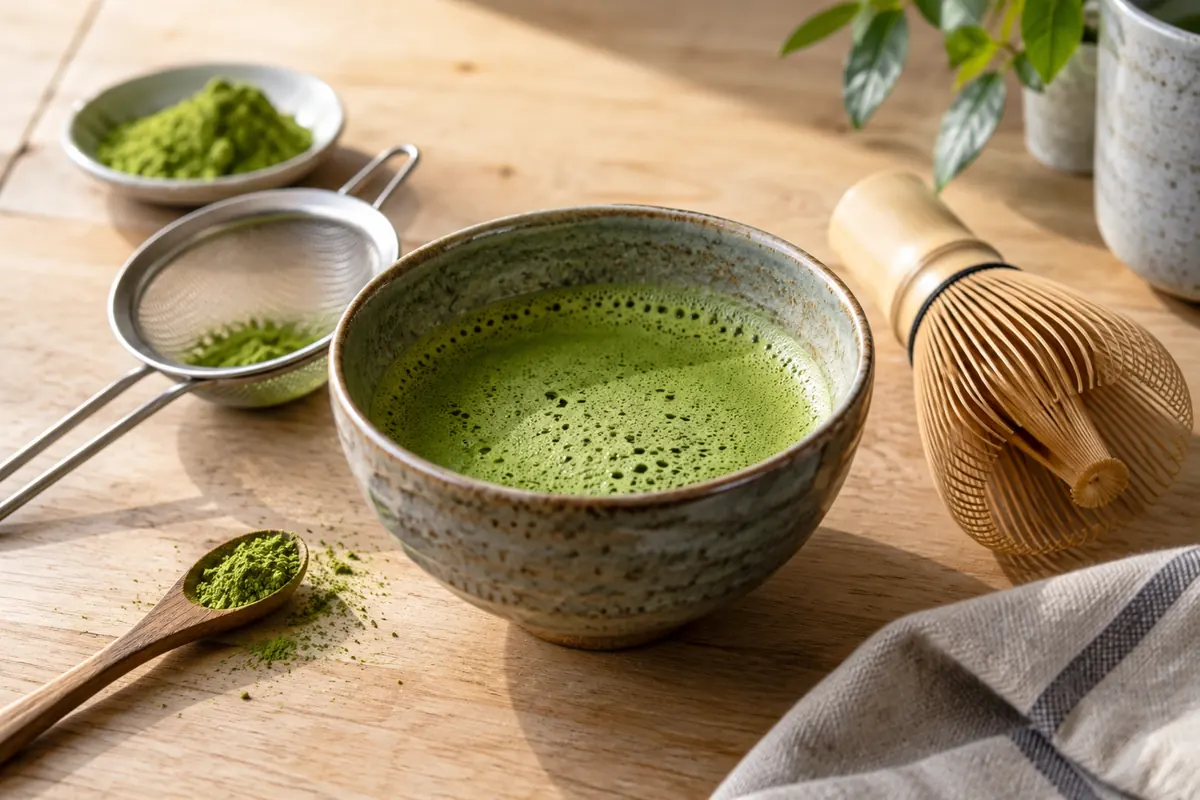
A small fine sieve breaks up many clumps before they meet water. Place it over the bowl or cup that will hold the tea base, measure the powder into it, and pass it through gently. Keep the sieve and spoon dry so the process does not create fresh wet patches. A broad receiving bowl makes it easier to keep the powder inside than a narrow glass with a rim barely wider than the sieve. Clean up the preparation area before adding liquid, particularly if loose powder has settled around the vessel.
A general kitchen strainer can be useful if its mesh is fine enough for the task. It should not be described as a guarantee of a particular tea texture, and a very coarse colander is a different tool. If you already own a suitable small sieve, try it before buying a specialized accessory. For repeated use, choose something easy to clean and dry thoroughly. The practical benefit is consistency at the start of the drink, rather than a decorative object that never leaves the back of a drawer.
Give the whisk working room
A bamboo chasen and a bowl provide a familiar way to whisk matcha, but the bowl still needs enough space for the motion. Follow the maker's guidance for wetting or preparing the whisk and for the water quantity. Whisk in the method it recommends, keeping the action controlled rather than scraping hard against the base. A cramped narrow mug restricts movement and encourages splashing. If the drink will ultimately go into a tall glass, prepare the base in a more suitable vessel and then pour it into that glass.
A handheld electric frother is another tool people may already have, but it changes the motion and can throw liquid from a shallow bowl. Follow its instructions and use a vessel with enough depth. Start cautiously rather than powering it at the surface of a nearly full cup. The aim is evenly dispersed tea, not the largest possible head of foam. Large bubbles and a green surface can make a drink look energetic while dry clumps remain below, so look at the base itself before adding the rest of the ingredients.
Temperature belongs in the record
Water temperature affects a drink's flavor and handling, and the tea maker's recommendation provides a sensible place to begin. Ippodo's latte method, for example, calls for water below boiling rather than an immediate pour from a boiling kettle. Do not assume that the hottest available water is always the best way to dissolve a powder. Matcha is not disappearing into the water like granulated sugar. Use the stated method, then assess the taste before reaching for sweetness to cover a result you did not intend.
Prepare the base in a vessel that can handle its actual temperature and whisking motion, then add the milk after the powder is dispersed. For an iced latte, chill or assemble according to the tea maker's method rather than using a large pile of ice to correct a boiling-hot full glass. A temperature-controlled kettle can simplify the water stage, but a suitable thermometer or the maker's cooling guidance may already meet the need. Keep the tea amount and serving glass proportionate so the final drink retains flavor after the ice begins to melt.
Milk and ice come after a coherent base
For a latte, choose milk you enjoy and add it after the matcha base has been prepared. Different dairy and plant-based products have different sweetness, flavor, and foaming behavior. A sweetened carton may already contribute enough sweetness for your preference. Taste before adding syrup. Keep the tea and milk proportions recorded so you can repeat a cup that works. A drink can taste weak because it contains too much milk for the amount of tea, rather than because the matcha itself needs to be replaced.
For an iced drink, leave room for the ice and expect melting to change the balance while you drink. A very large glass can encourage you to stretch a modest tea base with milk until the flavor nearly disappears. Choose the serving size first, then build a method appropriate to it. Stir the finished drink when needed, especially if layers were arranged for serving. An attractive separation between milk and tea is a presentation choice; drinking only the upper layer does not give a fair impression of the intended mixture.
Buy freshness and repeatability before extras
Choose tea from a seller that explains its intended uses and storage, and keep the package closed as directed. Buy an amount you can use while it is in good condition rather than treating a large tin as an automatic bargain. A more expensive powder cannot correct a damp sieve, unmeasured quantities, or a vessel that makes whisking awkward. Establish a repeatable preparation with one product first. That baseline lets you notice what changes when you choose another tea, instead of attributing every difference to an unfamiliar label.
Keep the equipment recommendation narrow: a suitable fine sieve for clumps and a scale for repeatable portions are useful kitchen tools beyond tea. A bamboo whisk may be worthwhile when you enjoy that method, while a temperature-controlled kettle suits a broader routine of tea making. Start with the task that is currently failing. A smooth base, milk in a proportion you like, and a cup served while it is fresh give you a clear improvement without turning a simple drink into a shopping project.