The pan is doing two jobs
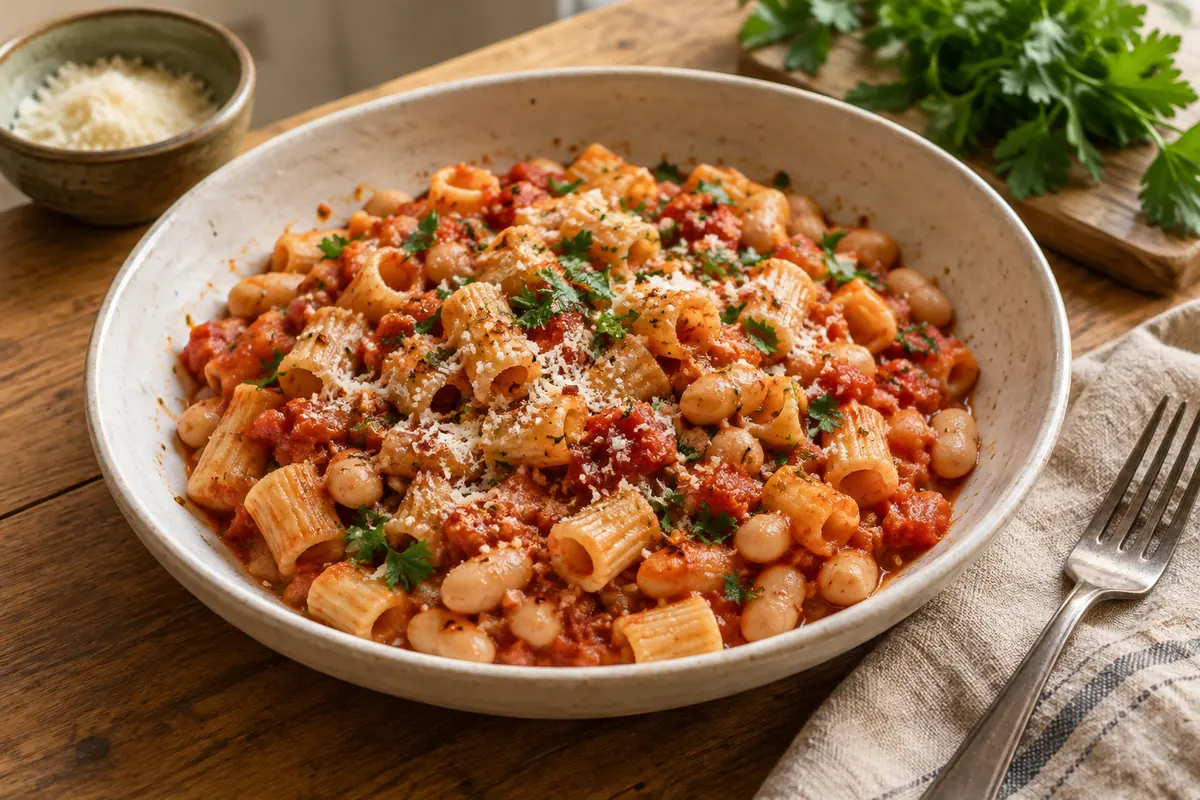
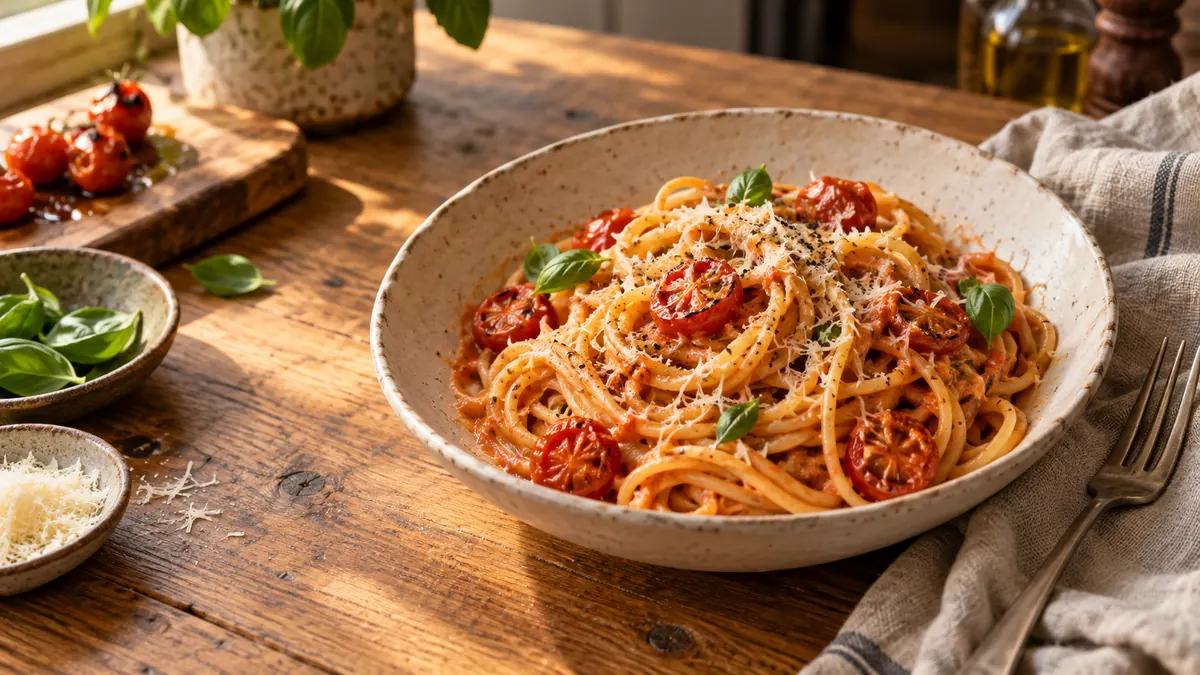
Decide what you want the sauce to be. A light tomato coating, a creamy finish, and a brothy bean pasta need different amounts of liquid at the table. The first can become disappointingly dry if every drop is cooked away; the last is supposed to remain spoonable. Keep that target in mind while cooking. A pan that looks saucy over the burner can tighten as it sits, especially after cheese or another thick ingredient is added. Plan to serve when the pasta and sauce are both ready.
Put it to work
Useful tools, at a glance
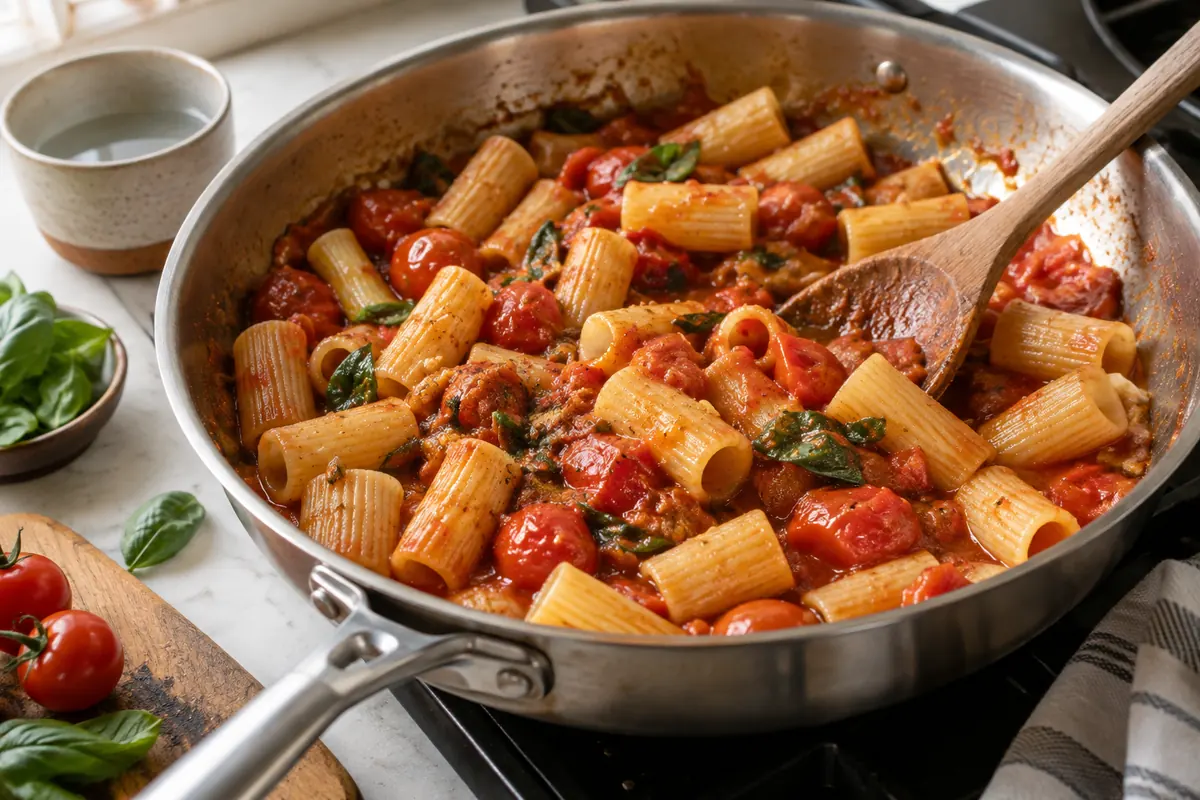
Browning and finishing sauces in a 12-inch stainless steel pan
Tramontina Signature 12-inch Tri-Ply Clad Fry Pan
Tossing pasta and turning food with silicone heads
OXO Good Grips 12-inch Silicone-head Tongs
Keep the recipe's pasta shape on the first attempt
Different shapes occupy space and take on liquid differently. Long strands need room to soften without breaking, while short tubes can collect sauce inside. A thick shape may need more cooking than a thin one, and a substitute made from different ingredients may behave differently again. Follow the specified product and package information for the first attempt. If you later change the shape, treat the timing and liquid balance as something to observe, not as a detail guaranteed to remain identical.
Choose the pan before adding ingredients. A broad skillet exposes more surface to evaporation than a narrow pot, while a deep-sided vessel can make stirring easier for a large quantity. The recipe's lid instructions matter because covered and uncovered cooking lose moisture at different rates. Check capacity with enough space to move the pasta and liquid safely. A pan filled almost to its rim may technically contain the ingredients, but it gives you very little control when the mixture begins bubbling.
Give aromatic ingredients a chance to cook
Some one-pan recipes intentionally combine most ingredients at the start. Others begin with onions, garlic, mushrooms, or a tomato base. Follow that order rather than assuming the method requires everything to enter cold together. An onion expected to soften in fat will behave differently when submerged immediately in water. Mushrooms may need their own cooking stage to develop the texture you want. Read the whole method first so a time-saving label does not hide a step that contributes most of the dish's flavor.
Prepare the ingredients before starting. Once pasta is hydrating in a limited amount of liquid, leaving the stove to chop a garnish can mean missing a change in consistency. Keep a suitable spoon or spatula, a small supply of hot water if the recipe allows adjustment, and the finishing ingredients within reach. Separate raw animal ingredients from ready-to-eat components and follow a properly developed method if meat or seafood is included. Cooking pasta in one vessel does not make every additional ingredient share its safety requirements or schedule.
Add water with an end point in mind
Measure the starting liquid. Guessing makes it harder to understand why one batch worked and the next did not. Include the liquid already supplied by tomatoes, stock, or other ingredients when following the formula, and do not silently replace a thick product with a watery one. Salted stock changes seasoning as well as hydration. When the recipe calls for further liquid, add it in controlled amounts and stir so it can reach the pasta, instead of pouring a large correction into an already nearly finished sauce.
Taste a piece as it approaches the expected cooking time, using a clean utensil and cooling the sample enough to assess it. Notice the center as well as the surface. If the pan is dry and the pasta needs longer, follow the recipe's adjustment guidance and lower excessive heat if necessary. If the pasta is ready but the liquid is abundant, a brief uncovered finish may help, provided the noodles are not being cooked far beyond their intended texture. Avoid treating vigorous boiling as the answer to every consistency problem.
Stir for contact, without turning dinner into paste
Pasta near the bottom can settle against the pan, particularly while the mixture is thickening. Stir at the intervals the recipe requires, moving through the base rather than only rearranging the top. As long strands soften, ease them into the liquid carefully with a suitable tool. Check the corners of a pan where ingredients may collect. The goal is even contact and controlled cooking. Constant forceful handling of tender pasta can break it, and scraping with an unsuitable utensil can damage the pan's surface.
Watch the heat across the whole vessel. A large pan on a small burner may simmer strongly in the middle and quietly at the edges. Adjust its position safely when appropriate, and do not assume every piece has cooked because the sauce is bubbling in one spot. A compatible burner and a manageable quantity make the method easier. If your pan is too small for the meal, using a separate pot can produce a better dinner than insisting on a one-pan promise the equipment cannot comfortably support.
Let the finish change the sauce deliberately
Cheese, butter, cream, yogurt, and herbs contribute different things and require their own timing. Add them as the recipe directs, including taking the pan off the heat when called for. A sauce can become thick, oily, or uneven if an intended finishing ingredient is boiled aggressively. Stir a small amount of the available cooking liquid through when the formula allows it, then assess again. Pasta starch can help a sauce coat the noodles, but it cannot turn every combination of fat, water, and heat into the same result.
Barilla's conventional pasta guidance recommends finishing pasta with sauce and reserved cooking water, a useful reminder that the final coating is an active cooking decision. One-pan pasta arrives there through a different route, with its cooking liquid already present. Taste the whole bite before adding more salt, especially if cheese or a salty pantry ingredient is involved. Fresh herbs and a measured acidic ingredient can bring clarity, but choose them for the sauce you have made. A random squeeze of lemon is not a universal repair for overcooked noodles.
Keep vegetables and toppings in their best condition
A delicate green and a firm root vegetable do not need the same time in the pan. Follow a recipe that accounts for that difference, or cook a component separately and add it at the appropriate point. Very watery vegetables can change the liquid balance, while large pieces may remain firm after the pasta is ready. The convenience of one-pan cooking is strongest when the chosen ingredients genuinely suit its timing. It becomes less useful when every element needs a different rescue at the end.
Crisp toppings can wait until serving. Toasted crumbs, nuts, and a dry crunchy condiment lose some of their contrast when stirred into a wet pan and left there. Keep them separate and let diners add an appropriate amount. The same approach can help with leftovers, where a fresh finishing texture makes the reheated meal more appealing. Cool and store perishable pasta dishes promptly according to current guidance, and reheat thoroughly. Do not leave the pan on the stove for the evening simply because it contains only a little food.
Bring the pasta and sauce to the table together
Set out bowls before the final sauce adjustment. If the noodles are ready but the pan is a little loose, use the recipe's permitted brief finish while checking that they retain the intended texture. If the sauce tightens after cheese or butter enters, add suitable reserved or measured liquid gradually as the method allows. Then serve promptly rather than leaving the completed pan over heat while preparing a complicated garnish. The last spoonful of sauce should travel with the pasta, with crisp toppings added on the plate where their texture can survive.
Our verified Tramontina 12-inch steel skillet gives a broad cooking surface, and OXO silicone-head tongs can help handle suitable pasta shapes. Choose them only if their size and care fit your kitchen; a pan you already own may meet the recipe's needs. The method should make dinner more comfortable, with a sauce you want to eat and a quantity you can control. When those conditions are met, washing one pan afterward is a welcome consequence of a good meal.
Keep in mind
Use a recipe designed for one-pan cooking and preserve its pan size and pasta shape on the first attempt.
Measure any liquid adjustment so the next batch starts with useful information.