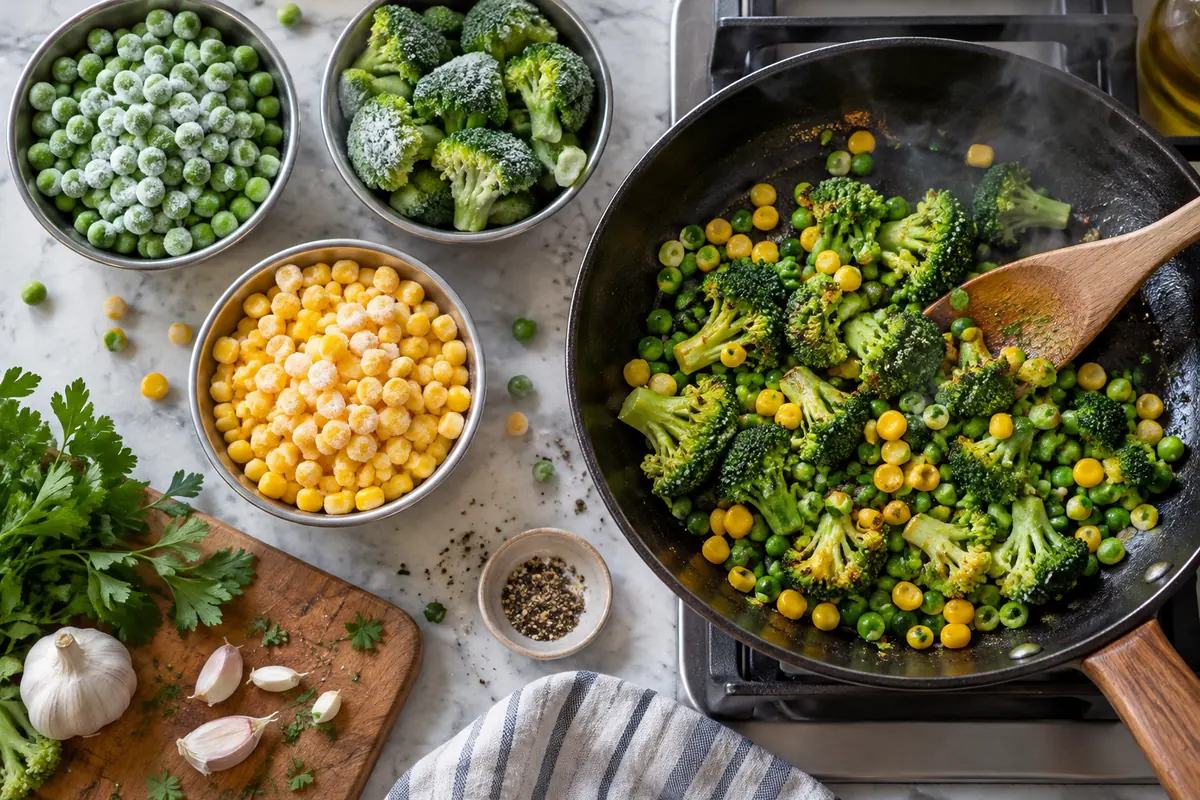
A bag in the freezer is not yet a meal
Whole Foods Market's 2026 forecast calls attention to a more ambitious freezer aisle, especially prepared meals. Applying that interest to everyday frozen vegetables is an editorial extension rather than a claim that each vegetable is a measured trend. The practical advantages are familiar: a portion can be taken from the bag, the rest can remain frozen, and the ingredient may already be cut. Those advantages are strongest when you also understand what freezing has changed about texture and how the product must be cooked.
Put it to work
Useful tools, at a glance
Roasting and baking with an uncoated pan
Nordic Ware Naturals Half Sheet, 2-Pack
Rinsing ingredients and straining small batches
Cuisinart Stainless Steel Mesh Strainers, Set of 3
Read the label before choosing the method
Plain vegetables, vegetables in sauce, and fully prepared sides ask for different treatment. Check the ingredients and cooking directions rather than assuming every bag contains a ready-to-eat food. Some frozen vegetables must be cooked before eating, even if they look bright and clean. Blanching before freezing is a quality step for many vegetables; it should not be treated as proof that the contents can safely be scattered raw over a salad or blended into a cold drink.
Look at the cut as well. Large broccoli florets, finely chopped broccoli, and a blend with stems will behave differently in the same pan. Spinach may be loose leaf or a compressed block. Corn can be plain kernels or part of a seasoned mixture. The specific form should match the dinner. A package that is excellent for soup may be frustrating when you want separate browned pieces. Keep the cooking instructions available after opening so convenience does not depend on guessing later.
Peas and corn can finish a meal quickly
Small peas fit naturally into dishes with a relatively short final cooking stage. Follow the package's directions and coordinate that cooking with pasta, a grain dish, or soup. Add them at a point that allows safe cooking without holding them through the entire meal preparation. Their small size makes them easy to distribute, but it also makes them easy to lose in an oversized pot of liquid. A modest amount can supply a distinct green element without turning every serving into a bowl of peas.
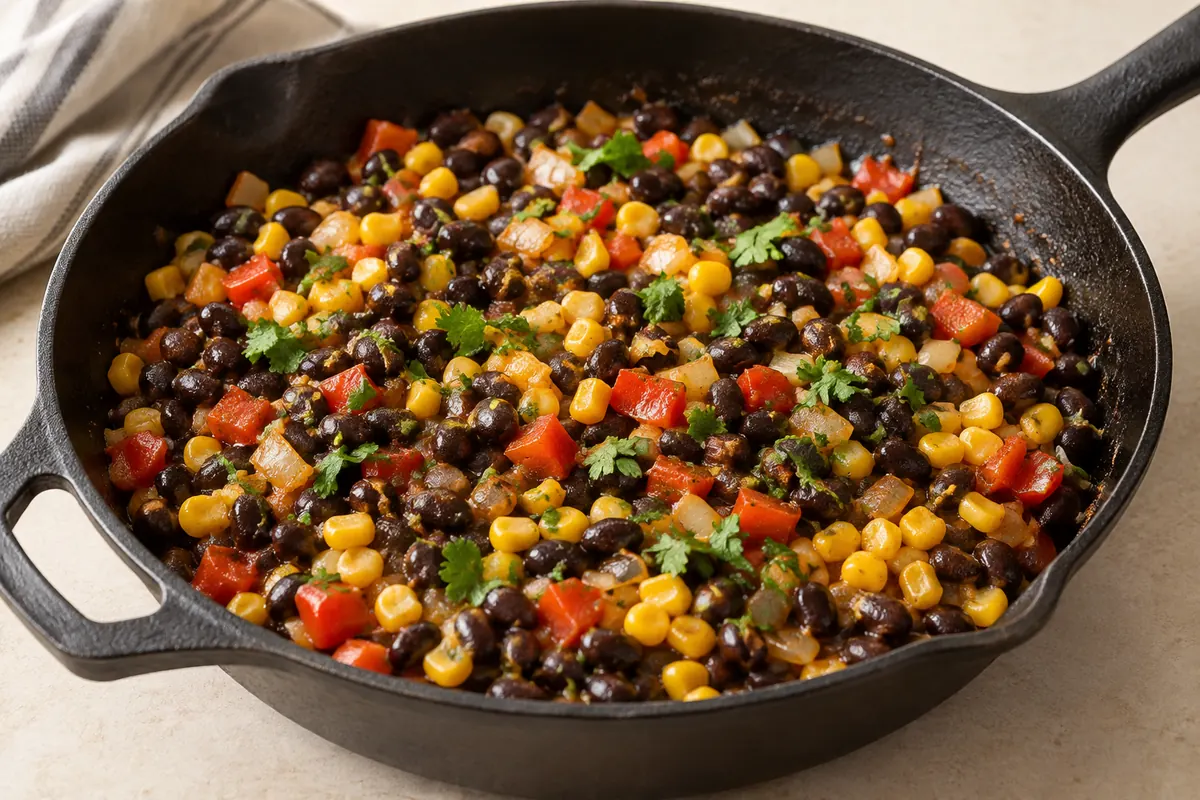
Corn brings a different texture and sweetness. For a skillet with browned patches, avoid filling the pan so heavily that a deep layer of liquid forms. Work in a manageable batch and let excess moisture evaporate before expecting color. A corn-and-bean skillet can become dinner with rice or tortillas, while a small portion of cooked corn can join a salad after safe cooling. These are separate uses with different finishing requirements. Keep the main dish's timing in mind rather than treating all frozen kernels as a garnish added at the last second.
Spinach needs a decision about its water
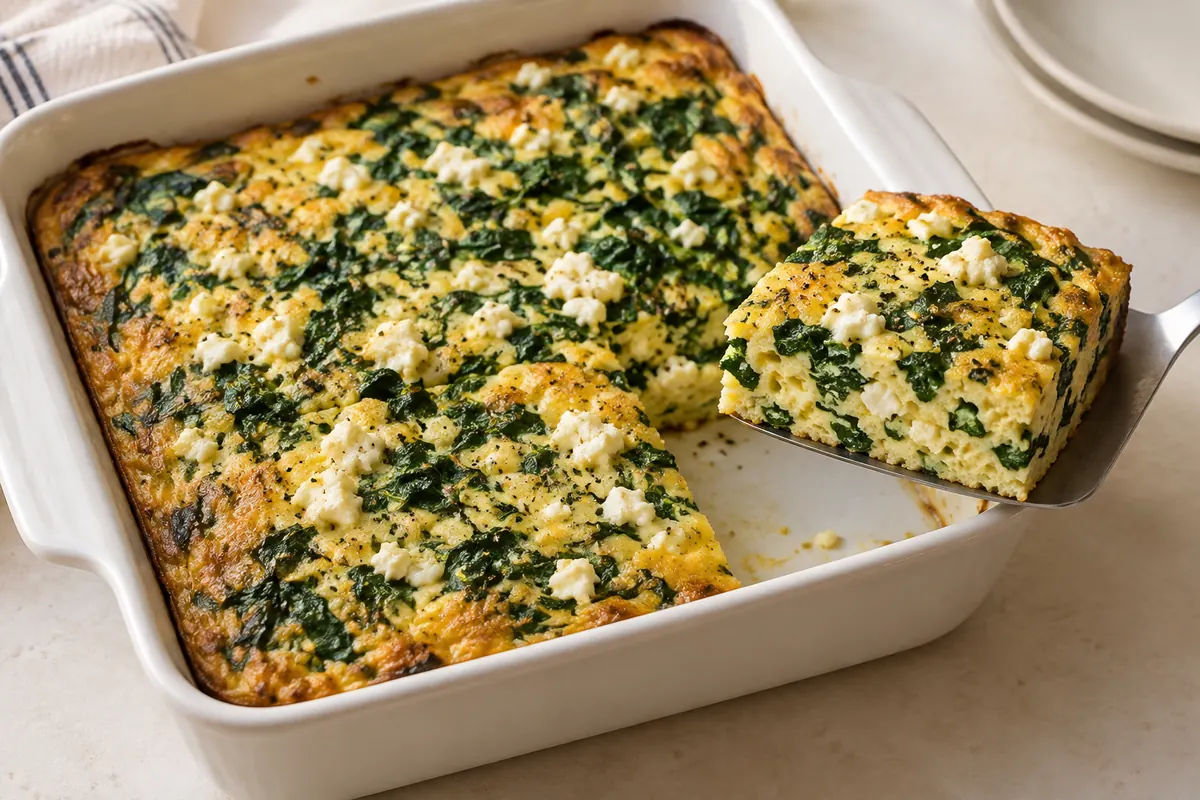
Frozen spinach is useful precisely because a large amount of leafy vegetable has become compact. That concentration can also surprise a recipe written for a different amount or form of fresh spinach. Follow the package for cooking and any thawing directions. For a filling, frittata, or thick sauce, remove excess liquid as the recipe requires before combining it with the other ingredients. Otherwise, water released later can soften a crust or turn a carefully mixed filling loose.
For soup or a brothy bean dish, some of that moisture may be less of a problem, though seasoning and total liquid still need adjustment. Do not squeeze every vegetable automatically when the dish actually needs a spoonable broth. Decide what consistency the finished meal should have first. A strainer can be helpful for draining cooked spinach, but handle hot food carefully and let it cool enough for any hand pressure required by a recipe. Keep raw-food preparation separate from cooked vegetables that are ready to combine.
Broccoli needs room when browning is the goal
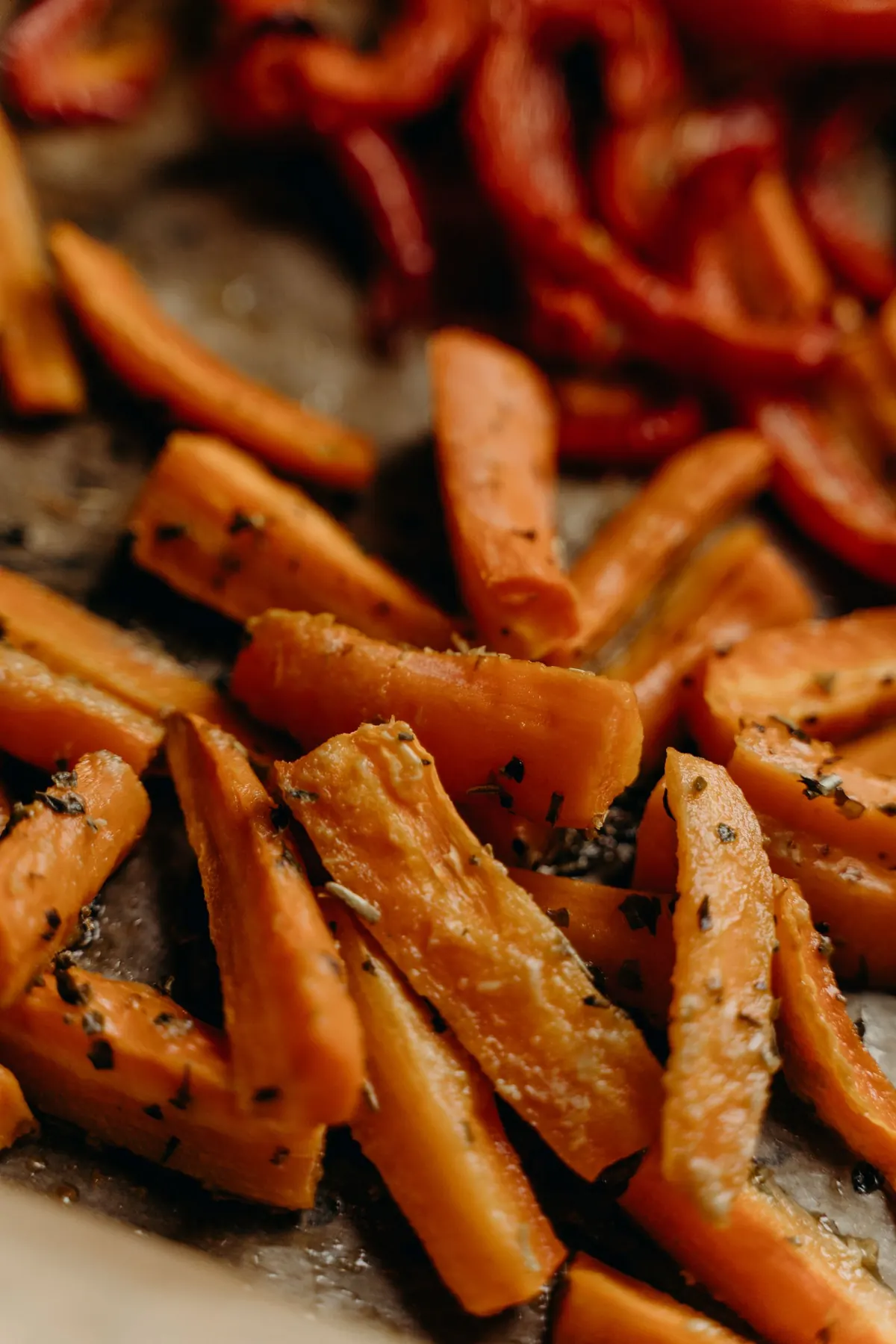
Frozen broccoli can make a useful roasted side, but it will not behave exactly like a freshly cut, dry floret. Start with a package and method suitable for oven cooking, preheat the oven fully, and use a rimmed sheet pan with room between pieces. Separate clumps rather than leaving a frozen mound in the middle. Follow the product's safety and cooking directions, then judge surface dryness and tenderness. A pan crowded with vegetables may cook them, but it is less likely to give the browned edges you wanted.
Avoid covering the tray in a heavy sauce at the beginning if a dry roasted surface matters. Add a dressing, cheese, or lemon finish later as appropriate. If the available broccoli is finely chopped, choose a soup, sauce, or grain dish instead of trying to force it into the role of large roasted florets. This is a useful form of flexibility: change the dish to suit the ingredient you bought. It is often easier than repeatedly adjusting a method around a cut that cannot provide the desired texture.
Organize the freezer around actual portions
A partly used bag is easier to finish when it is closed securely, labeled if necessary, and placed where it can be found. Follow the storage directions and keep the freezer at 0°F or below. Remove the portion you need without leaving the rest warming on the counter while you cook. If a large bag is awkward, organize it so the contents stay contained and the cooking directions remain associated with it. A tidy label is useful only if it still tells you what to do with the food.
Keep a short list of the vegetables you already have before buying more. Two reliable types with assigned meals may help more than six novelty mixes with no clear destination. If the same bag repeatedly remains unused, ask why. The cut may not suit your cooking, the flavor may be unpopular, or the portion may be too large for the household. Buying the smaller package can be the more practical choice even when a large bag seems attractive by unit price. Food that is used is doing a different job from food that merely occupies inexpensive storage.
Let frozen and fresh share the same dinner
There is no need to make a whole meal choose one side of a fresh-versus-frozen debate. Frozen peas can join fresh herbs, a cooked spinach filling can sit beside a fresh salad, and roasted frozen broccoli can accompany a freshly cooked main dish. Give each ingredient the handling it needs. A crisp raw element can be especially welcome beside a softer frozen vegetable preparation, but it should be washed and prepared safely rather than added only for visual contrast.
A useful freezer selection covers different cooking jobs. Loose peas can join pasta near its finishing stage according to the package; chopped spinach can supply a filling after its required cooking and draining; corn can share a skillet with beans; large broccoli pieces can occupy a roasting tray. Keep a companion for each job in the pantry rather than buying more vegetable mixes: pasta, canned beans, or a grain you already cook. A bag then answers a specific dinner question, and its cut determines which answer will work.
Keep in mind
Follow each package's cooking directions; frozen vegetables are not automatically ready to eat.
Choose the cut for the dish, especially when deciding between soup, fillings, and roasting.