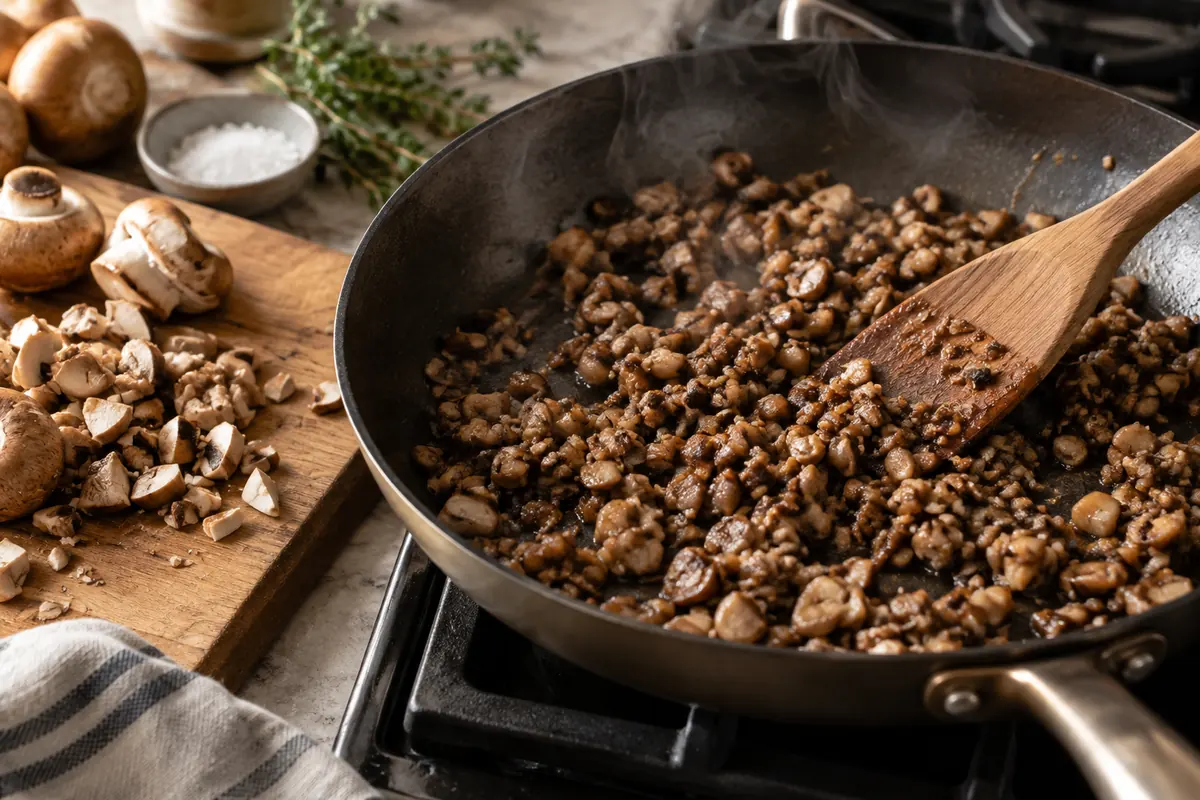
A mushroom can be chopped without disappearing
Start with the result you want to eat. A loose filling needs some texture and surface dryness. A sauce can welcome a wetter, softer mince. A burger or meatball needs a complete recipe designed to hold together, because exchanging large volumes of ingredients can change its structure. The Mushroom Council describes chopping mushrooms to a ground-meat consistency for blended dishes. That is a useful size reference, rather than permission to swap ingredients in every recipe without considering the rest of the method.
Put it to work
Useful tools, at a glance
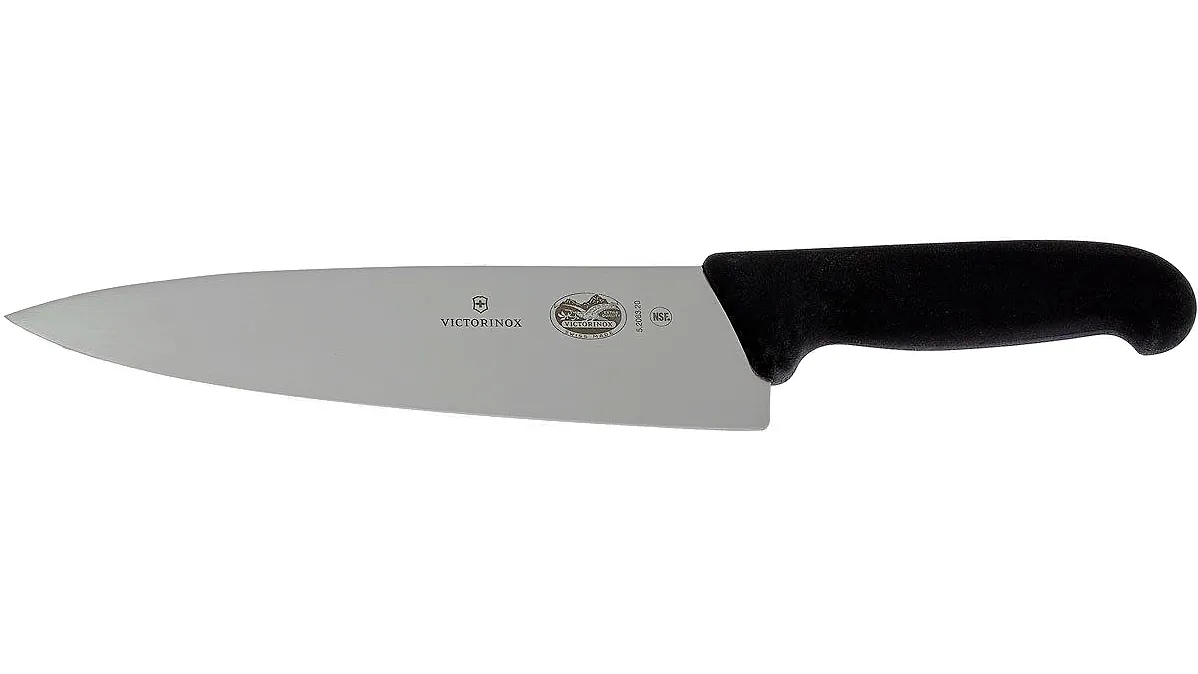
General chopping with a wide chef knife
Victorinox Fibrox Pro 8-inch Chef Knife
Browning and finishing sauces in a 12-inch stainless steel pan
Tramontina Signature 12-inch Tri-Ply Clad Fry Pan
Clean, trim, and choose the chop
Use ordinary cultivated mushrooms in good condition, with a clear identity from a reliable seller. Remove debris, clean them, and trim any dry ends as needed. The tender stems of common button and cremini mushrooms can join the caps, while tough stems from other varieties may need another use. Do not gather unknown mushrooms for a weeknight experiment. A photograph or a cooking method cannot establish whether a wild mushroom is safe to eat.
A chef's knife and stable board give you direct control over the pieces. Slice, turn, and chop in manageable batches rather than chasing rolling whole mushrooms across a crowded board. A food processor can save time for a larger quantity, but use short pulses and inspect frequently. The bottom can turn to paste while whole pieces remain above it. Stop early, scrape down as needed, and finish a few large pieces with the knife instead of processing everything into a wet purée.
Choose a pan with room to release water
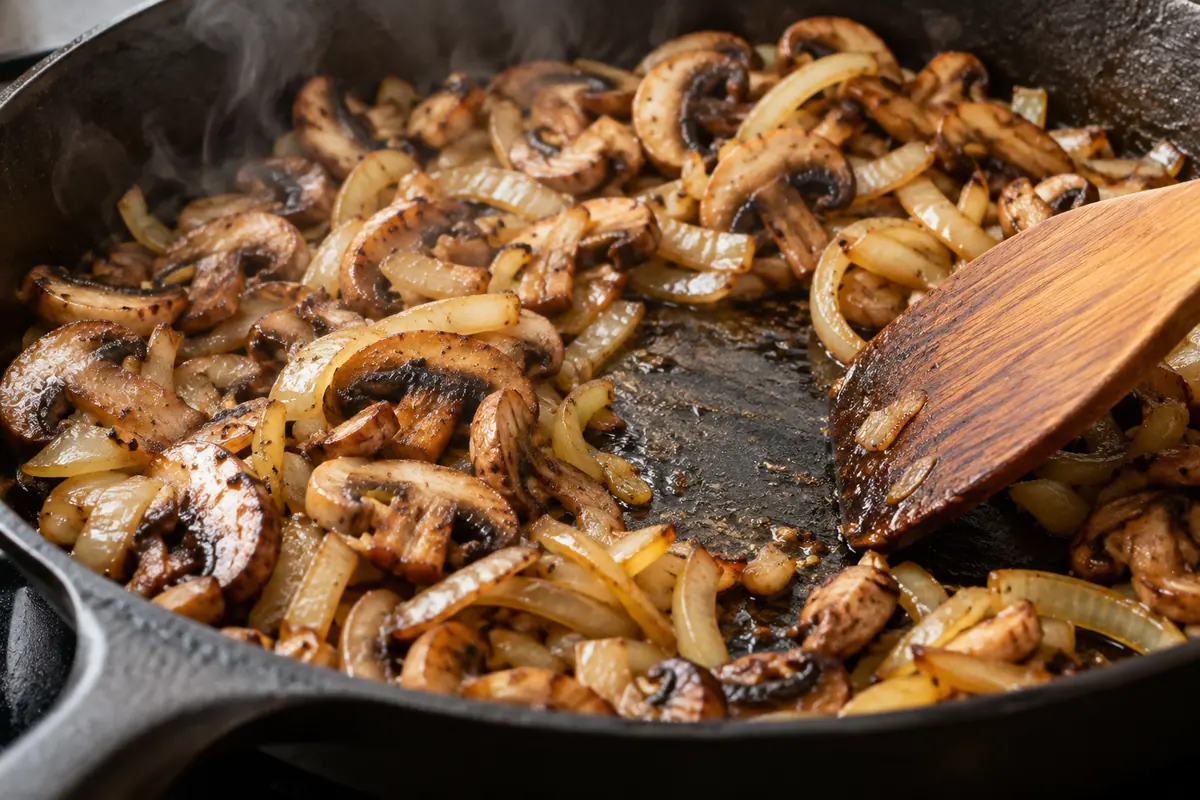
A wide skillet is helpful because chopped mushrooms expose a lot of surface and release moisture. If the pan is filled deeply, the lower layer can sit in liquid while the upper layer barely meets the metal. Cook a smaller amount or work in batches when you want distinct browned pieces. A twelve-inch stainless skillet is one option, but the useful question is how much flat area your stove can heat and your pan can provide.
Add a moderate amount of cooking fat and follow the recipe's heat guidance. Mushrooms can initially absorb fat and then release liquid, so do not keep pouring in oil just because the first addition seems to disappear. Stir enough to cook the pieces evenly, then allow some contact with the surface as the mixture dries. Watch the liquid and smell the pan. A dry-looking top does not prove that the bottom is ready, and a smoking pan is a cue to adjust rather than push harder.
Decide how much browning the dish needs
For a taco-style filling, a few browned edges and a loose texture can help the mushrooms stand alongside beans, tortillas, and a crunchy topping. For a tomato sauce, lightly browned mushrooms may be enough because the sauce will soften them again. Chasing an extremely dark color can make a small chopped piece bitter before the rest of dinner benefits. Taste a cooked spoonful and choose the next step based on that dish, not on the darkest photograph you have seen.
Keep small garlic pieces and delicate spices out of the pan until the mushrooms have released much of their water if a long evaporation stage is needed. Stir them through later and let them become fragrant without scorching. A spoonful of tomato paste can be cooked briefly at that stage before liquid is added. This order gives each ingredient a useful moment in the pan. It also makes it easier to identify which part caused bitterness if a batch becomes too dark.
Make one filling with contrasting components
Combine cooked mushroom mince with black beans for a soft filling that still has visible pieces. Add the beans after the mushrooms have reached the texture you want, then use a little liquid to bring them together. Season, taste, and add acidity toward the end. A crisp cabbage topping, a few radish slices, or chopped onion can supply the fresh crunch. Pick one or two additions rather than hiding the filling under a large collection of condiments.
For a bowl, serve the same mixture over rice or barley with a separately cooked vegetable. Keep its sauce loose enough to moisten the grain but avoid turning the whole bowl into one uniform texture. If the filling tastes flat, consider whether it needs salt, acidity, or an aromatic before adding more spice. Mushrooms offer a savory base, but they do not remove the need to balance the rest of the meal. A bright finish often helps more than another minute of browning.
If adding meat, keep the safety requirements clear
Mushrooms can extend a ground-meat dish, as the Mushroom Council's blending guidance describes, but they do not change the required cooking endpoint for the meat. Follow a complete recipe and use a food thermometer. USDA lists 160°F for ground beef, pork, lamb, and veal, and 165°F for ground poultry. Check the mixture appropriately rather than deciding that a browned mushroom or a dark sauce proves the meat is cooked through.
Cooking mushrooms separately can make it easier to control their moisture before mixing them into a prepared filling, while some recipes cook mushrooms and meat together. Use the order specified by the recipe rather than transferring one sequence to every dish. Keep raw-meat utensils and boards separate from ready-to-eat toppings, and wash hands and equipment after contact. A blended filling still needs the same careful handling as the meat it contains, including during cooling and reheating.
Store a flexible portion before adding every finish
If cooking extra, reserve a plain portion before adding all the beans, cream, cheese, or strong finishing sauce. It can join an omelet, a tomato pan, or a warm grain bowl later. Refrigerate cooked leftovers promptly in shallow containers and use within three to four days, or freeze for later. Reheat leftovers to 165°F. Divide the batch while it is still easy to portion rather than keeping a large warm mass on the counter until the rest of the evening is over.
A thawed portion will usually be softer than a newly browned batch. Put it in a sauce or filling where that softness makes sense, or evaporate excess liquid in a pan before finishing it. Do not expect freezing to preserve an exact crisp edge. Label the container with both its contents and date, especially if it also contains meat. Mushroom mince and a mushroom-meat blend can look similar after storage, but they may suit different eaters and different plans.
Keep the method useful beyond one fashionable name
The most valuable lesson in mushroom mince is learning to manage a small ingredient's water and texture. Once you can choose the chop and cook a manageable layer, the mince can fit whatever is already in the kitchen. It might become the savory layer beneath white beans on toast, a modest addition to a tomato sauce, or a filling with cabbage and rice. Those are different dinners connected by one practical preparation, rather than by a promise that every dish needs mushrooms.
Give the finished mince a destination while its texture is clear. Loose, relatively dry pieces can fill tortillas with black beans and a crisp cabbage topping. A wetter portion can simmer briefly in tomato sauce and coat pasta. For white beans on toast, let the mushrooms sit above the beans rather than mashing everything into one spread. Each arrangement uses the same chopped ingredient differently. Keep any portion intended for another meal plain enough to take its new seasoning, and refrigerate or freeze it within the storage plan already described.
Keep in mind
Keep finely chopped mushrooms in a shallow layer when browning is the aim.
A mushroom-meat blend must reach the safe endpoint for the meat it contains.