Decide whether you want broth or body
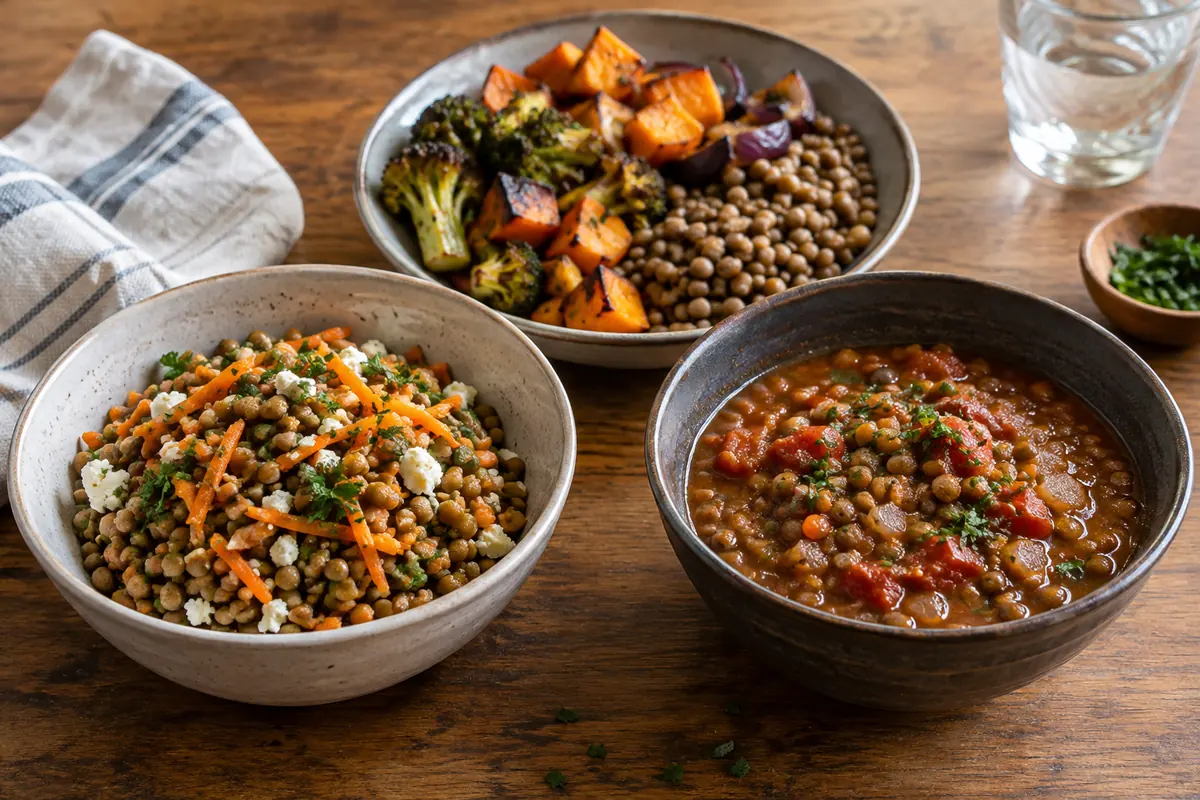
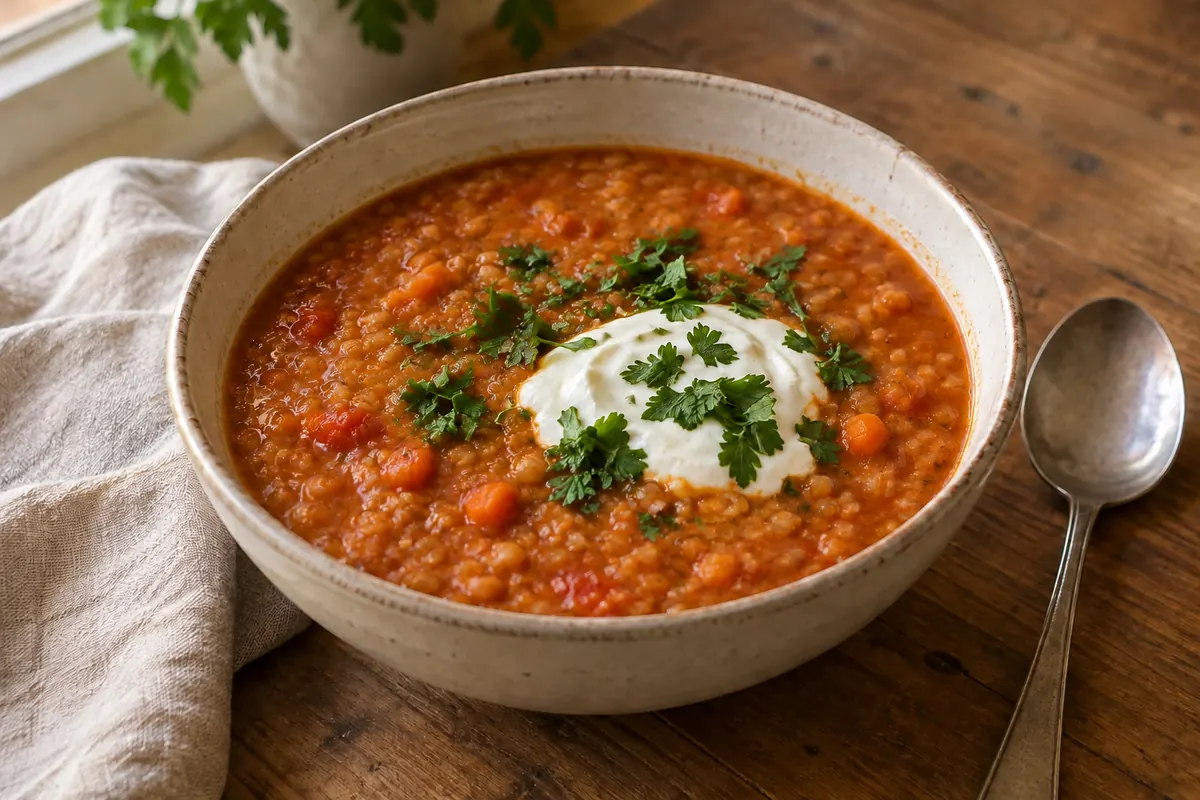
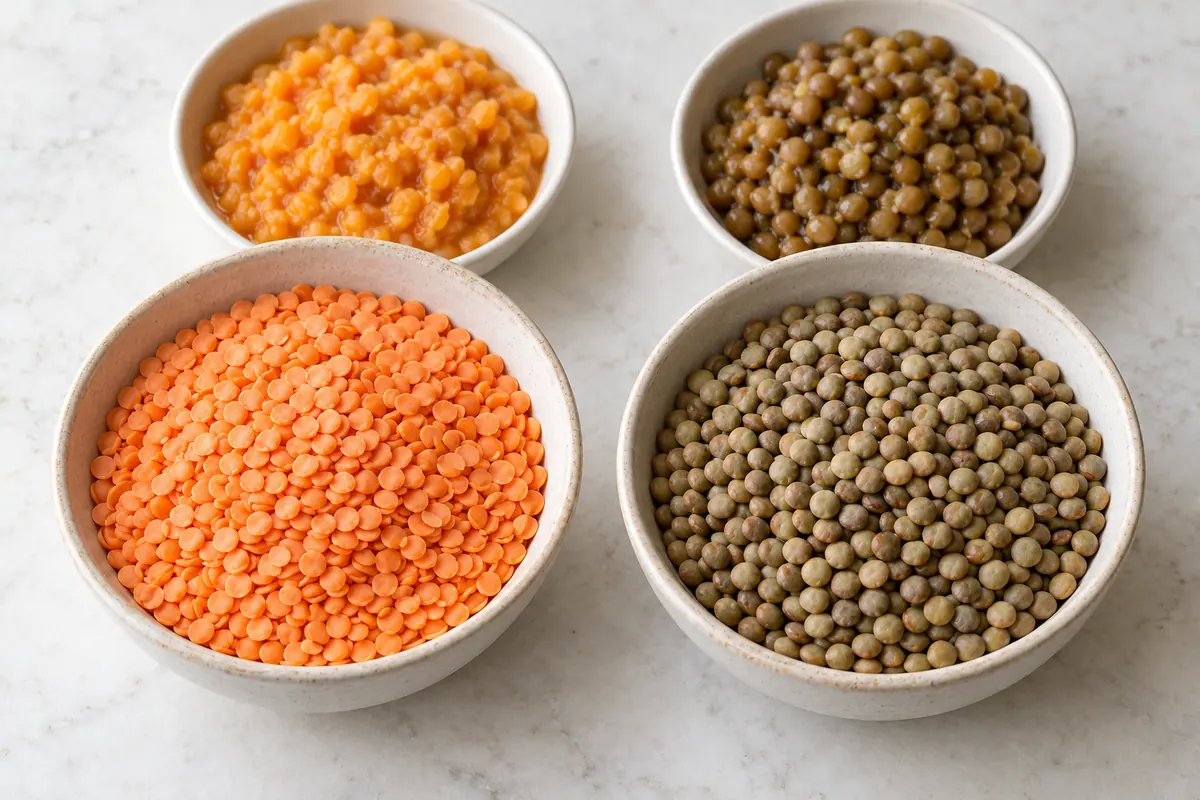
A red lentil carrot soup relies on soft lentils to join the vegetables and liquid. A green lentil soup can leave the pulses visible among diced vegetables. Changing the bag changes more than the color. It affects when you add the lentils, how much liquid remains and whether the soup needs blending. Start with that texture decision before looking for a one-for-one substitution.
Read split, whole and the variety name
The coral-colored lentils sold as red lentils are often peeled and split, which is why they cook quickly and lose their neat shape. Whole red lentils also exist. Check the package rather than assuming that every red lentil behaves like a split one. If the grains in your bag are round and intact, use its instructions for that particular form.
Green is another broad label. Standard green lentils and small French green lentils do not necessarily soften on the same schedule. The USA pulse industry distinguishes French green lentils as smaller and firmer than standard green varieties. For a soup where separate lentils are important, note the exact variety you used so the next batch starts with the same ingredient.
Do not carry the cooking time across unchanged
Rinse lentils in a fine-mesh strainer and remove any small stones or debris before cooking. Lentils generally do not need a soak. Follow the packet for a first timing estimate, then taste. Split red lentils can soften much sooner than whole green ones, so the last ten minutes of one soup may not be enough for the lentils you substituted.
When adding whole green lentils to a recipe written for split red, give them enough liquid and time to become tender before fragile greens or already-cooked vegetables go in. You can also cook the green lentils separately and stir them into the soup near the end. That adds a pan, but it makes a mixed batch of vegetables easier to manage.
Keep the amount clear and the liquid adjustable
Compare dry lentils with dry lentils. A cup of cooked green lentils is not the same starting quantity as a cup of dry red lentils; the cooked portion has already absorbed water. Weigh the dry amount when the recipe supplies a weight. If you only have cooked lentils, use a recipe written for cooked pulses or expect to adjust both yield and broth.
A soup thickened by red lentils may become much looser when whole lentils take their place. Reduce some of the broth separately, mash a portion of the cooked lentils or blend a small amount of soup and return it. Choose one adjustment at a time. Adding more dry lentils to a finished soup starts another cooking cycle and can leave the vegetables overdone.
What happens when red lentils replace green?
Expect the reverse texture change. Split red lentils can disappear into the liquid while the soup is still cooking. Add them on their own shorter schedule, stir gently and check often. If you wanted a clear broth with intact lentils, the result will not be identical, even if the seasoning and dry weight stay the same.
That softer result can still make a useful dinner. Lean into a thicker bowl, loosen it with hot broth if needed and finish with a distinct topping such as herbs or a spoonful of yogurt. Avoid calling the swap a failure just because the lentils are no longer separate. It is a different soup, and it should be seasoned after its final consistency is settled.
Buy the form you will use twice
For a small pantry, a bag of split red lentils and a bag of whole green or brown lentils cover different jobs. Keep them in labeled, closed containers in a cool, dry place, and retain the cooking directions. Do not combine the end of two varieties in one jar if you expect them to finish together later.
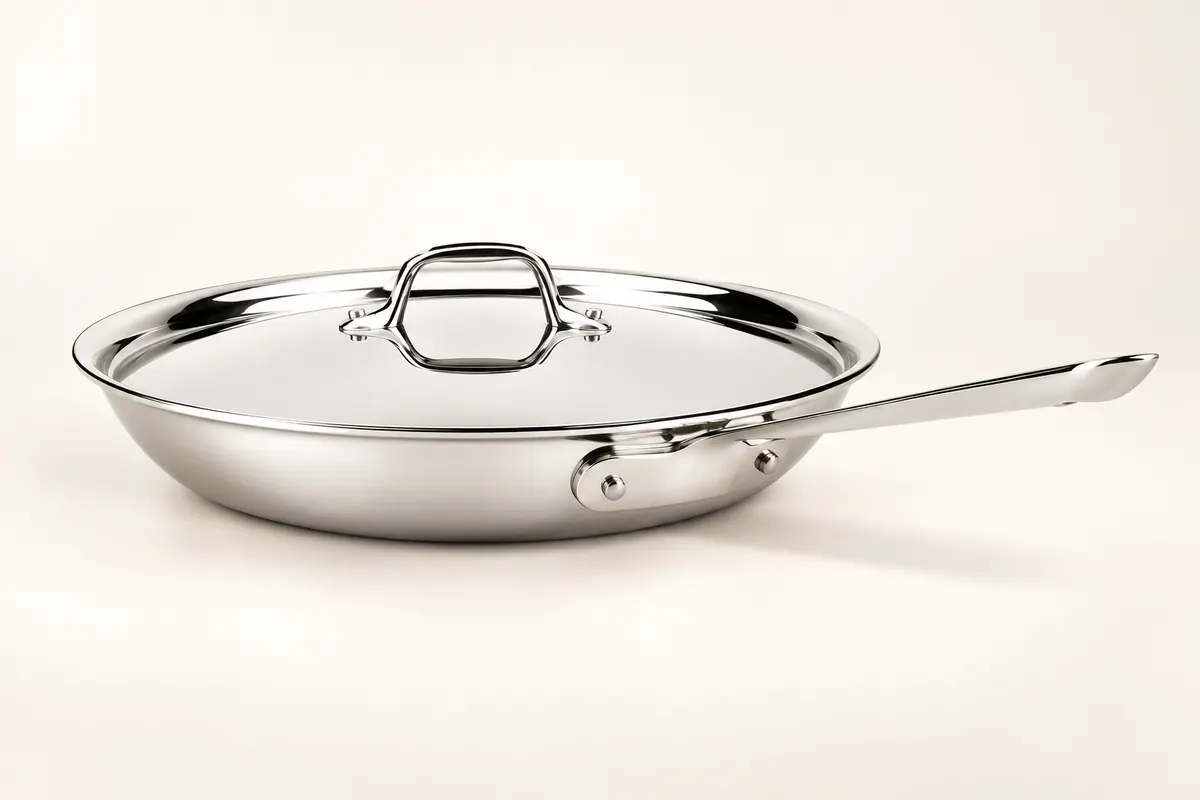
A fine-mesh strainer makes rinsing small split lentils simpler because the pieces do not escape through large colander holes. The Cuisinart set linked here offers several sizes; use whichever strainer you already own if its mesh holds the lentils. After that, the most useful equipment is an ordinary pot with room to stir and a spoon for checking the actual texture.
Keep in mind
This comparison concerns plain dry lentils. Follow separate directions for ready-cooked pouches and canned lentils.
Different lentil varieties and storage ages can change the cooking time.